
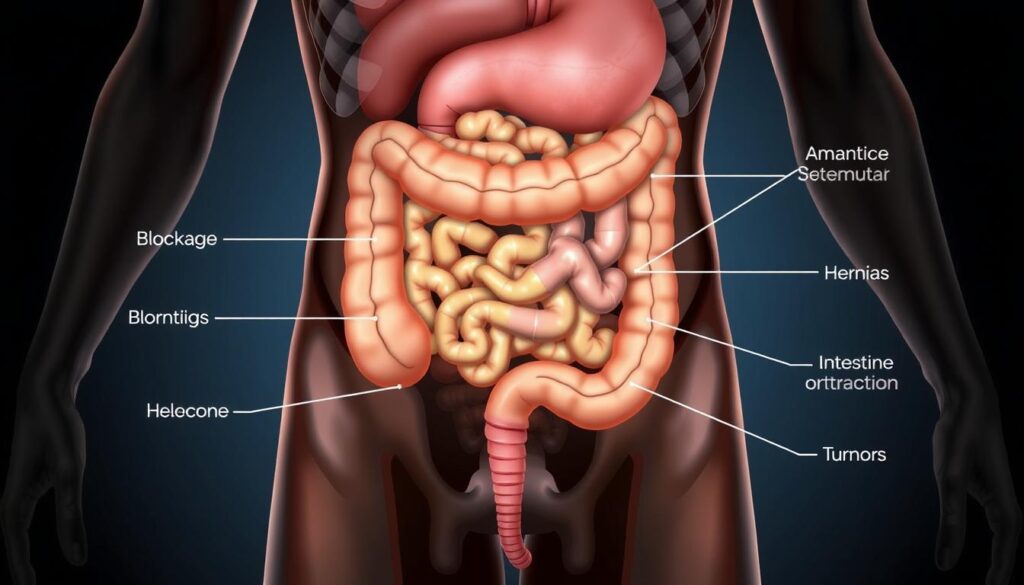
Intestinal obstruction is a serious medical condition that disrupts your digestive system. It can lead to life-threatening complications if left untreated. A bowel blockage stops food and liquid from passing through normally.
This condition requires immediate medical attention due to its severe symptoms. Your body can develop intestinal obstruction through various causes. These include adhesions, hernias, tumors, and specific medical conditions12.
Recognizing the signs of intestinal obstruction is vital for quick treatment. Key symptoms include abdominal pain, vomiting, and constipation. An inability to pass gas can also signal a potential blockage3.
Key Takeaways
- Intestinal obstruction is a serious digestive system disruption
- Multiple causes can trigger bowel blockage
- Recognizing early symptoms is critical for treatment
- Medical emergencies require immediate professional care
- Prevention involves managing underlying health conditions
What is Intestinal Obstruction?
Intestinal obstruction is a serious medical condition that blocks your digestive tract. It can occur in the small or large intestine. This blockage stops food, liquids, and waste from moving through your system4.
Intestinal obstruction can affect your body in many ways. It creates major challenges for your digestive health5.
Definition and Key Characteristics
Bowel obstruction can be partial or complete. It disrupts your body’s ability to process nutrients and remove waste. The condition can have several causes.
- Tumors blocking the digestive tract5
- Hernias restricting intestinal passage4
- Adhesions from previous surgeries4
- Inflammatory conditions affecting the intestines
How It Affects Your Body
An intestinal obstruction causes critical changes in your body. You might experience several symptoms.
- Severe abdominal cramping
- Inability to pass gas or bowel movements5
- Persistent nausea and vomiting
- Significant bloating
The complications can be serious without proper medical care. It might lead to reduced blood flow and tissue damage. In severe cases, it can cause intestinal wall perforation4.
“Early recognition and appropriate management are crucial in addressing intestinal obstruction,” says medical experts.
Modern medicine offers effective ways to manage this condition. Many uncomplicated small bowel obstructions can be resolved without surgery. Doctors may recommend surgery if other treatments don’t work4.
Causes of Intestinal Obstruction
Intestinal obstruction can stem from various sources. Knowing these causes helps spot problems early. Your digestive system might face blockages from mechanical or non-mechanical issues.
Mechanical Causes of Intestinal Blockage
Mechanical obstructions physically block food and waste in your intestines. Common causes include:
- Adhesions from previous abdominal surgeries6
- Hernias that compress or block intestinal passages6
- Colon cancer creating physical barriers6
- Intussusception, where intestinal sections telescope into each other6
Non-Mechanical Causes
Non-mechanical obstructions, or paralytic ileus, disrupt intestinal movement. These issues affect nerves or muscles. They can result from:
- Abdominal surgery complications6
- Infections affecting muscle function
- Certain medication side effects
- Neurological disorders like Parkinson’s disease
Critical Risk Factors
Some conditions and lifestyle choices raise your risk of intestinal obstruction. These factors include:
| Risk Category | Specific Risks |
|---|---|
| Medical History | Previous abdominal surgery, Crohn’s disease7 |
| Digestive Conditions | Inflammatory bowel disease, diverticulitis6 |
| Lifestyle Factors | Chronic constipation, swallowed foreign objects7 |
“Early recognition of risk factors can prevent serious complications of intestinal obstruction.” – Digestive Health Experts
Knowing these causes helps you spot potential warning signs. It’s crucial to act quickly if you notice issues. Always consult healthcare professionals if you experience persistent digestive issues.
Treatment Options for Intestinal Obstruction
Understanding treatment options for intestinal obstruction is vital. Your medical team will create a plan based on your specific case. Intestinal decompression might be the first step in addressing your condition8.
Your doctor may suggest bowel rest and use a nasogastric tube. This helps relieve pressure and drain fluids. Complete obstructions often require surgery, with laparoscopy being a common approach8.
General anesthesia ensures comfort during these procedures. It helps minimize pain throughout the treatment process8.
Abdominal surgery may be needed to remove blockages and fix intestinal damage. Doctors assess your health to reduce risks like infection or bleeding8. Your recovery time depends on your health and the surgical method used8.
After treatment, you’ll get advice on preventing future obstructions. Those with multiple abdominal surgeries may have a higher risk of blockages8. Following your doctor’s guidance can help ensure the best outcome.
FAQ
What exactly is an intestinal obstruction?
An intestinal obstruction blocks your small or large intestine. It stops food and liquid from moving through your digestive tract. This can prevent your body from absorbing nutrients and getting rid of waste.
What are the most common symptoms of intestinal obstruction?
Key signs include severe belly pain, vomiting, and constipation. You might also have trouble passing gas. Swelling in your abdomen, nausea, and dehydration can occur too.
These symptoms can point to a serious problem. If you have them, get medical help right away.
What causes intestinal obstruction?
Both mechanical and non-mechanical factors can cause this issue. Mechanical causes include scar tissue, hernias, and colon cancer. Non-mechanical causes, or paralytic ileus, stem from muscle or nerve problems.
Surgery, infections, certain drugs, or brain disorders like Parkinson’s can lead to paralytic ileus.
Who is at higher risk for intestinal obstruction?
People with a history of belly or pelvic surgery face higher risk. Those with Crohn’s disease, cancer, or chronic constipation are also more prone.
Other risk factors include bowel diseases, diverticulitis, and conditions that twist or block intestines. Age and medical history play a role too.
How is intestinal obstruction treated?
Treatment depends on what’s causing the blockage and how bad it is. For simple cases, doctors may suggest rest and fluids. They might use a tube to relieve pressure.
Meds can help with pain and nausea. Severe cases may need surgery to remove the blockage and fix damage.
Can intestinal obstruction be prevented?
You can’t prevent all cases, but you can lower your risk. Eat a healthy diet with fiber and drink plenty of water. Manage chronic conditions like Crohn’s disease.
Avoid getting constipated. Talk to your doctor about risks, especially if you’ve had belly surgery before.
When should I seek emergency medical care?
Get help right away if you have lasting, severe belly pain. Other red flags are non-stop vomiting and inability to poop or pass gas.
Major swelling in your belly or signs of severe dehydration are also urgent. These symptoms could mean a dangerous blockage that needs quick treatment.
Source Links
- Intestinal obstruction – https://www.mountsinai.org/health-library/diseases-conditions/intestinal-obstruction
- Bowel Obstruction | Intestinal Obstruction | MedlinePlus – https://medlineplus.gov/intestinalobstruction.html
- Understanding Intestinal Obstruction – https://www.saintlukeskc.org/health-library/understanding-intestinal-obstruction
- Intestinal Obstruction: Evaluation and Management – https://www.aafp.org/pubs/afp/issues/2018/0915/p362.html
- Bowel obstruction – https://www.healthdirect.gov.au/bowel-obstruction
- Intestinal obstruction-Intestinal obstruction – Symptoms & causes – Mayo Clinic – https://www.mayoclinic.org/diseases-conditions/intestinal-obstruction/symptoms-causes/syc-20351460
- Understanding an Intestinal Obstruction – https://www.hopkinsmedicine.org/health/conditions-and-diseases/understanding-an-intestinal-obstruction
- Intestinal obstruction repair: MedlinePlus Medical Encyclopedia – https://medlineplus.gov/ency/article/002927.htm

