
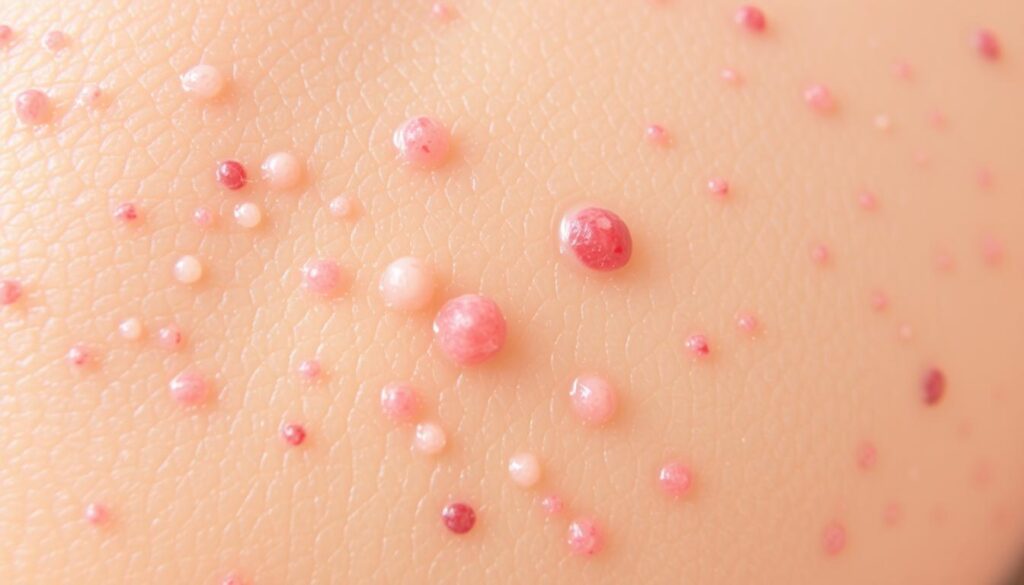
Ever spotted tiny, rough bumps on your skin that look like chicken skin? This could be Keratosis Pilaris, a common skin condition1. It’s harmless but can be frustrating, usually showing up on upper arms, thighs, cheeks, or buttocks1.
Keratosis Pilaris often affects children and teenagers. It typically starts in late infancy or adolescence1. People with fair skin are more likely to have this condition1.
The good news? For most people, it gets better with age. It usually clears up by the time you’re in your early 30s1.
The “chicken skin” look happens when keratin blocks hair follicles. You can’t prevent it, but you can manage symptoms with gentle skincare1. Hormonal changes during pregnancy and puberty can cause flare-ups1.
Key Takeaways
- Keratosis Pilaris is a common skin condition affecting multiple body areas
- Most prevalent in children and teenagers with fair skin
- Typically resolves naturally by age 30
- Caused by keratin blocking hair follicles
- Manageable through gentle skincare practices
What is Keratosis Pilaris?
Keratosis pilaris is a common skin condition that causes small, rough bumps. Often called “chicken skin,” it’s harmless but can be frustrating. The condition typically appears in specific areas of the body2.
These bumps make your skin feel like sandpaper. They’re hair follicles plugged with keratin, a protective protein. Keratin can cause blockages in the follicles, leading to the bumpy texture2.
Understanding the Basics
Keratosis pilaris often runs in families and is common in young children. Most people see improvement as they age. The condition typically clears up by the late twenties23.
Common Symptoms of Chicken Skin
- Small, rough bumps resembling goosebumps
- Dry, itchy skin patches
- Slight discoloration around the bumps
- Variations in bump color depending on skin tone
Areas Most Affected by Rough Skin
| Body Area | Frequency of Occurrence |
|---|---|
| Upper Arms | Most Common |
| Thighs | Very Common |
| Cheeks | Common |
| Buttocks | Occasionally |
“Keratosis pilaris is a benign condition that might look concerning but is completely harmless,” says dermatology experts.
Knowing your skin’s unique traits helps manage Keratosis Pilaris Bumps better. The condition can be stubborn, but proper care can improve its appearance. With the right approach, you can effectively tackle this common skin issue2.
Causes of Keratosis Pilaris
Keratosis pilaris is a common skin condition with mysterious triggers. Understanding its causes can help you manage it better. Several key factors contribute to its development.
Keratosis pilaris results from hair follicles blocked with keratin. Keratin is a protein found in skin, hair, and nails4. This blockage creates the rough skin texture many people experience.
Genetic Factors
Genetics greatly influence your chances of developing keratosis pilaris. The condition often runs in families. If your relatives have similar skin concerns, you’re more likely to develop it45.
- Approximately 50-80% of adolescents experience this condition5
- The dry skin can be inherited from family members6
- Genetic predisposition plays a crucial role in development
Skin Type and Keratosis Pilaris
Different skin types react uniquely to keratosis pilaris. People with dry skin are more prone to these bumps6. The condition appears as small, flesh-colored or pink bumps.
| Skin Characteristics | Keratosis Pilaris Likelihood |
|---|---|
| Fair Skin | Higher Probability |
| Dry Skin | Very High Risk |
| Eczema-prone Skin | Increased Chances |
Role of Hormones
Hormonal changes can greatly impact keratosis pilaris. Women are slightly more likely to be affected. Puberty and pregnancy can trigger or worsen the condition5.
Remember, while keratosis pilaris might seem persistent, understanding its causes can help you develop an effective management strategy.
Keratosis pilaris is not infectious and often improves with age45. Most people find their symptoms decrease as they grow older.
Treatment Options for Keratosis Pilaris
Keratosis pilaris can be tricky to handle. Luckily, there are several ways to manage it. The right treatment can make your skin look and feel better.
Knowing which methods work best is key. With the right approach, you can improve your skin’s health significantly.
Over-the-Counter Solutions
Many people start with easy-to-find products. Keratosis Pilaris Creams often contain ingredients that smooth rough skin patches7.
Skin doctors suggest specific products to help. These can reduce bumps and improve skin texture.
- Glytone KP Kit with glycolic acid exfoliating wash
- SKINFIX Resurface+ AHA Renewing Body Cream
- Cetaphil Gentle Cleansing Bar
Prescription Treatments
Sometimes, store-bought products aren’t enough. In these cases, doctors may prescribe special Keratosis Pilaris Lotion.
These treatments might include:
- Retinoids for skin cell turnover
- Topical steroids to reduce inflammation
- Anti-inflammatory medications
Home Remedies
You can also try some things at home:
- Regular gentle exfoliation
- Consistent moisturizing
- Using products with salicylic acid or lactic acid
“Maintaining a consistent skincare routine is key to managing keratosis pilaris,” says Dr. Gohara7.
Be patient when treating keratosis pilaris. It may change with hormones and often gets better with age8.
Steady care and the right treatment can help manage this common skin issue. Keep at it, and you’ll likely see improvements over time.
Managing Keratosis Pilaris in Daily Life
Rough skin from keratosis pilaris can be tricky, but it’s manageable. Your skincare approach is key to controlling this condition. Regular exfoliation and hydration help manage symptoms effectively.
Skincare Tips for Keratosis Pilaris Remedies
Choose gentle products for sensitive skin. Look for over-the-counter solutions with lactic acid, urea, salicylic acid, and ceramides. These ingredients remove dead skin cells and prevent hair follicle plugging.
A comprehensive skincare routine is vital for managing rough skin effectively. Consistency is crucial in seeing improvements over time.
Lifestyle Modifications
Daily habits affect keratosis pilaris management. Use a humidifier to keep skin moist. Wear loose-fitting clothes to reduce friction.
Be patient with your treatment. Keratosis pilaris often improves naturally over time. Many people see significant reduction by age 30910.
When to Seek Professional Help
Keratosis pilaris is usually harmless. However, see a dermatologist if symptoms cause discomfort or affect your self-confidence10.
Professional treatments like medicated creams or laser therapy offer advanced options. These can help with stubborn cases of keratosis pilaris9.
FAQ
What exactly is Keratosis Pilaris?
Keratosis Pilaris is a harmless skin condition. It causes dry, rough patches and tiny bumps on the skin. These bumps often appear on upper arms, thighs, cheeks, or buttocks.
It’s nicknamed “chicken skin” due to its bumpy texture. The condition occurs when keratin builds up and blocks hair follicles.
Is Keratosis Pilaris a serious medical condition?
No, Keratosis Pilaris is completely benign. It doesn’t pose any health risks. Most people see it as a cosmetic concern rather than a medical problem.
The condition often resolves naturally by age 30. It might affect your skin’s appearance, but it’s not harmful.
Can Keratosis Pilaris be permanently cured?
There’s no permanent cure for Keratosis Pilaris. However, you can manage its symptoms effectively. Consistent skincare routines, moisturizers, and gentle exfoliation can help.
Sometimes, prescription creams are used. These treatments can greatly improve skin texture and appearance.
Who is most likely to develop Keratosis Pilaris?
Keratosis Pilaris is more common in people with fair skin. Those prone to eczema or hay fever are also at risk. Family history can play a role too.
Women, children, and teenagers are particularly prone to it. Hormonal changes during puberty and pregnancy can influence its development.
What treatments are most effective for Keratosis Pilaris?
Effective treatments include over-the-counter moisturizing lotions with alpha-hydroxy acids. Prescription creams containing urea or salicylic acid can help. Gentle exfoliation and keeping skin hydrated are also beneficial.
Dermatologists often recommend brands like AmLactin and CeraVe SA cream.
Can diet or lifestyle impact Keratosis Pilaris?
Diet isn’t a direct cause, but good hydration can help manage symptoms. Using a humidifier and wearing loose clothing can also be beneficial.
Avoiding harsh skin treatments is recommended. Some find that certain lifestyle changes can reduce Keratosis Pilaris appearance.
When should I see a dermatologist about Keratosis Pilaris?
Consult a dermatologist if the condition causes significant discomfort. Seek help if it affects your self-confidence or you’re unsure about treatment options.
A professional can provide a definitive diagnosis. They can also recommend personalized treatment strategies for your skin.
Does Keratosis Pilaris get worse in certain seasons?
Yes, Keratosis Pilaris can be more noticeable during winter. Cold, low-humidity environments can worsen the condition.
Moisturizing and skin protection become even more crucial during these times. Extra care in winter can help manage symptoms better.
Source Links
- Keratosis Pilaris (Chicken Skin) – https://www.healthline.com/health/keratosis-pilaris
- Keratosis pilaris – Symptoms and causes – https://www.mayoclinic.org/diseases-conditions/keratosis-pilaris/symptoms-causes/syc-20351149
- Keratosis Pilaris: What It Is, Causes, Symptoms & Treatment – https://my.clevelandclinic.org/health/diseases/17758-keratosis-pilaris
- Keratosis pilaris – https://www.nhs.uk/conditions/keratosis-pilaris/
- Practice Essentials, Pathophysiology, Etiology of Keratosis Pilaris – https://emedicine.medscape.com/article/1070651-overview
- Keratosis Pilaris: Symptoms, Diagnosis and Treatment – https://www.nationwidechildrens.org/conditions/keratosis-pilaris
- 13 Best Treatments for Keratosis Pilaris, According to Dermatologists – https://www.usdermatologypartners.com/press-media/13-best-treatments-for-keratosis-pilaris/
- Medical Care, Surgical Care, Consultations – https://emedicine.medscape.com/article/1070651-treatment
- Winter is coming: A dermatologist’s tips for managing keratosis pilaris – https://www.skincarephysicians.net/blog/medical-dermatology/winter-is-coming-a-dermatologists-tips-for-managing-keratosis-pilaris/
- Keratosis pilaris (KP): At-home and in-office teatment options – https://www.medicalnewstoday.com/articles/keratosis-pilaris-treatment

