
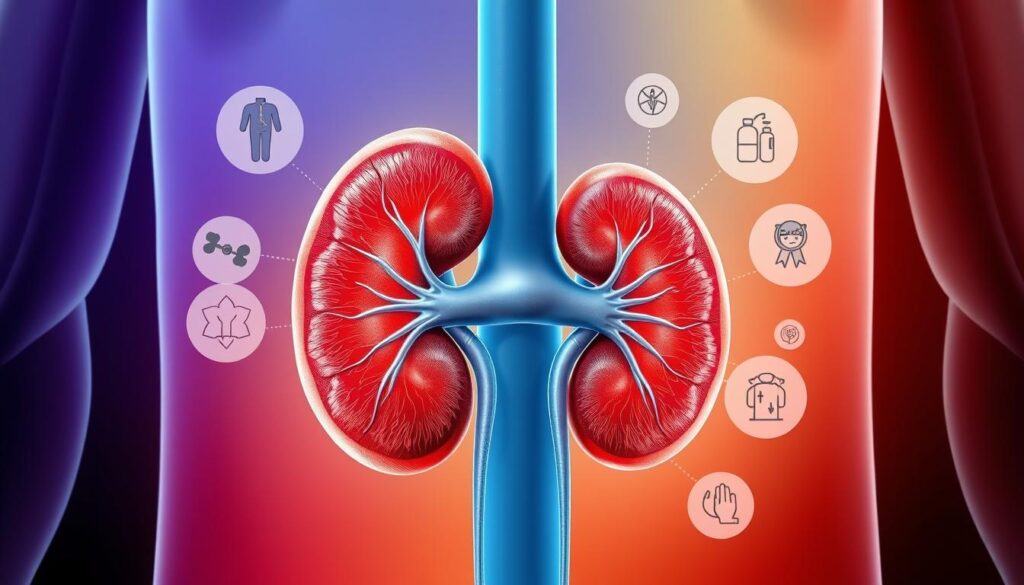
Kidney cancer affects thousands worldwide. It’s vital to understand for early detection and effective management. Renal Cell Carcinoma, the most common type, occurs when kidney cells grow uncontrollably1.
Men face a higher risk of kidney cancer than women12. The risk rises after age 402. In 2024, about 4,771 new cases are expected1.
Smoking greatly increases kidney cancer risk. It causes up to one-third of cases. Smokers are nearly twice as likely to develop Renal Masses12.
Early detection is crucial for better outcomes1. Know your risk factors and get regular check-ups. This can make a big difference in managing kidney cancer.
Key Takeaways
- Kidney cancer primarily affects individuals over 40
- Men are at higher risk of developing kidney cancer
- Smoking dramatically increases the risk of Renal Cell Carcinoma
- Early detection significantly improves treatment outcomes
- Regular medical screenings are crucial for at-risk individuals
What is Kidney Cancer?
Kidney cancer occurs when cells in the kidney grow abnormally and uncontrollably. Your kidneys filter waste and maintain body balance. Understanding this condition is crucial3.
The average age for kidney cancer diagnosis is 64. Men are twice as likely to develop it compared to women3. Early detection is key for successful treatment.
Types of Kidney Cancer
Renal cell carcinoma makes up about 90% of kidney cancers4. Several important subtypes exist within this category.
- Clear Cell Renal Cell Carcinoma: The most prevalent type, representing about 70% of renal cell carcinomas4
- Papillary Renal Cell Carcinoma: Occurring in roughly 10% of cases4
- Chromophobe Renal Cell Carcinoma: Accounting for approximately 5% of cases4
Risk Factors for Kidney Cancer
Several key factors can increase your risk of developing kidney cancer:
- Smoking
- Obesity
- High blood pressure
- Advanced age
- Family history of kidney cancer3
How Kidney Cancer Develops
Metastatic Renal Cell Carcinoma happens when cancer cells spread from the original tumor. Genetic mutations cause kidney cells to grow uncontrollably. This can form tumors that impact kidney function.
Understanding your risk factors and staying informed can be your first line of defense against kidney cancer.
The exact causes of kidney cancer are complex. Recognizing early warning signs is crucial. Regular medical check-ups can significantly improve potential outcomes3.
Common Signs and Symptoms
Kidney cancer often hides in its early stages. Knowing subtle warning signs is vital for early detection and treatment. Your health depends on recognizing these signals.
Early Warning Signs to Look For
Kidney cancer can show up in unexpected ways. Be alert for these potential red flags:
- Blood in urine (appearing pink, red, or cola-colored)5
- Persistent back or side pain6
- Unexplained weight loss5
- Chronic fatigue5
- Intermittent fever5
When to See a Doctor
Don’t ignore lasting symptoms or unusual health changes. Seek medical help promptly. Routine check-ups can often spot renal masses early7.
“Early detection significantly improves treatment outcomes for kidney cancer.”
Diagnostic Tests for Kidney Cancer
Doctors use various tests to check for biomarkers and confirm kidney cancer. These tests help pinpoint the problem accurately.
| Diagnostic Test | Purpose |
|---|---|
| Blood Tests | Check overall kidney function and detect abnormalities |
| Urine Analysis | Identify blood or other unusual markers |
| Imaging Tests | Ultrasound, CT scan, MRI to visualize kidney structures |
| Biopsy | Confirm cancer presence and determine type |
Many kidney tumors are found by chance during other tests6. Stay vigilant and get regular check-ups. Listen to your body’s signals for better health outcomes.
Treatment Options for Kidney Cancer
Understanding kidney cancer treatment options is vital for effective management. Your journey is unique, requiring a personalized approach. Factors like cancer stage and overall health guide the decision-making process.
A kidney cancer treatment strategy often combines medical interventions. These target cancerous cells while preserving your quality of life.
Your treatment plan will likely involve various medical interventions. These aim to eliminate cancer cells and maintain your well-being8.
Surgical Procedures for Kidney Cancer
Surgery is a primary approach for treating kidney cancer. Nephrectomy, which removes the affected kidney, is common. Your doctor may recommend different procedures based on your condition.
- Partial nephrectomy for smaller tumors measuring 4 centimeters or less8
- Radical nephrectomy for more advanced cancer cases8
- Cytoreductive nephrectomy to remove visible tumor masses
Non-Surgical Treatments Available
Several alternative treatments can effectively manage kidney cancer when surgery isn’t ideal. These options target cancer cells through different mechanisms.
- Targeted Therapy: Focuses on disrupting tumor blood vessel formation8
- Immunotherapy: Enhances your immune system’s ability to fight cancer cells8
- Energy Ablative Techniques:
- Cryoablation (freezing cancer cells)
- Radiofrequency ablation (heating cancer cells)8
“The key is finding the most effective treatment that minimizes impact on your overall health and quality of life.”
Palliative Care and Support
Comprehensive care goes beyond medical treatments. It involves managing symptoms and providing emotional support. Palliative care focuses on improving your comfort during treatment.
| Treatment Type | Key Characteristics | Potential Benefits |
|---|---|---|
| Nephrectomy | Surgical removal of kidney | Eliminate localized tumor |
| Targeted Therapy | Blocks tumor blood vessel growth | Slow cancer progression |
| Immunotherapy | Boosts immune response | Enhance natural cancer fighting mechanisms |
Your medical team will help you understand these options thoroughly. They’ll work with you to develop the most suitable treatment plan9.
Living with Kidney Cancer
Life after kidney cancer diagnosis needs support and lifestyle changes. Targeted therapy and immunotherapy are vital in your treatment plan. Adapting to new medical challenges requires emotional strength10.
Emotional well-being is crucial during this time. Feelings like shock and anger are normal10. Cancer support groups and community nurses can offer valuable guidance10.
Follow-up care is key to monitoring your health. Early-stage patients need frequent visits initially. These visits become yearly after a few years11.
Survivors should maintain a healthy weight and stay active. A nutritious diet can help reduce cancer progression risks11. Quitting smoking improves survival chances significantly11.
Work with your healthcare team on a personalized monitoring plan. This plan should consider your cancer stage and treatment history11.
FAQ
What is kidney cancer?
Kidney cancer occurs when cells in the kidney grow abnormally. Renal cell carcinoma is the most common type, making up 90% of cases. It happens when DNA changes cause kidney cells to form tumors.
Who is most at risk for kidney cancer?
Several factors increase the risk of kidney cancer. These include being older, male, and having high blood pressure. Smoking, obesity, long-term dialysis, and family history also raise the risk.
What are the early signs of kidney cancer?
Early-stage kidney cancer often has no clear symptoms. As it progresses, you might notice blood in urine or persistent back pain. Other signs include loss of appetite, unexplained weight loss, and fatigue.
Fever and night sweats may also occur. If you experience these symptoms, consult your doctor right away.
How is kidney cancer diagnosed?
Doctors use various tests to diagnose kidney cancer. These include blood and urine tests, ultrasounds, x-rays, CT scans, and MRIs. Sometimes, a biopsy is needed.
Staging tests determine how far the cancer has spread. Early detection is crucial for better treatment outcomes.
What treatment options are available for kidney cancer?
Treatment depends on the cancer’s stage and severity. Surgery is a common option, including removing the entire kidney or just the tumor. Non-surgical treatments are also available.
These include cryoablation, radiofrequency ablation, targeted therapy, and immunotherapy. Your doctor will tailor the approach to your specific needs.
Can I continue living a normal life after a kidney cancer diagnosis?
Many patients maintain a good quality of life after diagnosis. Staying active is important, with 150 minutes of moderate exercise weekly. A healthy diet and adequate sleep are also crucial.
Seeking emotional support and joining support groups can help you manage the disease effectively.
What is the prognosis for kidney cancer?
Kidney cancer is now more treatable than ever before. Early detection greatly improves treatment success rates. Your prognosis depends on factors like cancer stage and overall health.
Regular follow-up care is essential for managing the disease. It helps detect any potential recurrence early.
Source Links
- Kidney cancer | Causes, Symptoms & Treatments – https://www.cancer.org.au/cancer-information/types-of-cancer/kidney-cancer
- Understanding Kidney Cancer – https://www.webmd.com/cancer/understanding-kidney-cancer
- Kidney cancer – Symptoms and causes – https://www.mayoclinic.org/diseases-conditions/kidney-cancer/symptoms-causes/syc-20352664
- What Is Kidney Cancer? | Renal Cancer – https://www.cancer.org/cancer/types/kidney-cancer/about/what-is-kidney-cancer.html
- Signs and Symptoms of Kidney Cancer | Renal Cancer Signs – https://www.cancer.org/cancer/types/kidney-cancer/detection-diagnosis-staging/signs-and-symptoms.html
- Don’t ignore these symptoms of kidney cancer – https://www.uclahealth.org/news/article/dont-ignore-these-symptoms-of-kidney-cancer
- Kindey cancer symptoms and treatments – https://www.nhsinform.scot/illnesses-and-conditions/cancer/cancer-types-in-adults/kidney-cancer/
- Kidney Cancer Treatment – https://www.mdanderson.org/cancer-types/kidney-cancer/kidney-cancer-treatment.html
- Renal Cell Cancer Treatment – https://www.cancer.gov/types/kidney/patient/kidney-treatment-pdq
- Coping and support when you have kidney cancer – https://www.cancerresearchuk.org/about-cancer/kidney-cancer/living-with/coping
- Living as a Kidney Cancer Survivor – https://www.cancer.org/cancer/types/kidney-cancer/after-treatment/follow-up.html

