
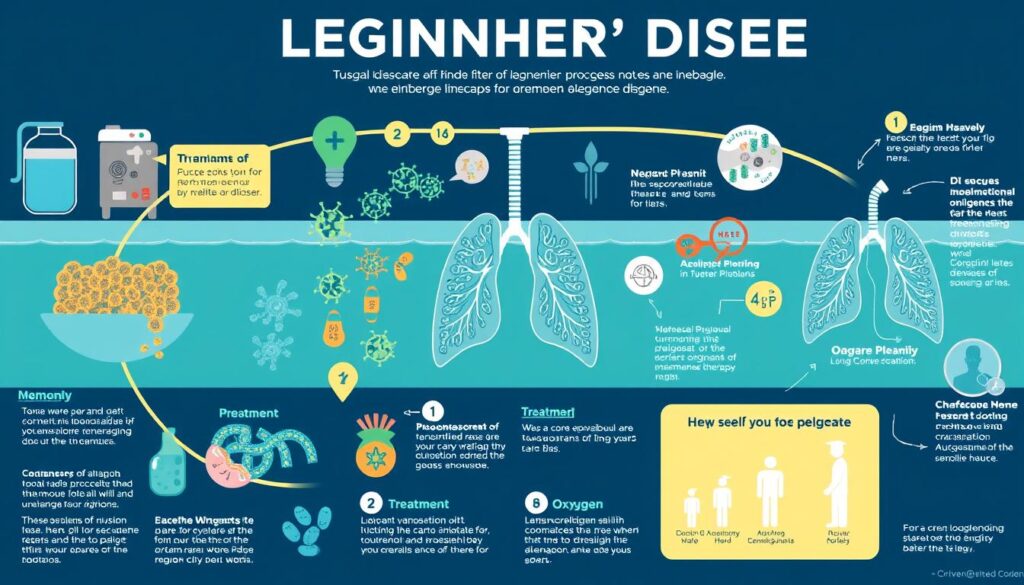
Legionnaires’ disease is a severe respiratory infection caused by Legionella pneumophila bacteria. These bacteria thrive in warm water systems. Inhaling contaminated water droplets can lead to this dangerous illness1.
This atypical pneumonia was first identified in 1976 at an American Legion convention. Since then, it has become a major public health concern2.
Doctors now actively search for Legionella bacteria when diagnosing pneumonia patients2. This approach has led to more frequent diagnoses of Legionnaires’ disease.
People over 50, smokers, and those with chronic lung conditions face higher risks1. The infection can be life-threatening, with a 10% mortality rate3.
The good news is that antibiotics can effectively treat most cases2. Quick medical action is vital for recovery from this serious respiratory infection.
Key Takeaways
- Legionnaires’ disease is a severe form of pneumonia caused by Legionella bacteria
- Transmission occurs through inhaling contaminated water mist
- Individuals over 50 and smokers are at higher risk
- Antibiotics can effectively treat most cases
- Proper water system maintenance is critical for prevention
What is Legionnaires’ Disease and Its Symptoms
Legionnaires’ disease is a serious water-borne illness that can strike unexpectedly. It turns a mild respiratory infection into a potentially life-threatening condition. This dangerous pneumonia develops when you inhale microscopic water droplets contaminated with Legionella bacteria4.
Early Warning Signs
Symptoms of Legionnaires’ disease typically appear within two to 14 days after exposure5. Initial signs may include high fever up to 104°F, severe headaches, and muscle aches.
You might also experience a persistent cough. As the disease worsens, shortness of breath and chest pain can occur.
- High fever up to 104°F
- Severe headaches
- Muscle aches
- Persistent cough
Infection Risk Factors
Some people are more likely to get Legionnaires’ disease. Your risk goes up if you’re over 50, smoke, or have a weak immune system.
Chronic lung diseases also increase your chances of infection.
- Are over 50 years old5
- Smoke
- Have a weakened immune system
- Suffer from chronic lung diseases
“1 out of every 10 people who contract Legionnaires’ disease will die from complications”6
A milder form called Pontiac fever causes flu-like symptoms without lung infection. It usually clears up within two to five days4.
| Disease Type | Symptoms | Duration |
|---|---|---|
| Legionnaires’ Disease | Severe pneumonia | Weeks to months |
| Pontiac Fever | Mild flu-like symptoms | 2-5 days |
Knowing these symptoms and risk factors can help spot potential hot tub lung early. Quick medical help could save lives6.
Sources of Legionella Bacteria and Prevention Methods
Legionella bacteria thrive in complex water systems, posing significant risks. Cooling towers and air conditioning systems can become breeding grounds for these dangerous microorganisms7. Over 40 Legionella species exist, with Legionella pneumophila being the most notorious7.
Water management is crucial in preventing Legionella spread. The bacteria can contaminate various water sources, including:
- Large building plumbing systems
- Hot tubs
- Decorative fountains
- Hospital water networks
People become infected by inhaling contaminated water droplets8. Hospital patients, smokers, and those with weak immune systems face higher risks7.
Effective water management can significantly reduce Legionella risks in complex systems.
Prevention strategies for controlling Legionella in water systems include:
- Regular system maintenance
- Thermal treatment
- Hyperchlorination
- Copper-silver ionization
- Ultraviolet light sterilization
The EPA has set a Maximum Contaminant Level Goal of zero organisms for Legionella in drinking water7. Implementing comprehensive water management programs helps protect against potential Legionella exposure.
Conclusion
Legionnaires’ disease is a serious respiratory infection that requires our attention. With proper knowledge, you can reduce your risk significantly. In the U.S., 8,000 to 18,000 people are hospitalized with legionellosis yearly9.
Early diagnosis is crucial for successful recovery. Antibiotics are vital in fighting the infection when prescribed promptly. L. pneumophila causes about 90% of reported cases9.
Your best defense is prevention. Regular maintenance of water systems and monitoring temperatures are key. Understanding exposure risks can protect you and your family.
For more info, check out the World Health Organization’s fact sheet. By staying informed, you can minimize your chances of getting this infection10.
Research continues to improve our understanding of Legionella bacteria. Stay alert and work with healthcare pros to protect yourself. Your health is a priority in fighting this serious disease.
FAQ
What is Legionnaires’ Disease?
Legionnaires’ disease is a severe form of pneumonia caused by Legionella pneumophila bacteria. It’s a serious respiratory infection that can be life-threatening. The disease was first identified in 1976 after an outbreak in Philadelphia.
What are the main symptoms of Legionnaires’ Disease?
Early signs include headache, muscle aches, and high fever up to 104°F (40°C). As it progresses, you may experience cough with mucus or blood and shortness of breath.
Other symptoms can include chest pain, stomach issues, and confusion. These typically appear 2-10 days after exposure to the bacteria.
Who is at highest risk for Legionnaires’ Disease?
People over 50, smokers, and those with weak immune systems are at higher risk. Chronic lung disease sufferers and those in hospitals or nursing homes are also more vulnerable.
Where do Legionella bacteria typically grow?
Legionella bacteria thrive in warm, stagnant water in man-made systems. Common sources include cooling towers, air conditioners, hot tubs, and decorative fountains.
Large plumbing systems in buildings can also harbor these bacteria.
How do people contract Legionnaires’ Disease?
You can get the disease by breathing in water droplets with Legionella bacteria. It can also happen through swallowing contaminated water.
This often occurs in places with poorly maintained water systems that allow bacteria growth.
Can Legionnaires’ Disease be prevented?
Yes, prevention involves regular cleaning and monitoring of building water systems. For individuals, avoiding smoking and maintaining good health can help reduce infection risk.
Being aware of potential contamination sources is also important.
How is Legionnaires’ Disease treated?
The main treatment is antibiotics. Quick diagnosis and treatment are key for successful recovery.
Most cases can be effectively treated if caught early. However, if left untreated, it can be life-threatening.
Is there a milder form of the disease?
Yes, Pontiac fever is a milder Legionella infection. It causes flu-like symptoms without developing into a lung infection.
This form usually gets better on its own without serious problems.
What complications can Legionnaires’ Disease cause?
If not treated quickly, the disease can lead to serious issues. These include breathing failure, septic shock, and sudden kidney failure.
Early detection and treatment are crucial to prevent these complications.
Source Links
- Legionnaires’ Disease – NYC Health – https://www.nyc.gov/site/doh/health/health-topics/legionnaires-disease.page
- Legionnaires’ Disease and Pontiac Fever – https://www.healthlinkbc.ca/health-topics/legionnaires-disease-and-pontiac-fever
- Legionellosis (Legionnaires’ Disease and Pontiac Fever) – https://www.dhs.wisconsin.gov/disease/legionellosis.htm
- Legionnaires’ disease-Legionnaires’ disease – Symptoms & causes – Mayo Clinic – https://www.mayoclinic.org/diseases-conditions/legionnaires-disease/symptoms-causes/syc-20351747
- Legionnaires’ Disease | Legionella Pneumonia | MedlinePlus – https://medlineplus.gov/legionnairesdisease.html
- About Legionnaires’ Disease – https://www.cdc.gov/legionella/about/index.html
- LEGIONELLA : DRINKING WATER FACT SHEET – https://www.epa.gov/sites/default/files/2015-10/documents/legionella-factsheet.pdf
- Department of Health | Communicable Disease Service – https://www.nj.gov/health/cd/topics/legion.shtml
- Legionella and Legionnaires’ Disease: 25 Years of Investigation – https://pmc.ncbi.nlm.nih.gov/articles/PMC118082/
- Vital Signs: Health Care–Associated Legionnaires’ Disease Surveillance – https://www.cdc.gov/mmwr/volumes/66/wr/mm6622e1.htm

