
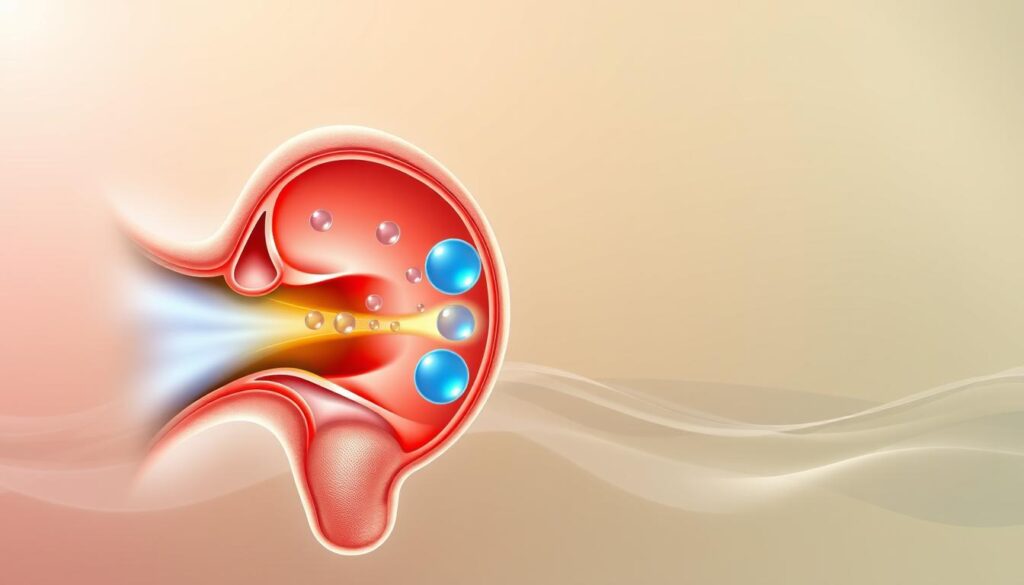
Meniere’s disease is a tricky inner ear problem that messes with balance and hearing. It causes sudden dizzy spells that can really throw off your day. This condition mostly affects people between 20 and 60, with women slightly more at risk123.
Your inner ear helps you stay balanced. When Meniere’s hits, it can cause major issues. Symptoms include vertigo, hearing loss, ringing ears, and a full feeling in the ear2. These episodes usually last 2 to 3 hours1.
Over time, Meniere’s can affect one or both ears. Knowing about this disorder helps manage its effects. The exact cause isn’t known, but it’s likely linked to inner ear fluid problems1.
Your genes and family history might make you more likely to get Meniere’s13. If you have symptoms, it’s important to see a doctor for proper care.
Key Takeaways
- Meniere’s disease primarily affects people aged 20-60
- Symptoms include vertigo, hearing loss, and ear pressure
- The condition can impact one or both ears
- Genetic and environmental factors may influence development
- Professional medical guidance is crucial for management
What is Meniere’s Disease and Its Symptoms?
Meniere’s disease is a complex inner ear disorder that affects hearing and balance. It creates unexpected challenges for those diagnosed, impacting their overall quality of life4.
Understanding the Condition
Meniere’s disease mainly affects adults between 40 and 60 years old. It targets the inner ear, causing disruptions in endolymph fluid balance4.
These disruptions lead to various uncomfortable symptoms. Younger individuals rarely experience this condition.
Common Symptoms You May Experience
- Sudden vertigo attacks lasting 20 minutes to 12 hours4
- Fluctuating hearing loss in low to medium frequency sounds5
- Persistent tinnitus (ringing or buzzing in the ear)
- Feeling of fullness or pressure in the affected ear
- Balance issues and potential nausea5
Impact on Daily Life
Meniere’s disease can create significant challenges due to its unpredictable nature. You might experience sudden dizziness that interrupts work, social interactions, and daily activities.
In some cases, about 15-25% of patients may develop symptoms in both ears4.
“Living with Meniere’s disease requires adaptation and understanding of your unique symptoms.”
| Symptom | Frequency | Duration |
|---|---|---|
| Vertigo | Unpredictable | 20 min – 12 hours |
| Hearing Loss | Progressive | Varies |
| Tinnitus | Intermittent | Can become constant |
About 615,000 people in the United States live with Meniere’s disease. Around 45,500 new cases are diagnosed annually4.
Understanding your symptoms is crucial for effective management. With proper care, you can learn to navigate this challenging condition.
Causes of Meniere’s Disease
Meniere’s disease has complex origins that affect your body’s balance and hearing. Understanding these causes can help you manage this tricky condition better. The vestibular system plays a key role in this process.
Genetic Predisposition
Your family history might reveal your risk for Meniere’s disease. People with affected relatives are more likely to develop it6. Genetic factors can lead to inner ear problems7.
Environmental Triggers
Several external factors can worsen Meniere’s disease symptoms:
Inner Ear Fluid Imbalance
The main cause of Meniere’s disease is endolymphatic hydrops. This means too much fluid builds up in your inner ear. This extra fluid messes up your hearing and balance signals7.
The complexity of Meniere’s disease stems from its multifaceted origins, involving genetic, environmental, and physiological factors.
Meniere’s disease usually affects people between 40 and 60 years old6. Women have a slightly higher risk6. There’s no cure yet7, but knowing these causes can help you manage it better.
| Risk Factors | Potential Impact |
|---|---|
| Genetic Predisposition | Increased likelihood of developing Meniere’s |
| Viral Infections | Potential trigger for symptom onset |
| Fluid Imbalance | Disruption of vestibular system functioning |
Diagnosing Meniere’s Disease
Diagnosing Meniere’s disease demands a thorough evaluation. Healthcare providers use various methods to understand this complex inner ear condition. They rely on comprehensive medical assessments for accurate diagnosis.
Medical History and Physical Examination
Your doctor will review your medical history in detail. They’ll focus on your vertigo episodes, noting their frequency, duration, and intensity8. Diagnostic criteria typically require two or more spontaneous vertigo attacks.
These attacks should last between 20 minutes to 12 hours8. Your doctor will use this information to guide their diagnosis.
Audiometric Testing Procedures
Audiometry is vital in diagnosing Meniere’s disease. Your healthcare professional will conduct hearing tests to document any loss. They focus on low to medium frequencies8.
These tests help track hearing fluctuations and sound sensitivity changes. They also reveal potential inner ear damage.
- Hearing fluctuations
- Sound sensitivity changes
- Potential inner ear damage
Imaging Tests for Precise Diagnosis
Your doctor might recommend MRI or CT scans to rule out other conditions. These tools provide detailed views of your inner ear structure. They help identify abnormalities that could cause your symptoms.
| Diagnostic Test | Purpose |
|---|---|
| Electronystagmography (ENG) | Measure balance and eye movement |
| Vestibular Evoked Myogenic Potentials (VEMP) | Assess muscle reactions to sound |
Accurate diagnosis requires multiple assessments over time due to the fluctuating nature of Meniere’s disease symptoms.
About 4 out of 5 people find non-surgical treatments control their symptoms effectively9. Your medical team will create a personalized plan for you. They’ll work closely with you throughout the process.
Treatment Options for Meniere’s Disease
Managing Meniere’s disease needs a tailored approach for your symptoms and lifestyle. Most people find non-surgical methods work well. Your doctor will likely suggest a plan just for you.
This plan may include lifestyle changes, medications, and possibly surgery. Diuretics can help reduce inner ear fluid pressure. Vestibular rehab can boost balance and lessen dizziness.
Gentamicin injections might help with severe vertigo attacks. But they can risk your hearing10. Doctors consider symptom duration and vertigo severity before recommending surgery10.
Surgery is an option for more severe cases. These procedures aim to fix high fluid pressure or balance issues10. Intratympanic steroids offer targeted treatment with fewer side effects.
They deliver more medicine than oral drugs10. Almost all Meniere’s vertigo attacks can be controlled. However, a complete cure isn’t available yet11.
Your Meniere’s journey is unique, and support matters. Join support groups and stay up-to-date on new research. Work closely with your doctors to find the best way to manage your condition.
FAQ
What exactly is Meniere’s disease?
Meniere’s disease is a chronic inner ear disorder affecting balance and hearing. It usually impacts people aged 40-60, causing vertigo, hearing loss, tinnitus, and ear fullness. The condition typically affects one ear, but can occur in both.
What are the main symptoms of Meniere’s disease?
Key symptoms include sudden vertigo attacks lasting 20 minutes to 12 hours. Progressive hearing loss, tinnitus, and ear pressure are also common. These symptoms can disrupt daily life and increase fall risks.
What causes Meniere’s disease?
The exact cause is unknown, but multiple factors are believed to contribute. These include genetic predisposition, environmental triggers, and inner ear fluid imbalance. Other potential factors are constricted blood vessels, viral infections, and autoimmune reactions.
How is Meniere’s disease diagnosed?
Diagnosis involves a thorough medical history, physical exam, and audiometric testing. Doctors look for specific criteria, including vertigo episodes and documented hearing loss. Imaging tests may be used to rule out other conditions.
What treatment options are available?
Treatment aims to manage symptoms and improve quality of life. Options include lifestyle changes, medications, and stress management. Severe cases may require intratympanic injections, vestibular rehabilitation, or surgery. Hearing aids might be recommended for hearing loss.
Can Meniere’s disease be cured?
There’s no complete cure for Meniere’s disease. However, various treatments can help manage symptoms effectively. The goal is to reduce vertigo attacks and minimize hearing loss.
How does Meniere’s disease impact daily life?
Meniere’s disease can cause significant stress and anxiety due to its unpredictable nature. Sudden vertigo attacks make work and social interactions challenging. Many patients face limitations in driving and activities requiring balance.
Are there any lifestyle changes that can help manage Meniere’s disease?
Yes, several lifestyle changes can help manage symptoms. These include maintaining a low-salt diet and avoiding caffeine and alcohol. Managing stress, getting adequate sleep, and staying hydrated are also beneficial.
Regular exercise and vestibular rehabilitation can improve balance and reduce symptom severity. These changes can significantly impact your overall well-being and symptom management.
Source Links
- Ménière’s disease – https://www.nhsinform.scot/illnesses-and-conditions/ears-nose-and-throat/menieres-disease/
- Meniere’s Disease Treatment NYC | Mount Sinai – https://www.mountsinai.org/locations/ear-institute/conditions/vertigo-balance-disorders/menieres-disease
- Meniere’s Disease – https://www.webmd.com/brain/what-is-meniere-disease
- What Is Ménière’s Disease? — Diagnosis and Treatment – https://www.nidcd.nih.gov/health/menieres-disease
- Ménière’s disease – https://www.nhs.uk/conditions/menieres-disease/
- Meniere’s disease – Symptoms and causes – https://www.mayoclinic.org/diseases-conditions/menieres-disease/symptoms-causes/syc-20374910
- Meniere Disease – https://www.hopkinsmedicine.org/health/conditions-and-diseases/menieres-disease
- Meniere’s disease – Diagnosis and treatment – https://www.mayoclinic.org/diseases-conditions/menieres-disease/diagnosis-treatment/drc-20374916
- What is Ménière’s disease / syndrome? – | Ménière’s Society – https://www.menieres.org.uk/information-and-support/symptoms-and-conditions/menieres-disease
- Surgery – | Ménière’s Society – https://www.menieres.org.uk/information-and-support/treatment-and-management/surgery
- Meniere’s Disease Treatment Novi | ENT Specialists – https://www.entspecialistspc.com/dizziness-balance-conditions/menieres-disease/

