
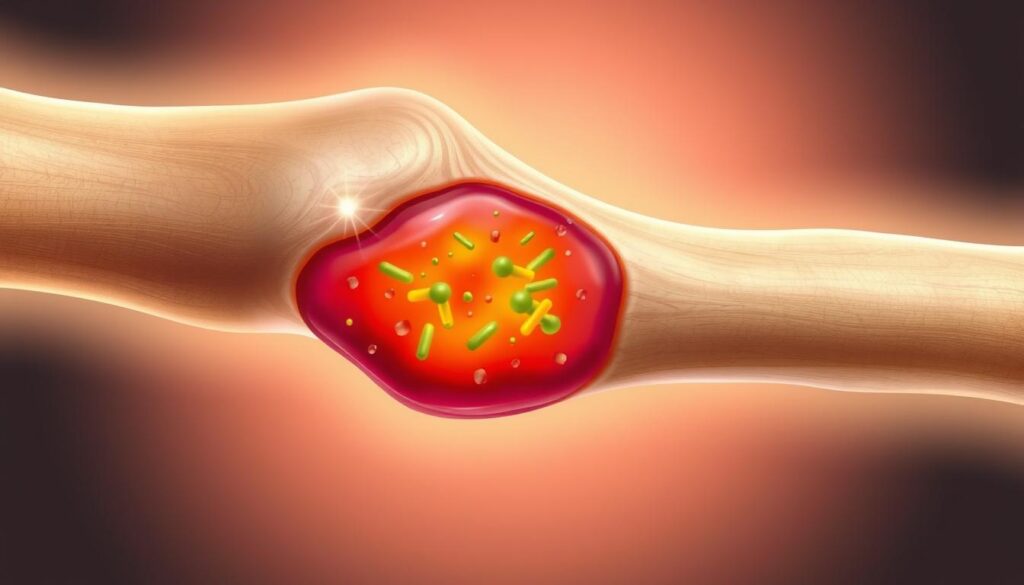
Osteomyelitis is a severe bone infection that can significantly impact your health. It occurs when bacteria invade bone marrow, potentially causing permanent damage. Early detection and effective management are crucial for treating this condition1.
This infection affects two to five people per 10,000 in the U.S. annually. Preschool-age children, elderly individuals, and those with diabetes are more vulnerable1.
Bones can become infected through bloodstream transmission, nearby infected tissue, or direct injury. Staph bacteria often enter through wounds, surgical sites, or medical procedures1.
Early symptom recognition can greatly improve treatment outcomes. Be alert for bone pain, fever, joint swelling, and unusual warmth in affected areas1.
Key Takeaways
- Osteomyelitis is a serious bone infection affecting multiple age groups
- Staph bacteria are the primary cause of bone infections
- Early detection is critical for effective treatment
- Diabetes and weakened immune systems increase infection risk
- Multiple diagnostic tests can confirm the presence of osteomyelitis
What is Osteomyelitis and Why Should You Care?
Bone inflammation can be a serious health concern. Osteomyelitis is a complex bone infection that affects overall health. It often goes unnoticed until it becomes critical.
Osteomyelitis causes bone swelling and infection in people of all ages. It happens when bacteria invade bone tissue, causing significant damage2. Learning about this condition is vital for your health.
Understanding the Basics
The infection in osteomyelitis can spread through several pathways:
- Direct invasion through an open wound
- Blood-borne transmission
- Spreading from nearby infected tissues
Early Symptoms to Watch
Recognizing early symptoms is crucial for preventing serious complications. Be alert to these signs:
- Persistent bone pain
- Unexplained fever
- Swelling and redness around the affected area
- Difficulty moving joints
Some people are at higher risk of developing osteomyelitis. Individuals with diabetes, compromised immune systems, or recent bone injuries are particularly vulnerable3.
“Early detection can make the difference between a manageable condition and a serious health challenge.”
Risk Factors and Prevalence
| Risk Group | Likelihood of Infection |
|---|---|
| Diabetic Patients | High Risk |
| Children | Moderate Risk |
| Elderly | Increased Vulnerability |
Staphylococcus aureus is the main bacteria causing bone infections4. Quick medical care within 3-5 days of noticing symptoms improves treatment results4.
Causes of Osteomyelitis You Should Know
Osteomyelitis is a serious bone infection. Knowing its causes can help protect you and your loved ones. Bones face various threats that can lead to dangerous conditions.
Bacterial Infections and Their Impact
Staphylococcus aureus is the main cause of most bone infections56. These bacteria can enter your body through different ways. This creates a big risk for osteomyelitis5.
Germs can get into bones through three main routes:
- Bloodstream infections
- Direct injury or wound
- Surgical procedures
Critical Risk Factors
Some health issues can make you more likely to get osteomyelitis6. These conditions weaken your immune system. People with these problems are at higher risk:
- Diabetes
- Sickle cell disease
- HIV
- Chronic kidney disease
Bone Trauma and Infection Risks
Injuries can let bacteria into your bones. Breaks, deep cuts, and surgeries can expose bones to infections7. Chronic health conditions and lifestyle choices like smoking can make you more likely to get osteomyelitis.
“Prevention is always better than cure when it comes to bone health.” – Medical Experts
| Risk Category | Infection Potential |
|---|---|
| Chronic Diseases | High Risk |
| Recent Surgeries | Moderate Risk |
| Bone Trauma | Elevated Risk |
Knowing these causes and risks helps you protect your bone health. You can take steps to lower your chances of getting a bloodstream infection. This can help prevent osteomyelitis56.
Treatment Options Available for Osteomyelitis
Osteomyelitis treatment involves a comprehensive approach to fight infection and prevent complications. The main goal is to eliminate bacteria causing bone infection through carefully chosen medical interventions8.
Antibiotic Therapy
Your doctor will likely prescribe intravenous antibiotics to fight the infection-causing pathogens. Staphylococcus aureus is the most common bacterial cause in both adults and children8.
These powerful medications go directly into your bloodstream. This ensures rapid and targeted treatment of the infection9.
Surgical Interventions
Severe cases may require surgical debridement to remove infected bone and tissue. A bone biopsy helps doctors identify the infectious agents and plan effective treatment8.
Your medical team might drain infectious fluid and restore blood flow. They may also use bone grafts to support healing9.
Home Care and Support
Long-term care is vital in managing osteomyelitis. You’ll need to follow your doctor’s advice on pain management and movement restrictions. Continued antibiotic treatment may also be necessary8.
Regular check-ups with imaging tests and blood work help track your recovery. These tests also prevent potential complications from arising8.
FAQ
What exactly is osteomyelitis?
Osteomyelitis is a serious bone infection. It occurs when bacteria or fungi infect the bone marrow. The infection can affect one or more parts of a bone.
It can happen at any age but is more common in young children. Germs can spread through the bloodstream, nearby infected tissue, or direct injury.
What are the most common symptoms of osteomyelitis?
Key symptoms include fever, pain, and tenderness in the affected area. Swelling, redness, and warmth are also common signs. Patients may have trouble moving joints or bearing weight.
Early detection is crucial to prevent serious complications. If left untreated, it can lead to bone death or chronic infection.
What causes osteomyelitis?
Staphylococcus aureus is the most common cause of osteomyelitis. Infections can spread through blood, nearby tissue, or direct entry through injuries or surgeries.
Risk factors include conditions that weaken the immune system. These include diabetes, sickle cell disease, HIV, and intravenous drug use.
How is osteomyelitis diagnosed?
Diagnosis involves physical exams, medical history reviews, and blood tests. Imaging studies like X-rays, MRI, or CT scans are also used.
In some cases, doctors perform a bone biopsy. This helps identify the specific organism causing the infection.
What are the treatment options for osteomyelitis?
Treatment usually combines intravenous antibiotics for several weeks and possible surgery. Surgical procedures may include draining infectious fluid or removing damaged tissue and bone.
Home care involves pain management and restricted movement. Patients must continue antibiotic treatment as prescribed by their doctor.
Who is at highest risk for developing osteomyelitis?
People with weakened immune systems face the highest risk. This includes those with diabetes, sickle cell disease, or HIV.
Others at risk include individuals with chronic health conditions or bone trauma. Smokers and those with open wounds or recent surgeries are also vulnerable.
Can osteomyelitis be prevented?
While not always preventable, you can reduce your risk. Practice good wound care and manage underlying health conditions.
Maintain strong immune health and avoid smoking. Seek immediate medical attention for deep or infected wounds. Proper hygiene and prompt treatment of infections are key.
Source Links
- Osteomyelitis Symptoms and Treatment | UPMC Infectious Disease – https://www.upmc.com/services/division-infectious-diseases/conditions/osteomyelitis
- Osteomyelitis – https://www.cooperhealth.org/services/osteomyelitis
- Osteomyelitis – https://www.nhs.uk/conditions/osteomyelitis/
- Osteomyelitis – https://patient.info/bones-joints-muscles/osteomyelitis-leaflet
- Osteomyelitis – Symptoms and causes – https://www.mayoclinic.org/diseases-conditions/osteomyelitis/symptoms-causes/syc-20375913
- Osteomyelitis – https://www.hopkinsmedicine.org/health/conditions-and-diseases/osteomyelitis
- Osteomyelitis – https://www.healthdirect.gov.au/osteomyelitis
- Diagnosis and Management of Osteomyelitis – https://www.aafp.org/pubs/afp/issues/2011/1101/p1027.html
- Osteomyelitis: Diagnosis and Treatment – https://www.aafp.org/pubs/afp/issues/2021/1000/p395.html

