
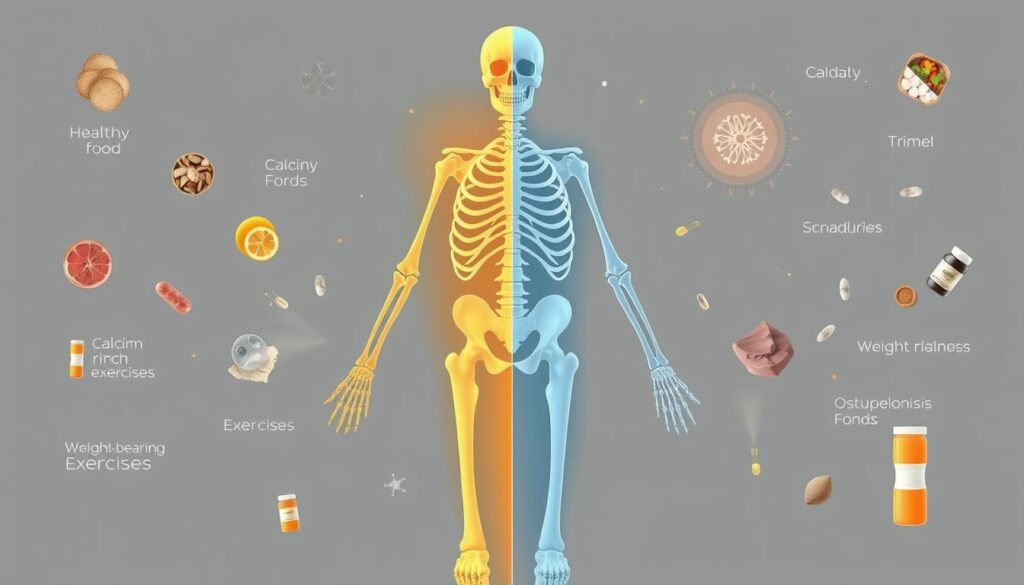
Bone health is vital for aging well. Osteoporosis weakens bones silently, making them fragile and prone to fractures1. It affects over half of Americans aged 50 and older1.
Bone density changes naturally with age. Adults lose 1-3% of bone mass yearly after 501. This decline can lead to osteopenia or severe osteoporosis1.
Knowing your risk is important. Both men and women face bone loss. However, women face greater challenges2.
One in five women over 50 develop osteoporosis. For men, it’s one in 202.
Key Takeaways
- Osteoporosis is a widespread condition affecting millions of Americans
- Bone loss begins around age 50 and accelerates without intervention
- Women are at higher risk of developing bone density issues
- Early detection can prevent serious fractures
- Lifestyle and nutrition play critical roles in bone health
What is Osteoporosis and Who is Affected?
Osteoporosis is a silent bone disease affecting millions of Americans. It weakens bones, making them prone to fractures. Learning about it can help protect your skeletal health.
About 54 million Americans have osteoporosis or low bone mass. This puts them at risk for health problems. Women make up 80% of these cases, totaling over 8 million34.
Defining Osteoporosis
Osteoporosis reduces bone mineral density, making bones fragile. It’s called a silent disease because symptoms aren’t noticeable until a fracture occurs3.
Common Risk Factors
- Age over 50
- Low calcium intake
- Insufficient vitamin D levels
- Smoking
- Excessive alcohol consumption
- Lack of weight-bearing exercise
Who is Most at Risk?
Osteoporosis can affect anyone, but some groups face higher risks:
- Postmenopausal women4
- Non-Hispanic white and Asian women4
- Individuals with autoimmune disorders
- People with a family history of bone density issues
“Understanding your risk is the first step in preventing osteoporosis.” – Bone Health Expert
| Demographic | Osteoporosis Risk |
|---|---|
| Women over 65 | 1 in 4 affected4 |
| Men over 50 | Up to 1 in 4 at risk of fracture3 |
Experts suggest bone density tests for those with multiple risk factors. This helps catch issues early and prevent complications.
Recognizing the Signs of Osteoporosis
Osteoporosis often progresses without noticeable symptoms. Knowing the early warning signs can help protect your bone health. This knowledge can prevent potential complications.
Early Warning Signs of Bone Loss
Your body gives subtle hints about bone density changes. Watch for these key indicators:
- Gradual loss of height
- Development of a stooped posture
- Unexplained back pain
- Increased fracture risk
How Osteoporosis Can Go Undetected
Bone loss typically occurs silently, with no immediate symptoms. One in two women over 50 will have an osteoporotic fracture5.
The condition progresses gradually, making early detection challenging6. Regular check-ups are crucial for early diagnosis.
Understanding Fractures and Their Implications
Fractures often serve as the first sign of osteoporosis. These can greatly impact your mobility and independence6.
About a third of women and a fifth of men over 50 will have osteoporosis-related fractures7. These typically occur in the spine, hip, or wrist.
“Prevention is always better than cure when it comes to bone health.”
Doctors recommend bone density tests to assess fracture risk. Medications like bisphosphonates can help prevent further bone loss. These treatments can also reduce potential complications5.
| Age Group | Fracture Risk | Recommended Action |
|---|---|---|
| 50-65 | Moderate | Regular screenings |
| 65+ | High | Comprehensive bone health assessment |
Be proactive about your bone health. Consult with healthcare professionals regularly. Schedule bone density screenings to monitor your bone health.
Proven Prevention Tips for Osteoporosis
Protect your bones with a smart mix of nutrition, exercise, and healthy habits. Effective prevention starts with understanding how to support your skeleton. Your bones need constant care to stay strong and resilient.
Weight-bearing exercise is crucial for bone health. Adults should do at least 2.5 hours of moderate aerobic activity weekly8. Strength training helps build new bone tissue and stronger muscles9.
Try walking, dancing, or resistance training for strong, flexible bones. These activities can greatly reduce your risk of osteoporosis.
Nutrition plays a vital role in maintaining bone density. Aim for 1,000 milligrams of calcium daily9. Men over 70 and women over 50 may need more.
Vitamin D is essential too, as it helps your body absorb calcium9. Practice balance exercises like Tai Chi to prevent falls and fractures.
Your doctor might suggest hormone therapy for bone health, especially for post-menopausal women10. Regular bone density screenings can catch issues early.
Lifestyle choices matter. Limit alcohol and avoid smoking to protect your bones9. These simple steps can make a big difference.
FAQ
What exactly is osteoporosis?
Osteoporosis weakens bones by decreasing their density and increasing porosity. This condition raises the risk of fractures. It’s called a “silent disease” because symptoms often go unnoticed until a bone breaks.
Who is most at risk for developing osteoporosis?
People over 50, women, and those post-menopause face higher risks. Small-framed individuals and those of Caucasian or Asian descent are also more vulnerable.
Other risk factors include family history, low body weight, and smoking. Excessive alcohol use and certain medical conditions like hypogonadism can also increase risk.
How can I prevent osteoporosis?
Eat calcium-rich foods, aiming for 1,200 mg daily. Ensure you get enough vitamin D and do weight-bearing exercises like walking or dancing.
Quit smoking and limit alcohol intake. Regular bone density screenings are also crucial for prevention.
What are the early warning signs of bone loss?
Early signs include gradual height loss and developing a stooped posture. Unexplained back pain and increased fracture risk are also warning signs.
However, many people don’t notice symptoms until a significant bone break occurs.
How often should I get a bone density test?
Women over 65 and men over 70 should get regular bone mineral density tests. Those with risk factors may need earlier and more frequent testing.
Can exercise really help prevent osteoporosis?
Yes, exercise is crucial for maintaining bone density. Weight-bearing and muscle-strengthening activities are especially beneficial.
Aim for 30-60 minutes of daily exercise. Try walking, jogging, dancing, or Tai Chi to improve balance and prevent falls.
Are there medical treatments for osteoporosis?
Yes, treatments include bisphosphonates to prevent bone loss and hormone therapy. Some medications can reduce fracture risk by 5-10%.
Your healthcare provider can recommend the best treatment based on your individual health profile.
Does diet play a role in bone health?
Diet is vital for bone health. Eat foods rich in calcium and vitamin D, like dairy, leafy greens, and fish.
Proper nutrition helps maintain bone mineral density and supports overall bone strength.
Source Links
- Osteoporosis – Symptoms and causes – https://www.mayoclinic.org/diseases-conditions/osteoporosis/symptoms-causes/syc-20351968
- Osteoporosis – https://www.nia.nih.gov/health/osteoporosis/osteoporosis
- What is osteoporosis and what causes it? – https://www.bonehealthandosteoporosis.org/patients/what-is-osteoporosis/
- Osteoporosis – https://www.fda.gov/consumers/womens-health-topics/osteoporosis
- How to Spot the Signs of Osteoporosis – https://www.houstonmethodist.org/blog/articles/2024/jan/what-are-the-signs-of-osteoporosis-how-is-it-diagnosed/
- Symptoms of osteoporosis: Early and late stage signs – https://www.medicalnewstoday.com/articles/symptoms-of-osteoporosis
- What are the early signs of osteoporosis? – https://valleyregionalmedicalcenter.com/blog/entry/what-are-the-early-signs-of-osteoporosis
- Osteoporosis – Prevention – https://www.nhs.uk/conditions/osteoporosis/prevention/
- Osteoporosis Prevention – https://www.webmd.com/osteoporosis/osteoporosis-prevention
- Patient education: Osteoporosis prevention and treatment (Beyond the Basics) – https://www.uptodate.com/contents/osteoporosis-prevention-and-treatment-beyond-the-basics/print

