
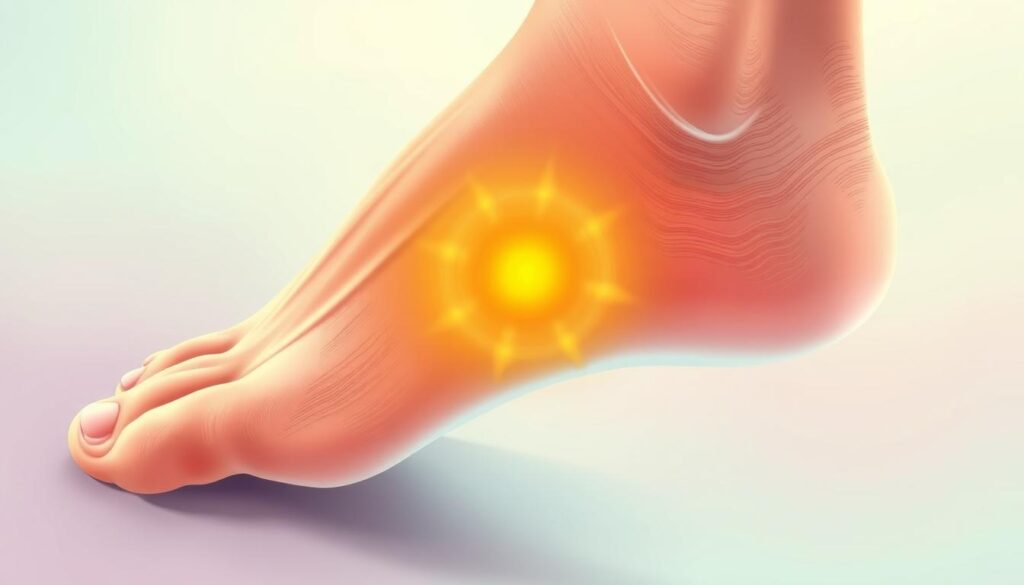
Heel pain can turn your day upside down. Plantar fasciitis often causes this discomfort. It affects many people, regardless of their activity level1.
This condition inflames the tissue connecting your heel to your toes2. Your foot’s complex structure makes it prone to stress and strain. Daily habits and activities can lead to plantar fasciitis1.
Changes in activity, walking surfaces, shoes, or weight can trigger pain1. Plantar fasciitis pain usually builds slowly, focusing near the heel. It’s often worst in the morning or after resting1.
Doctors can tell plantar fasciitis from other heel issues. They do this through careful exams and patient history1.
Key Takeaways
- Plantar fasciitis is a common cause of heel pain
- Foot structure and activity levels impact condition development
- Morning pain is a typical characteristic of plantar fasciitis
- Multiple factors contribute to foot arch pain
- Professional diagnosis helps differentiate from other heel conditions
What is Plantar Fasciitis?
Foot pain can be tough, especially with plantar fasciitis. This common foot problem affects many people, causing discomfort and limiting movement. Let’s explore this condition and its effects.
Understanding the Basics
Plantar fasciitis is a painful foot issue. It involves inflammation of the plantar fascia, a tissue connecting your heel to toes3. This structure supports your arch and cushions impact when walking or running.
When irritated, it can cause intense heel spurs and foot arch pain. You might feel sharp pain near your heel.
Common Symptoms to Watch
- Sharp, stabbing pain near the heel4
- Intense discomfort first thing in the morning
- Pain that increases after long periods of rest
- Tenderness when pressing on the bottom of the foot
Who is Most at Risk?
Plantar fasciitis often starts around age 405. Some factors increase your risk:
- Being overweight or obese
- Having flat feet or high arches
- Working in jobs requiring prolonged standing
- Engaging in high-impact activities like running
Impact on Daily Life
This condition can disrupt your everyday activities. Simple movements can become painful. The good news is that most people find relief within 6 to 18 months with proper treatment3.
“Understanding your foot’s health is the first step towards recovery and pain-free movement.”
If you have ongoing foot arch pain or suspect heel spurs, see a doctor. They can offer personalized arch support and treatment options.
Causes of Plantar Fasciitis
Knowing why heel pain happens can help you fight plantar fasciitis. Several key factors play a role in this tough condition. Let’s explore what can lead to this painful problem.
Risk Factors That Increase Your Vulnerability
Your chance of getting plantar fasciitis depends on many things. People over 40 are more likely to face this issue6. Here are some specific risk factors:
- Being overweight, which increases strain on your heels6
- Having unusual foot mechanics like flat feet or high arches7
- Occupations requiring prolonged standing
- Tight or weak calf muscles6
Activities That Stress Your Plantar Fascia
Some physical activities can really hurt your feet. Long-distance running, dancing, and aerobics put a lot of stress on your foot tissues7. Working out on hard surfaces can make this worse6.
How Foot Structure Impacts Your Heel
Your foot shape plays a big role in plantar fasciitis. People with odd walking patterns may put too much weight on one part of their foot. This can lead to more tension in the plantar fascia when walking or running.
| Foot Characteristic | Plantar Fasciitis Risk |
|---|---|
| Flat Feet | High Risk |
| High Arches | Increased Vulnerability |
| Normal Arch | Lower Risk |
“Understanding your foot’s unique structure can be the first step in preventing chronic heel pain.”
Night splints and orthotics can help manage your foot shape. They can lower your risk of getting plantar fasciitis. Knowing these causes helps you take steps to protect your feet.
Treatment and Relief Options
Plantar fasciitis affects about 10% of people8. Most cases can be managed without surgery. Treatment usually starts with conservative approaches to reduce pain and promote healing.
Home remedies are key in managing plantar fasciitis. Stretching exercises can help ease discomfort. NSAIDs like ibuprofen can provide quick relief from inflammation8.
Physical therapy offers expert guidance. It teaches techniques to strengthen foot muscles and improve flexibility. These methods can be very effective in treating the condition.
Professional treatments offer more advanced solutions. Corticosteroid injections are typically given once or twice9. Shock wave therapy can help reduce pain and swelling9.
Only about 5% of patients need surgery8. It’s best to try conservative methods first. Consult a foot specialist for personalized advice.
Prevention is crucial in managing plantar fasciitis. Keep a healthy weight and wear supportive shoes. Regular stretching can greatly lower the risk of chronic heel pain.
FAQ
What exactly is plantar fasciitis?
Plantar fasciitis is an inflammation of the foot’s plantar fascia. This thick tissue band connects your heel to your toes. It causes sharp heel pain, often worst in the morning or after rest.
Who is most at risk for developing plantar fasciitis?
People aged 40-60 and long-distance runners are at higher risk. Those with flat feet, high arches, or obesity are also susceptible. Jobs requiring prolonged standing increase the risk too.
Runners, dancers, and individuals with certain foot mechanics are particularly vulnerable.
What are the most common symptoms of plantar fasciitis?
The main symptom is sharp heel pain, worst in the morning or after sitting. Pain may increase when climbing stairs or standing for long periods. It can vary throughout the day, sometimes easing with movement.
Can plantar fasciitis go away on its own?
Often, plantar fasciitis improves with rest, stretching, icing, and supportive footwear. If pain persists for weeks or impacts daily activities, consult a healthcare professional.
What treatments are available for plantar fasciitis?
Home remedies include stretching, icing, and over-the-counter anti-inflammatory drugs. Professional treatments may involve physical therapy, custom orthotics, and night splints. In rare cases, doctors might recommend steroid injections, shock wave therapy, or surgery.
How can I prevent plantar fasciitis?
Maintain a healthy weight and wear supportive shoes. Gradually increase exercise intensity and stretch regularly. Use proper techniques during athletic activities. Give your feet enough rest between high-impact activities.
Is plantar fasciitis the same as a heel spur?
No, plantar fasciitis and heel spurs are different conditions. Heel spurs are bony growths that may occur with plantar fasciitis. They don’t always cause pain and are often found accidentally during imaging tests.
How long does it typically take to recover from plantar fasciitis?
Recovery time varies based on severity and treatment approach. Most people improve within months with consistent conservative treatments. Some cases may take up to a year to fully resolve.
Follow your healthcare provider’s advice and be patient with your recovery.
Source Links
- Plantar Fasciitis – https://www.hopkinsmedicine.org/health/conditions-and-diseases/plantar-fasciitis
- Plantar Fasciitis – https://www.webmd.com/fitness-exercise/understanding-plantar-fasciitis-basics
- Plantar fasciitis – https://www.mountsinai.org/health-library/diseases-conditions/plantar-fasciitis
- Plantar heel pain and plantar fasciitis – https://pmc.ncbi.nlm.nih.gov/articles/PMC4661045/
- Plantar Fasciitis & Heel Pain Treatments | HSS Foot & Ankle – https://www.hss.edu/condition-list_plantar-fasciitis.asp
- Plantar fasciitis – https://versusarthritis.org/about-arthritis/conditions/plantar-fasciitis/
- Plantar fasciitis – https://www.healthdirect.gov.au/plantar-fasciitis
- Plantar fasciitis treatment at home: 6 remedies to try today | HCA Houston Healthcare – https://www.hcahoustonhealthcare.com/healthy-living/blog/plantar-fasciitis-treatment-at-home-6-remedies-to-try-today
- Nonsurgical Treatment for Plantar Fasciitis – https://nyulangone.org/conditions/plantar-fasciitis/treatments/nonsurgical-treatment-for-plantar-fasciitis

