
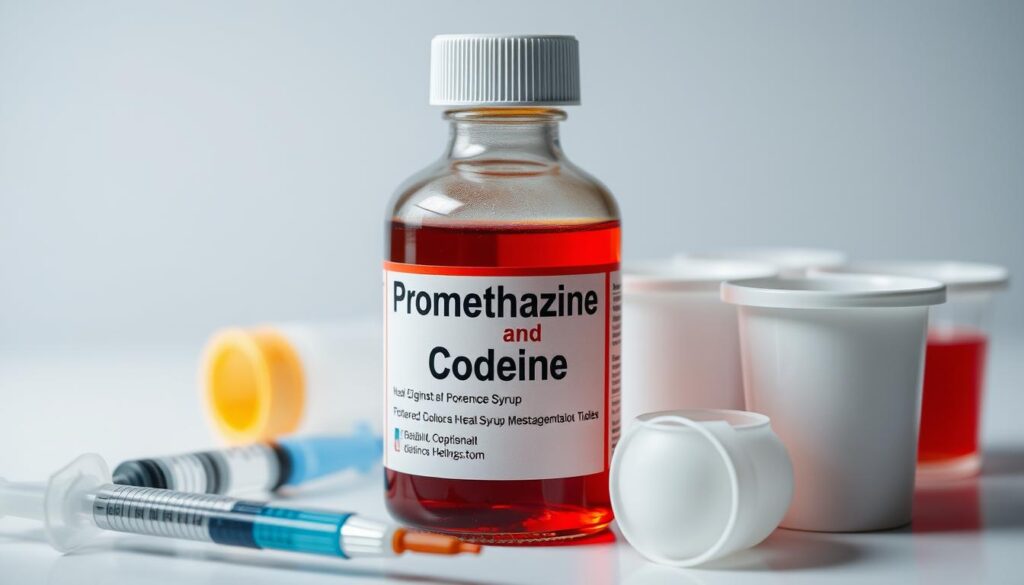
Prescription medications like cough syrup can be tricky to understand. Promethazine and codeine are a strong combo that needs careful medical oversight1. Doctors may prescribe this mix to treat allergies, colds, and pain1.
This medication has both risks and benefits to consider. Kids and some patient groups face strict limits. Children under 12 can’t use it2. Those under 16 need extra care with these products1.
The drug has many uses in medicine. It treats allergic reactions and motion sickness1. It also helps with cold symptoms and provides relief1.
Doctors use it as a sedative before surgery. It also controls nausea after operations1. Always follow your doctor’s advice when using this medication.
Key Takeaways
- Promethazine and codeine are prescription medications with specific medical uses
- Strict age restrictions apply for children and adolescents
- Multiple medical applications include allergy and cold symptom management
- Requires careful medical supervision due to potential side effects
- Not recommended for pediatric patients under certain age groups
What Are Promethazine and Codeine
Promethazine and codeine form a potent medication combo. This blend pairs an antihistamine with an opioid cough suppressant. It treats various health issues3.
Medical Classification and Properties
The medication has two main components. Each has unique medical properties:
- Promethazine: A phenothiazine antihistamine that blocks natural substances in the body
- Codeine: An opioid pain medication converted to morphine in the body
Primary Uses in Healthcare
Doctors prescribe this combo for several reasons:
- Treating cold and allergy symptoms
- Managing nausea and vomiting
- Providing pain relief
- Functioning as a sedative before and after surgical procedures3
Available Forms and Formulations
This medication comes in different forms. These options help meet varied medical needs4:
| Medication Form | Common Uses |
|---|---|
| Oral Syrup | Cough suppression |
| Tablets | Pain management |
| Suppositories | Alternative administration method |
Important: This medication is a controlled substance to prevent prescription drug abuse and potential opioid addiction4.
This drug combo works well but has risks. Misuse can lead to substance abuse problems. Always follow your doctor’s instructions when taking this medication5.
Safety Guidelines and Proper Usage
Your safety is crucial when using promethazine and codeine. These medications need careful handling to avoid risks linked to lean or purple drank. Following proper guidelines helps prevent dangerous complications.
Correct dosage is vital for these medications. Never take more than prescribed, as it can be harmful or deadly. Different age groups require specific precautions.
- Children under 12 should not receive these medications
- Caution is needed for individuals aged 12-18
- Pregnant women must consult their healthcare provider
Mixing these drugs with other substances raises risks. Avoid alcohol and street drugs while taking promethazine and codeine. Tell your doctor about all medications you’re taking to prevent interactions6.
“Responsible medication use begins with understanding potential risks and following professional medical guidance.”
Watch for withdrawal symptoms if you’ve used these medications long-term. Stopping suddenly can trigger complex body responses7. Work with your doctor to manage your medication safely.
Beware of recreational uses like lean or purple drank. These misuses of prescription drugs can cause severe health problems. Avoid them at all costs.
Risks and Side Effects of Promethazine and Codeine
Promethazine and codeine abuse can cause serious health issues. Knowing the risks helps prevent misuse and ensures safe medication use.
Understanding potential dangers is key for proper drug management. It’s crucial to be aware of possible complications.
Common Side Effects
This medication may cause several side effects. Keep an eye out for these common reactions:
Serious Adverse Reactions
Some reactions can be more severe. These need immediate medical attention:
Potential serious side effects include:
- Slowed or stopped breathing2
- Hallucinations2
- Seizures2
- Severe skin reactions1
- Uncontrollable shaking1
Drug Interactions and Contraindications
Certain drug combinations can increase opioid addiction risks. Watch out for interactions with:
- Caffeine potentially balancing sedation effects6
- Bupropion potentially decreasing codeine effectiveness6
- Amiodarone influencing codeine metabolism6
Always consult your healthcare provider about potential drug interactions and individual risk factors.
Note: Children under 16 should not use this medication due to significant health risks1.
Conclusion
Promethazine and codeine are powerful medications with both benefits and risks. Their misuse has become a serious health issue. Young people are especially at risk, with worrying trends emerging89.
Understanding these drugs is key to using them safely. About 66% of lean users are young people, mostly male. Out of 1,543 bad reactions, 557 were from misuse89.
Both doctors and patients need to be careful. Over half of misuse cases come from direct drug abuse8. Follow your doctor’s advice and talk openly about side effects.
Safe use of these drugs requires knowledge and care. Stay informed and cautious to prevent abuse. This way, these medicines can help without causing harm.
FAQ
What are promethazine and codeine used for?
Promethazine and codeine serve different purposes in medicine. Promethazine relieves allergy symptoms and prevents motion sickness. Codeine is an opioid that eases pain and suppresses coughs.
Together, they treat cough and cold symptoms. They also help with nausea and vomiting. Doctors often prescribe them as a combination medication.
What forms do promethazine and codeine come in?
These medications are available in tablets, syrups, and suppositories. The most common form is a prescription cough syrup. Always follow your doctor’s instructions when using these medications.
Are promethazine and codeine safe for children?
These medications are not safe for children under 12. For kids 12-18, they can cause serious side effects. These may include potentially fatal breathing problems.
Always talk to a doctor before giving these drugs to children. They’ll help determine if it’s safe and necessary.
What are the most common side effects?
Common side effects include drowsiness, dizziness, and dry mouth. You might also experience constipation and reduced coordination. If you notice severe or long-lasting side effects, call your doctor right away.
Can these medications be addictive?
Yes, promethazine and codeine can be habit-forming. They’re often misused in forms known as “lean” or “purple drank.” Only use these medications as prescribed to avoid developing dependence.
What interactions should I be aware of?
These drugs can interact with other medications that affect the central nervous system. They may also interact with certain antidepressants. Avoid alcohol while taking promethazine and codeine.
Always tell your doctor about all medications you’re taking. This helps prevent dangerous interactions.
Are there any serious risks associated with these medications?
Serious risks include slowed breathing, confusion, and hallucinations. Seizures and severe skin reactions can also occur. These risks are higher for children, elderly patients, and “ultra-rapid metabolizers” of codeine.
Can I take promethazine and codeine if I’m pregnant or breastfeeding?
If you’re pregnant, planning pregnancy, or breastfeeding, talk to your doctor first. They’ll evaluate the potential risks to your baby. Your doctor can help decide if these medications are safe for you.
Source Links
- Promethazine: MedlinePlus Drug Information – https://medlineplus.gov/druginfo/meds/a682284.html
- Promethazine and codeine (oral route) – https://www.mayoclinic.org/drugs-supplements/promethazine-and-codeine-oral-route/description/drg-20060985
- Codeine; Promethazine oral solution – https://my.clevelandclinic.org/health/drugs/18211-promethazine-codeine-solution
- Promethazine/Codeine: Uses, Side Effects, Interactions, Pictures, Warnings & Dosing – WebMD – https://www.webmd.com/drugs/2/drug-2921/promethazine-codeine-oral/details
- Promethazine and Codeine – https://www.mskcc.org/cancer-care/patient-education/medications/adult/promethazine-and-codeine
- Promethazine/codeine dosing, indications, interactions, adverse effects, and more – https://reference.medscape.com/drug/promethazine-codeine-999464
- Codeine: MedlinePlus Drug Information – https://medlineplus.gov/druginfo/meds/a682065.html
- Beyond the ‘purple drank’: Study of promethazine abuse according to the European Medicines Agency adverse drug reaction reports – https://pmc.ncbi.nlm.nih.gov/articles/PMC8278560/
- Codeine and promethazine: Exploratory study on “lean” or “sizzurp” using national survey data and an online forum – https://journals.plos.org/plosone/article?id=10.1371/journal.pone.0301024

