
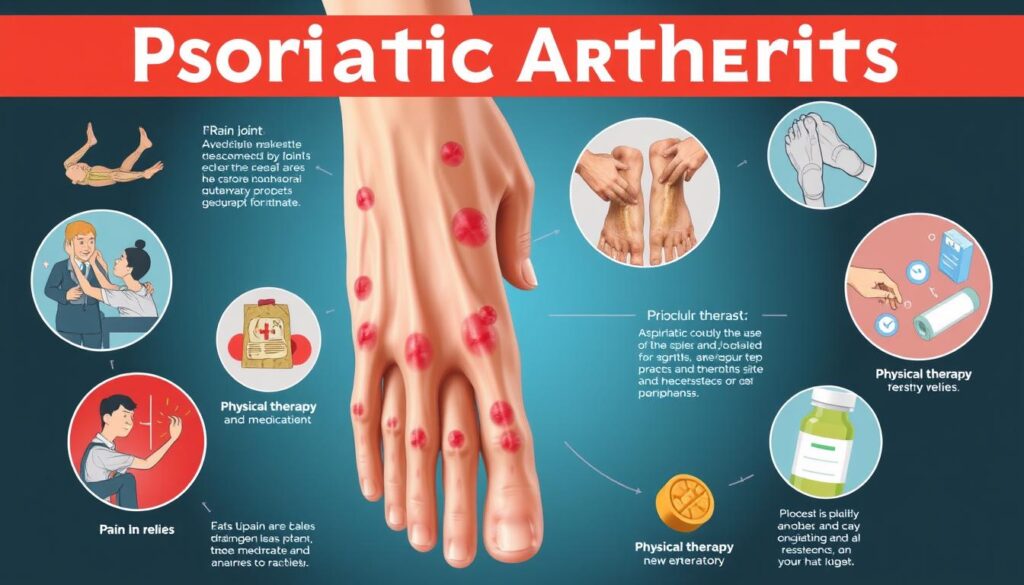
Psoriatic arthritis is a tricky condition that affects people with psoriasis. It causes joint pain and swelling, making daily tasks hard. About 25% of psoriasis patients develop this challenging disorder1.
Symptoms can start with skin issues or joint pain. Sometimes, joint problems appear before skin changes2. This condition doesn’t discriminate between genders, affecting men and women equally2.
Without proper care, psoriatic arthritis can harm joints, bones, and tissues1. Genes play a role, but environmental factors like infections and injuries matter too1.
Key Takeaways
- Psoriatic arthritis affects approximately 25% of people with psoriasis
- Joint symptoms can emerge before skin manifestations
- Both genetic and environmental factors influence the condition
- Early detection and management are crucial for preventing joint damage
- The disorder impacts men and women equally
What is Psoriatic Arthritis?
Psoriatic arthritis is a complex autoimmune disorder affecting people with psoriasis. It causes joint pain and skin issues, impacting life quality. This inflammatory arthritis poses unique challenges in rheumatology and dermatology.
Psoriatic arthritis has distinct core characteristics. Up to 30% of people with psoriasis may develop this condition3. It occurs when the immune system attacks healthy cells, causing widespread inflammation4.
Types of Psoriatic Arthritis
Psoriatic arthritis manifests in five distinct forms:
- Small joint arthritis in fingers and toes
- Asymmetrical arthritis in hands and feet
- Symmetrical polyarthritis
- Arthritis mutilans (a rare, destructive form)
- Psoriatic spondylitis affecting the spine3
Causes and Risk Factors
The exact cause of psoriatic arthritis remains unclear. However, several factors contribute to its development:
| Risk Factor | Description |
|---|---|
| Genetics | Specific genetic markers increase susceptibility5 |
| Age | Most common in adults between 30-55 years old5 |
| Family History | Increased risk if relatives have psoriasis or psoriatic arthritis5 |
Psoriatic arthritis can impact any part of your body, from fingertips to spine. Symptoms can range from mild to severe5.
“Understanding your body’s signals is the first step toward managing psoriatic arthritis effectively.”
Symptoms of Psoriatic Arthritis
Psoriatic arthritis affects people in different ways. Recognizing its signs is key for early detection and treatment. This autoimmune disease can be tricky to manage6.
Common Signs to Look For
The hallmark symptoms of psoriatic arthritis include:
- Joint pain and inflammation that can be mild to severe6
- Swelling in fingers and toes (dactylitis) that resembles sausage-like appearances7
- Nail changes such as pitting, crumbling, or separation from nail beds6
- Lower back pain associated with spondylitis6
How Symptoms Vary by Individual
Psoriatic arthritis symptoms can range from mild to severe. Some people experience slight discomfort, while others face serious joint damage6.
The condition affects men and women equally8. It typically develops after age 306.
“Early, aggressive treatment improves the chance of controlling psoriatic arthritis” – Rheumatology Experts
When to Seek Medical Help
You should consult a healthcare professional if you experience:
- Persistent joint pain or stiffness
- Unexplained skin condition changes
- Significant nail changes
- Recurring inflammation in joints or skin
About 30% of people with psoriasis develop psoriatic arthritis8. Stress, infections, and environmental factors may trigger the condition8.
Quick diagnosis is crucial to prevent possible joint damage8. Don’t wait to seek help if you notice any symptoms.
Treatment Options for Psoriatic Arthritis
Psoriatic arthritis management combines medical treatments and lifestyle changes. Your plan depends on symptom severity and health needs9.
Medication Strategies for Disease Management
Your doctor may suggest various medications to control symptoms. These include NSAIDs for pain relief and immunosuppressive medicines like methotrexate109.
Biologic therapy targets specific immune system pathways11. It can be effective for active cases.
- NSAIDs for pain and inflammation relief10
- Immunosuppressive medicines like methotrexate9
- Biologic therapy targeting specific immune system pathways11
Biologics like adalimumab (Humira) and etanercept (Enbrel) work well for active cases9. They reduce inflammation and prevent joint damage through targeted immune system interventions.
Lifestyle Modifications for Symptom Control
Lifestyle changes are crucial in managing your condition. Regular low-impact exercises like swimming and walking can help.
Stress management techniques such as meditation are beneficial. Maintaining a healthy weight and quitting smoking are also important.
- Regular low-impact exercises like swimming and walking
- Stress management techniques such as meditation
- Maintaining a healthy weight
- Stopping smoking
Your proactive approach can significantly improve your quality of life and reduce disease progression.
Alternative and Complementary Therapies
Consider exploring additional treatment options that complement traditional medicine. Acupuncture may help manage chronic pain.
Physical therapy can improve joint function. Heat and cold therapy offer pain relief.
- Acupuncture for chronic pain management
- Physical therapy to improve joint function
- Heat and cold therapy for pain relief
- Occupational therapy for daily activity support10
Always consult your doctor for a personalized treatment strategy. They can address your unique psoriatic arthritis symptoms11.
Living with Psoriatic Arthritis
Psoriatic arthritis management requires a holistic approach. It presents unique challenges that demand physical and mental strength. Effective strategies can help you navigate daily life more easily12.
Mental health is crucial in managing this chronic condition. Depression risk is higher, potentially increasing pain sensitivity12. The National Psoriasis Foundation offers valuable support and guidance.
Physical activity can reduce inflammation and boost well-being. Swimming, yoga, and tai chi are gentle exercises to consider12.
Adaptive devices make daily tasks easier. Try large-handled utensils, finger grips, and shower bars to reduce joint strain13. Building muscle strength can decrease the workload on affected joints12.
Stress management is vital as it can trigger flares. Explore relaxation techniques that suit you best13. Work with healthcare providers to create a personalized treatment plan.
Stay connected with support communities and prioritize your mental health. Focus on strategies that improve your quality of life. With the right approach, you can manage symptoms and maintain a positive outlook13.
FAQ
What exactly is psoriatic arthritis?
Psoriatic arthritis is a chronic condition combining psoriasis and arthritis symptoms. It’s an autoimmune disorder causing joint inflammation and skin issues. You may experience joint pain, stiffness, and skin patches with silvery scales.
What are the different types of psoriatic arthritis?
There are five main types of psoriatic arthritis. These include distal joint arthritis and asymmetrical arthritis. Others are symmetrical polyarthritis, arthritis mutilans, and psoriatic spondylitis.
Distal joint arthritis affects small joints in fingers and toes. Psoriatic spondylitis impacts the spine and sacroiliac joints.
What are the most common symptoms?
Common symptoms include joint pain, stiffness, and swelling. You might notice sausage-like swelling in fingers and toes. Foot pain, lower back pain, and nail changes are also possible.
Symptoms can range from mild to severe. They may come in flares and remissions.
Who is most at risk for developing psoriatic arthritis?
Your risk increases if you have psoriasis or a family history of it. Being between 30-55 years old also raises the risk. Genetic factors and environmental triggers play significant roles in developing this condition.
How is psoriatic arthritis diagnosed?
Diagnosis involves a thorough evaluation by a rheumatologist or dermatologist. They review your medical history and perform a physical exam. Blood tests and imaging studies are also part of the process.
What treatment options are available?
Treatment aims to manage both skin and joint symptoms. Options include NSAIDs for pain and corticosteroids for inflammation. DMARDs and biologic therapies target specific immune system components.
Lifestyle changes like exercise and maintaining a healthy weight are crucial. Physical therapy can also help manage symptoms.
Can psoriatic arthritis be cured?
There’s no complete cure for psoriatic arthritis. However, modern treatments can effectively manage symptoms and prevent joint damage. Early diagnosis and consistent treatment are key to controlling the condition.
How can I manage psoriatic arthritis in daily life?
Follow your treatment plan and practice regular exercise. Use assistive devices and manage stress. Stay connected with healthcare providers for ongoing support.
Support groups like the Arthritis Foundation offer additional resources and community support.
Can diet affect psoriatic arthritis?
No specific diet cures psoriatic arthritis. An anti-inflammatory diet may help reduce inflammation and support overall health. Always consult your healthcare provider before making significant dietary changes.
What complications can occur if psoriatic arthritis is left untreated?
Untreated psoriatic arthritis can lead to permanent joint damage and reduced mobility. It may cause cardiovascular issues and severe disability. The condition can also impact your mental health.
Chronic pain and lifestyle limitations may lead to depression and anxiety.
Source Links
- Psoriatic arthritis – https://versusarthritis.org/about-arthritis/conditions/psoriatic-arthritis/
- Patient education: Psoriatic arthritis (Beyond the Basics) – https://www.uptodate.com/contents/psoriatic-arthritis-beyond-the-basics/print
- Psoriatic Arthritis – https://www.hopkinsmedicine.org/health/conditions-and-diseases/arthritis/psoriatic-arthritis
- Psoriatic arthritis – https://www.nhs.uk/conditions/psoriatic-arthritis/
- Psoriatic arthritis-Psoriatic arthritis – Symptoms & causes – Mayo Clinic – https://www.mayoclinic.org/diseases-conditions/psoriatic-arthritis/symptoms-causes/syc-20354076
- No title found – https://www.arthritis.org/diseases/psoriatic-arthritis
- Psoriatic Arthritis Signs and Symptoms • Johns Hopkins Arthritis Center – https://www.hopkinsarthritis.org/arthritis-info/psoriatic-arthritis/clinical-manifestation/
- Early signs and symptoms of psoriatic arthritis – https://www.uclahealth.org/news/article/early-signs-psoriatic-arthritis
- No title found – https://www.arthritis.org/health-wellness/treatment/treatment-plan/disease-management/treatment-options-for-psoriatic-arthritis
- 6 Treatments to Consider for Psoriasis and Psoriatic Arthritis – https://www.healthline.com/health/psoriatic-arthritis/moderate-to-severe/know-rx-biologics/6-treatment-options
- Psoriatic arthritis-Psoriatic arthritis – Diagnosis & treatment – Mayo Clinic – https://www.mayoclinic.org/diseases-conditions/psoriatic-arthritis/diagnosis-treatment/drc-20354081
- Living With Psoriatic Arthritis – https://www.psoriasis.org/living-with-psoriatic-arthritis/
- Tips for Managing Psoriatic Arthritis – https://rheumatology.org/patient-blog/tips-for-managing-psoriatic-arthritis

