
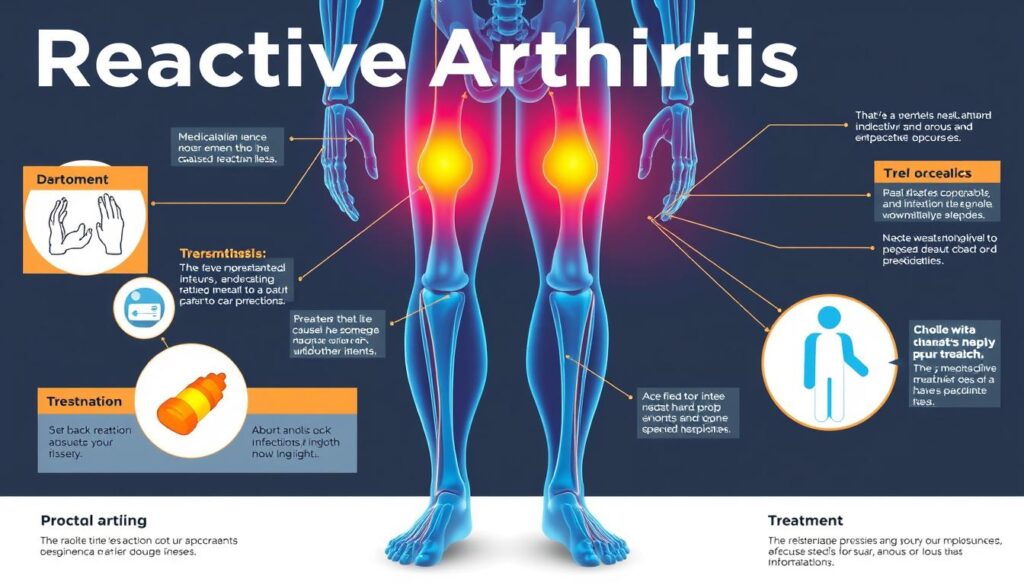
Reactive arthritis is an inflammatory condition that affects your joints, urinary tract, and eyes. It’s triggered by bacterial infections and disrupts health and mobility1. Young adults aged 20-40 are most at risk, with men facing higher chances2.
This joint inflammation occurs when your immune system attacks healthy tissue after an infection. Sexually transmitted infections or food poisoning can spark reactive arthritis1. Men under 40 are nine times more likely to develop it from STIs2.
Knowing about reactive arthritis helps you spot symptoms early. Your doctor can create a tailored plan for diagnosis and management.
Key Takeaways
- Reactive arthritis is an inflammatory condition triggered by bacterial infections
- Young men are most susceptible to developing this autoimmune disorder
- Infections from STIs and food poisoning can cause reactive arthritis
- Symptoms may appear gradually over weeks or months
- Proper medical management can help control symptoms effectively
What Triggers Reactive Arthritis and Who’s at Risk
Reactive arthritis is a chronic condition that occurs after specific bacterial infections. Knowing the triggers and risk factors can help manage this joint pain condition better34.
Common Bacterial Infections Causing Reactive Arthritis
Several bacteria can trigger reactive arthritis. These include Chlamydia trachomatis, Salmonella, Campylobacter, Yersinia, and Escherichia coli.
- Chlamydia trachomatis
- Salmonella
- Campylobacter
- Yersinia
- Escherichia coli
These infections spread through sexual contact or contaminated food. They can lead to arthritis treatment challenges3.
Symptoms usually appear 1 to 4 weeks after exposure to the triggering bacteria5.
Risk Factors and Genetic Predisposition
Your chance of getting reactive arthritis depends on several key factors. These factors include age, gender, and type of infection.
| Risk Factor | Impact |
|---|---|
| Age Group | 20-40 years old most affected45 |
| Gender | Men more susceptible, especially to sexually transmitted triggers345 |
| Infection Type | Sexual contact and foodborne illnesses increase risk4 |
The Role of HLA-B27 Gene
The HLA-B27 genetic marker is important in reactive arthritis risk. Many people have this gene, but not all develop the condition45.
People with this genetic marker are more likely to have rheumatoid arthritis-like symptoms5.
Understanding your personal risk factors can help you navigate potential reactive arthritis challenges more effectively.
Recognizing Reactive Arthritis: Signs and Symptoms
Reactive arthritis affects multiple body systems with complex symptoms. Early recognition and treatment are crucial for managing this condition67.
The main symptoms appear in three key areas:
- Joint inflammation and pain
- Urinary tract complications
- Eye-related issues
Joint symptoms are most noticeable, affecting the knees, ankles, and feet. You might see swollen joints that look like sausage-shaped fingers or toes7.
Urinary tract symptoms can be tough to deal with. These may include frequent urination and a burning feeling when peeing.
Men might also experience discharge.
- Increased urination frequency
- Burning sensation during urination
- Potential discharge in men
Eye problems affect about 40 percent of patients early on7. You might have red eyes, blurry vision, or uveitis.
“Reactive arthritis can manifest differently in each individual, making early diagnosis crucial.” – Rheumatology Specialists
Skin issues can also occur. These may show up as mouth sores or rashes on feet and hands.
Anti-inflammatory drugs can help manage these symptoms7.
| Symptom Category | Specific Manifestations | Duration |
|---|---|---|
| Joint Issues | Inflammation, pain in lower extremities | 3-12 months |
| Urinary Symptoms | Frequent urination, burning sensation | Varies |
| Eye Problems | Conjunctivitis, vision changes | Weeks to months |
Most people recover within three to four months. However, some may have recurring symptoms6.
Keep track of your symptoms and talk to a doctor. This can help manage this tricky condition effectively.
Conclusion
Reactive arthritis is a complex autoimmune disorder triggered by bacterial infection. It can greatly affect your joint health. Medical professionals have developed effective strategies to manage this condition through comprehensive research.
The incidence varies across different populations. Studies show 7–12% of patients infected with specific pathogens might develop joint inflammation8. Your treatment plan will depend on the underlying infection and symptoms.
Most patients find relief through targeted approaches. These include antibiotics, anti-inflammatory drugs, and sometimes immunosuppressive medications. With proper medical care, many people recover completely within a year9.
Genetic factors, especially the HLA-B27 gene, influence your risk for reactive arthritis. The condition can be unpredictable. However, staying informed and working with healthcare professionals can help manage symptoms effectively89.
FAQ
What is reactive arthritis?
Reactive arthritis is joint inflammation triggered by bacterial infections elsewhere in the body. It affects the intestines, genitals, or urinary tract. The condition causes joint pain, mainly in knees, ankles, and feet.
It can also impact eyes, skin, and the urinary system. Symptoms arise as a response to infections in other body parts.
Who is most likely to develop reactive arthritis?
Men aged 20 to 50 with the HLA-B27 genetic marker are most susceptible. They’re more prone to sexually transmitted triggers. However, both genders can get it from foodborne infections.
What bacterial infections can trigger reactive arthritis?
Common triggers include Chlamydia trachomatis, Salmonella, Campylobacter, and Escherichia coli. Shigella and Yersinia can also cause it. These bacteria spread through sexual contact or contaminated food.
What are the typical symptoms of reactive arthritis?
Key symptoms include joint pain, eye inflammation, and urinary problems. You might experience red eyes, blurry vision, and increased urination frequency. Skin rashes on hands and feet are also common.
Is reactive arthritis contagious?
Reactive arthritis itself isn’t contagious. However, the underlying bacterial infections can spread. These can be transmitted through sexual contact or contaminated food.
How long does reactive arthritis typically last?
Most people recover within 3 to 12 months. In rare cases, it can become chronic. Some individuals may experience long-term or recurring symptoms.
How is reactive arthritis diagnosed?
Diagnosis involves blood tests, joint fluid analysis, and imaging studies. Doctors rule out other conditions and look for signs of recent infections. They also consider your symptoms and medical history.
What treatments are available for reactive arthritis?
Treatment options include antibiotics, NSAIDs, corticosteroids, and immunosuppressive medications. The goal is to manage symptoms and treat the underlying infection.
Can reactive arthritis be prevented?
You can reduce your risk by practicing good hygiene. Use protection during sexual contact and avoid contaminated food. Seek prompt treatment for bacterial infections.
Are there any long-term complications of reactive arthritis?
Reactive arthritis can lead to chronic joint problems in some cases. Recurring symptoms or persistent inflammation may occur. Regular medical follow-ups and proper management help minimize long-term complications.
Source Links
- Reactive arthritis – https://www.nhsinform.scot/illnesses-and-conditions/muscle-bone-and-joints/conditions-that-can-affect-multiple-parts-of-the-body/reactive-arthritis/
- No title found – https://www.arthritis.org/diseases/reactive-arthritis
- Reactive arthritis-Reactive arthritis – Symptoms & causes – Mayo Clinic – https://www.mayoclinic.org/diseases-conditions/reactive-arthritis/symptoms-causes/syc-20354838
- Reactive Arthritis – https://www.hopkinsmedicine.org/health/conditions-and-diseases/arthritis/reactive-arthritis
- Reactive arthritis – https://www.nhs.uk/conditions/reactive-arthritis/
- What Is Reactive Arthritis? – https://www.webmd.com/arthritis/arthritis-reactive-arthritis
- Reactive Arthritis – https://orthop.washington.edu/patient-care/articles/arthritis/reactive-arthritis.html
- Expanding the spectrum of reactive arthritis (ReA): classic ReA and infection-related arthritis including poststreptococcal ReA, Poncet’s disease, and iBCG-induced ReA – https://pmc.ncbi.nlm.nih.gov/articles/PMC8091991/
- Reactive arthritis occurring after COVID-19 infection: a narrative review – Infection – https://link.springer.com/article/10.1007/s15010-022-01858-z

