
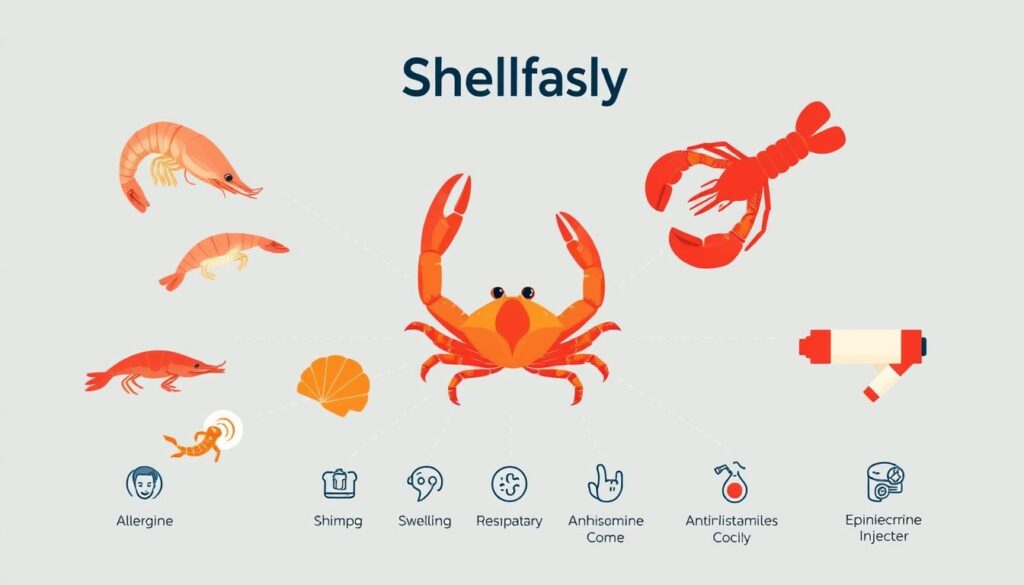
A shellfish allergy can be tough to manage. It’s a major health issue affecting many people worldwide1. Your immune system might react strongly to certain sea proteins, causing various allergic responses2.
Seafood intolerance varies from person to person. Adults, especially women, are more likely to develop shellfish allergies12. Crustaceans like shrimp, lobster, and crab often trigger these reactions2.
Knowing how your body reacts is vital. Symptoms can include vomiting, stomach cramps, wheezing, hives, and swelling2. Some people have mild symptoms, while others face severe, life-threatening anaphylaxis1.
Key Takeaways
- Shellfish allergy is the most common food allergy in adults
- Reactions can range from mild to severe, including anaphylaxis
- Women are more likely to develop shellfish allergies
- Symptoms can include vomiting, hives, and swelling
- Immediate medical attention is crucial for severe reactions
What Causes Shellfish Allergy and Who’s at Risk
Shellfish allergies are complex immune responses that can seriously impact your health. Your body mistakenly sees certain seafood proteins as harmful invaders. This misidentification triggers allergic reactions in some people3.
Knowing what causes these allergies can help you manage potential reactions better. It’s important to understand the underlying mechanisms and risk factors.
Types of Shellfish That Trigger Reactions
Shellfish allergies fall into two main groups:
- Crustacean Allergy: Involves shellfish like shrimp, crab, and lobster
- Mollusc Allergy: Includes clams, mussels, oysters, and scallops
Many people react to multiple types of shellfish. This is called cross-reactivity3. Some folks might only be allergic to one type.
Others need to avoid all shellfish completely. It varies from person to person.
Common Risk Factors
Your chances of getting a shellfish allergy go up with certain factors:
- Family history of allergies
- Existing asthma conditions
- Previous allergic reactions
Interestingly, about 60% of people with shellfish allergies have their first reaction as adults3. This makes shellfish allergies different from other food allergies.
The Role of Immune System Response
When you eat shellfish, your immune system might make special antibodies called IgE4. These antibodies trigger the release of chemicals like histamine.
Histamine causes allergic symptoms that can range from mild to severe5. Understanding this process helps you manage shellfish allergies better.
Understanding your body’s immune response is crucial in managing shellfish allergies effectively.
Seafood workers can develop allergies through exposure to shellfish particles in the air3. Cooking shellfish might even make it more allergenic3.
Recognizing Shellfish Allergy Symptoms and Emergency Response
Shellfish allergies can trigger various symptoms. Their severity ranges from mild to serious. Knowing these symptoms is vital for your safety.
Reactions can differ from person to person. Some may have mild issues. Others might face severe health risks.
- Skin reactions like hives and itching
- Nasal congestion
- Swelling of lips, face, and throat
- Difficulty breathing
- Stomach pain and digestive issues
The most serious concern is Anaphylaxis Risk. This life-threatening condition needs immediate medical help6. Act fast if you have severe symptoms.
These include airway constriction or sudden blood pressure drop. Quick action is crucial in such cases.
“Always be prepared and carry an epinephrine auto-injector if you have a known shellfish allergy.”
Managing Histamine Intolerance requires proactive health measures. Experts suggest carrying two epinephrine doses6. Wearing a medical alert bracelet is also recommended.
| Symptom Type | Severity | Recommended Action |
|---|---|---|
| Mild Reactions | Localized symptoms | Antihistamines |
| Severe Reactions | Anaphylaxis | Epinephrine + Emergency Care |
Be cautious about cross-contamination, especially when eating out. Tell restaurant staff about your allergy6. Always be ready for unexpected exposure.
Conclusion
Living with a shellfish allergy demands proactive Seafood Allergy Prevention strategies to safeguard your health. Your dedication to Food Allergy Awareness can greatly reduce dangerous allergic reactions. The global prevalence of shellfish allergies underscores the need for effective management78.
Shellfish Allergy Management goes beyond just avoiding seafood. It requires careful food label reading and clear communication with restaurants. Always carry emergency medication and educate those around you about your specific risks9.
Regular check-ups are vital to monitor your allergy’s progress. Shellfish allergies often remain consistent over time. Wear a medical alert bracelet and keep an epinephrine auto-injector nearby for added protection9.
With careful management and awareness, you can lead a healthy life despite your allergy. Stay informed, prepared, and proactive to defend against potential reactions78.
FAQ
What is a shellfish allergy?
A shellfish allergy occurs when your immune system overreacts to proteins in marine animals. It’s a serious condition that can cause mild to severe reactions. Your body mistakes shellfish proteins for harmful substances, triggering an allergic response.
What types of shellfish can trigger an allergic reaction?
Shellfish are split into two groups: crustaceans (shrimp, crabs, lobster) and mollusks (clams, oysters, scallops, squid). Crustacean allergies are usually more common and severe. Some people might be allergic to one type, while others must avoid all shellfish.
What are the most common symptoms of a shellfish allergy?
Symptoms can include hives, itchy skin, nasal congestion, and swelling of lips or throat. Wheezing, breathing problems, abdominal pain, diarrhea, nausea, and vomiting may also occur.
In severe cases, you might experience anaphylaxis, a life-threatening reaction requiring immediate medical care. Dizziness and fainting are possible symptoms too.
How is a shellfish allergy diagnosed?
Diagnosis involves several methods, including a detailed medical history and various tests. An allergist can perform skin-prick tests, blood tests, and sometimes oral food challenges. These techniques help determine the specific type and severity of your shellfish allergy.
Who is most likely to develop a shellfish allergy?
Shellfish allergies are more common in adults than children and occur more often in women. Risk factors include a family history of allergies and existing asthma. Previous allergic reactions to shellfish also increase the likelihood of developing an allergy.
How can I manage a shellfish allergy?
Management mainly involves avoiding all shellfish and products containing them. Always read food labels carefully and be cautious when dining out. Avoid cross-contamination and carry an epinephrine auto-injector like an EpiPen.
Wear a medical alert bracelet and consult an allergist regularly. They can help you develop a comprehensive management strategy.
Can I outgrow a shellfish allergy?
Shellfish allergies are often lifelong, unlike some food allergies. Some people might experience changes in their allergic response over time. Have periodic re-evaluations with an allergist before considering reintroducing shellfish into your diet.
What should I do during an allergic reaction?
Use your epinephrine auto-injector immediately if you experience an allergic reaction. Seek emergency medical attention right away, especially for symptoms of anaphylaxis. Inform friends, family, and caregivers about your allergy and how to respond in emergencies.
Source Links
- Shellfish allergy – Symptoms and causes – https://www.mayoclinic.org/diseases-conditions/shellfish-allergy/symptoms-causes/syc-20377503
- Shellfish Allergy | Causes, Symptoms & Treatment | ACAAI Public Website – https://acaai.org/allergies/allergic-conditions/food/shellfish/
- Shellfish – https://www.thermofisher.com/allergy/us/en/allergen-fact-sheets/shellfish.html
- Shellfish allergy – https://en.wikipedia.org/wiki/Shellfish_allergy
- Shellfish Allergy (for Parents) – https://kidshealth.org/en/parents/shellfish-allergy.html
- Shellfish Allergy (for Teens) – https://kidshealth.org/en/teens/shellfish-allergy.html
- Overcoming Shellfish Allergy: How Far Have We Come? – https://pmc.ncbi.nlm.nih.gov/articles/PMC7139905/
- Not all shellfish – https://ctajournal.biomedcentral.com/articles/10.1186/2045-7022-1-3
- Shellfish Allergy: What Are the Symptoms? – https://www.healthline.com/health/shellfish-allergy-symptoms

