
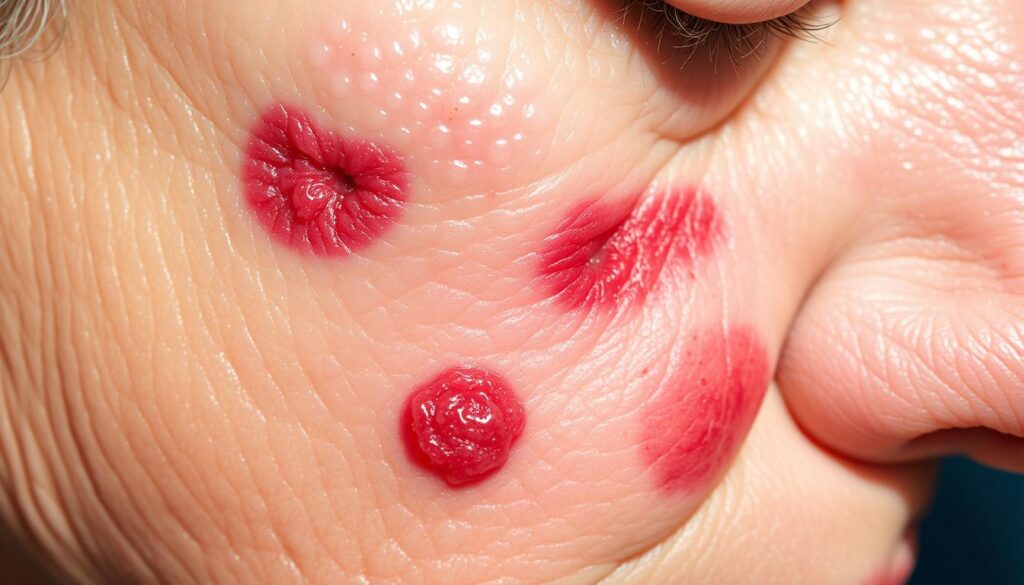
Squamous cell carcinoma (SCC) is a serious skin cancer that needs your attention. It’s the second most common non-melanoma skin cancer. SCC can develop unexpectedly and affect your health1.
Your skin faces many environmental challenges daily. This makes it prone to cellular changes. SCC usually appears on areas often exposed to sunlight1.
These areas include the face, ears, neck, hands, and arms. SCC makes up about 20% of all skin cancers2.
Some factors can raise your risk of getting this skin cancer. Light skin, blue or green eyes, and blond or red hair increase susceptibility1.
Long-term sun exposure and UV radiation play big roles in SCC development1. Knowing these risks helps with early detection and treatment.
Key Takeaways
- Squamous cell carcinoma is the second most common skin cancer
- Sun-exposed areas are most vulnerable to SCC
- Early detection significantly improves treatment outcomes
- Genetic and environmental factors contribute to SCC risk
- Regular skin checks are essential for prevention
What is Squamous Cell Carcinoma?
Squamous cell carcinoma (SCC) is a serious skin cancer. It grows in the outer layer of skin cells. SCC affects thousands of people yearly, challenging patients and doctors3.
Understanding the Basics
SCC is the second most common skin cancer. It happens when UV rays damage DNA in skin cells. About 1.8 million cases are diagnosed each year3.
Types of Squamous Cell Carcinoma
- Cutaneous Squamous Cell Carcinoma (cSCC): Most common skin-based variety3
- Internal SCC: Occurs in mucous membranes and internal tissues
- Superficial SCC: Remains in the top layer of skin
Common Symptoms to Watch
Your skin may show warning signs of SCC. Look out for these changes:
- Firm, red bumps
- Flat sores with scaly crusts
- Rough, patch-like areas
- Persistent open sores that don’t heal
“Early detection is crucial in managing squamous cell carcinoma effectively” – Dermatology Research Institute
People with fair skin are at higher risk. So are those with UV exposure history. Genetic factors also play a role4.
Black or brown-skinned people might see tumors in less sunny spots4.
| Risk Factor | Impact Level |
|---|---|
| UV Radiation Exposure | High |
| Weakened Immune System | Moderate to High |
| Genetic Predisposition | Moderate |
SCC can spread to other body parts. But finding it early helps treatment work better4.
Causes and Risk Factors for Squamous Cell Carcinoma
Protecting your skin from squamous cell carcinoma (SCC) starts with knowing its risk factors. SCC isn’t random. It’s often caused by specific environmental and genetic influences.
Sun Exposure and UV Radiation
Ultraviolet (UV) radiation is the main cause of most skin cancers. People with light skin have a higher risk of developing SCC5.
Long-term UV exposure can lead to precancerous lesions like actinic keratosis. These lesions may progress to squamous cell carcinoma6.
- UVB radiation causes most skin damage6
- Sun exposure between 10 a.m. and 4 p.m. is most dangerous6
- Sunburns dramatically increase skin cancer risk
Smoking and Alcohol Use
Smoking greatly increases SCC risk, especially for cancers on the lips5. Heavy drinking can damage skin cells and possibly trigger Bowen’s disease, a precancerous condition.
Genetic Factors and Skin Types
Your genes play a big role in your skin cancer risk. Men are more likely to get basal and squamous cell cancers5.
Some genetic syndromes like xeroderma pigmentosum increase the risk even more5.
Prevention is always better than cure when it comes to skin health.
Other risk factors include exposure to certain workplace chemicals and radiation treatments. Having a weakened immune system also increases your risk5.
Diagnosis and Treatment Options
Identifying and addressing squamous cell carcinoma (SCC) requires proper diagnostic and treatment approaches. Your healthcare journey starts with a thorough skin evaluation. Dermoscopy allows doctors to examine skin layers in detail.
Diagnostic Procedures
A skin biopsy is crucial for confirming SCC. Dermatologists use specialized techniques to assess suspicious skin lesions. This method can be up to 98% accurate in spotting cancerous changes.
The Mayo Clinic recommends thorough skin examinations to catch early signs of skin cancer.
Treatment Methods Available
Your treatment options depend on the cancer’s size and location. Mohs surgery is highly effective, with a 97% cure rate for first-time tumor removal7.
Radiation therapy is an alternative for those who can’t have surgery7. Small SCCs can often be cured through surgery or targeted radiation therapy8.
Importance of Follow-Up Care
Regular monitoring is vital, as some SCCs can spread to other body parts8. Advanced cases might need immunotherapy or targeted drug therapies8.
Stay proactive with consistent medical check-ups. This improves your chances of successful treatment and long-term skin health.
FAQ
What is squamous cell carcinoma (SCC)?
Squamous cell carcinoma is a common skin cancer type. It grows in the epidermis and often appears in sun-exposed areas. SCC can look like firm bumps, scaly patches, or non-healing sores.
Early treatment is key for this usually treatable cancer. If ignored, SCC can become a serious health concern.
What are the primary risk factors for developing squamous cell carcinoma?
Major risk factors include too much UV exposure and fair skin. A history of sunburns and a weak immune system also increase risk.
Smoking, drinking, and HPV infection can contribute to SCC development. People with precancerous skin lesions or chronic wounds are more likely to get it.
How is squamous cell carcinoma diagnosed?
Doctors diagnose SCC through a thorough skin exam and biopsy. They remove a small piece of suspicious skin for testing.
Under a microscope, they check for cancer cells. This helps determine the cancer’s stage and plan treatment.
What treatment options are available for squamous cell carcinoma?
SCC treatment depends on its size, location, and stage. Common options include surgery, cryosurgery, radiation therapy, and topical medications.
Advanced cases may need systemic therapies. The goal is to remove cancer while saving healthy skin.
Can squamous cell carcinoma be prevented?
You can’t completely avoid SCC, but you can lower your risk. Use sunscreen and wear protective clothing.
Avoid tanning beds and limit sun exposure during peak hours. Regular skin self-checks are also important.
Is squamous cell carcinoma life-threatening?
Most SCCs aren’t life-threatening if caught and treated early. However, untreated cancer can spread to other body parts.
This makes it more dangerous. Regular skin checks and quick medical care are vital.
Who is most at risk for developing squamous cell carcinoma?
People with fair skin and those over 50 are at higher risk. So are those with lots of sun exposure.
Individuals with weak immune systems or certain genetic conditions face increased risk. Smokers and those with past skin cancers are also more vulnerable.
Source Links
- Squamous cell skin cancer – https://www.mountsinai.org/health-library/diseases-conditions/squamous-cell-skin-cancer
- What Are Basal and Squamous Cell Skin Cancers? | Types of Skin Cancer – https://www.cancer.org/cancer/types/basal-and-squamous-cell-skin-cancer/about/what-is-basal-and-squamous-cell.html
- Squamous Cell Carcinoma – https://www.skincancer.org/skin-cancer-information/squamous-cell-carcinoma/
- Squamous cell carcinoma of the skin – Symptoms and causes – https://www.mayoclinic.org/diseases-conditions/squamous-cell-carcinoma/symptoms-causes/syc-20352480
- Basal and Squamous Cell Skin Cancer Risk Factors | Skin Cancer Risks – https://www.cancer.org/cancer/types/basal-and-squamous-cell-skin-cancer/causes-risks-prevention/risk-factors.html
- Prevention & Risk Factors for Squamous Cell Carcinoma – https://www.mskcc.org/cancer-care/types/squamous-cell-carcinoma/risk-factors
- Squamous Cell Carcinoma Treatment – https://www.skincancer.org/skin-cancer-information/squamous-cell-carcinoma/scc-treatment-options/
- Treating Squamous Cell Carcinoma | Squamous Cell Cancer Treatment – https://www.cancer.org/cancer/types/basal-and-squamous-cell-skin-cancer/treating/squamousl-cell-carcinoma.html

