
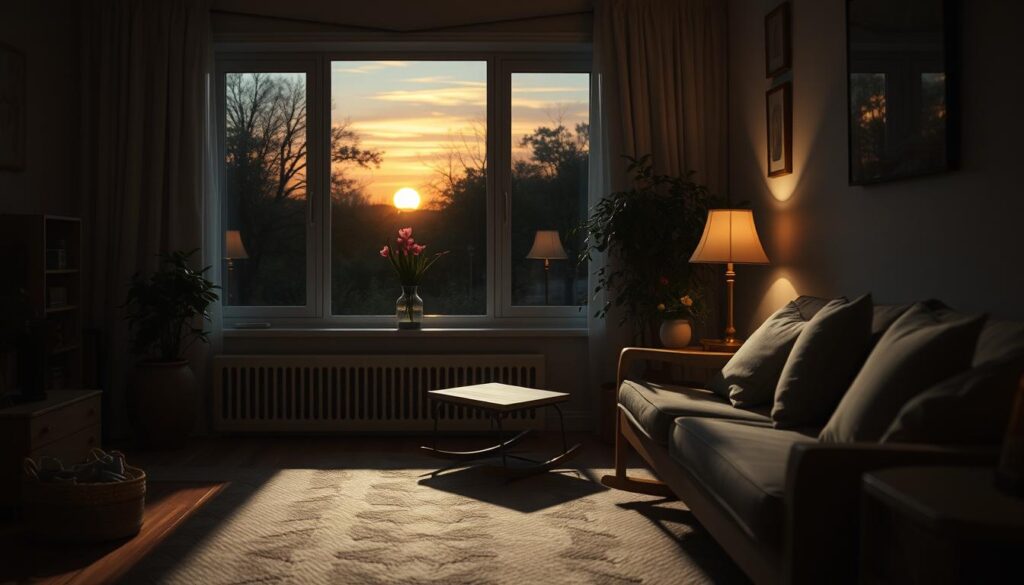
Sundowning is a tough behavioral condition affecting Alzheimer’s and dementia patients. It causes increased confusion and agitation in late afternoon and evening hours1. About 20% of Alzheimer’s patients experience these symptoms during their illness2.
Caring for someone with sundowning can be challenging. You might notice anxiety, confusion, aggression, and restless movements like pacing or wandering1. These behaviors often get worse during middle and later stages of Alzheimer’s2.
Knowing the triggers is key to managing sundowning. Fatigue, disrupted body clock, hunger, dim lighting, and health issues can worsen symptoms1. Understanding these factors helps create better care strategies for elderly patients.
Key Takeaways
- Sundowning affects approximately 20% of Alzheimer’s patients
- Symptoms typically emerge in late afternoon and evening
- Behavioral changes can include confusion and aggression
- Multiple factors can trigger or worsen sundowning
- Proper management requires understanding individual triggers
What is Sundowning and Who Does it Affect?
Sundowning is a complex condition affecting many families providing elderly care. It’s a set of behavioral symptoms that appear in late afternoon or evening. These symptoms mainly affect people with cognitive impairments.
Sundowning involves disruptions in circadian rhythms, causing behavioral changes. About 20-45% of people with Alzheimer’s experience some form of sundowning confusion3. Understanding this syndrome is crucial for effective care.
Defining Sundowning Syndrome
Sundowning brings cognitive and behavioral changes as daylight fades. These changes can manifest through increased confusion, agitation, and unexpected emotional responses.
Conditions Associated with Sundowning
- Alzheimer’s disease
- Dementia
- Parkinson’s disease
- Neurobehavioral disorders
Age and Vulnerability
The risk of sundowning increases with age and cognitive decline. People with moderate-stage dementia are more likely to have severe sundowning episodes4.
| Dementia Stage | Sundowning Likelihood |
|---|---|
| Early Stage | Low |
| Middle Stage | High |
| Late Stage | Moderate |
Sundowning represents a challenging intersection of neurological changes and environmental triggers.
A recent study of 184 people with Alzheimer’s and dementia revealed interesting findings. 39% of participants experienced sundowning symptoms5. This highlights the importance of understanding and managing this condition.
Symptoms of Sundowning
Sundowning brings tough challenges for people with dementia and their caregivers. Knowing these signs helps manage and support loved ones better.
Behavioral Changes You Might Notice
Sundowning causes upsetting behavior changes. Look out for these common signs:
- Increased agitation during late afternoon and evening
- Persistent wandering around the living space
- Sudden mood swings and emotional outbursts
- Repetitive actions like pacing or rocking
- Shadowing (following caregivers closely)
Cognitive Decline: Recognizing the Signs
Confusion gets worse during sundowning episodes. People might show these symptoms:
- Increased disorientation
- Paranoid thoughts
- Difficulty distinguishing reality from dreams
- Sudden memory lapses
“Sundowning can transform a calm moment into a challenging experience within minutes.”
Physical Symptoms to Look Out For
Physical signs of sundowning are crucial to spot. Up to 2 out of 3 people with Alzheimer’s face these issues6.
Keep an eye out for:
- Restlessness and inability to settle
- Disrupted sleep patterns
- Increased physical tension
- Potential aggressive movements
Sundowning affects at least half of dementia patients. It usually happens in middle and later stages7.
Spotting these signs early helps create better ways to manage the condition.
Effective Management Techniques for Sundowning
Sundowning in Alzheimer’s patients can be tough to handle. It’s challenging for both patients and caregivers. However, there are strategies that can help manage this condition effectively.
These approaches can greatly improve elderly care. They focus on creating a calm environment and establishing routines8.
Creating a Calming Environment
The environment plays a big role in managing sundowning. Here are some helpful caregiver support strategies:
- Maintain consistent lighting throughout the day9
- Reduce noise and potential distractions in the evening
- Use familiar objects to provide comfort
- Create a predictable, peaceful atmosphere
Establishing a Routine to Reduce Anxiety
Structured daily activities can help minimize behavioral symptoms. Predictability is key in managing sundowning10:
- Schedule activities in morning or early afternoon
- Encourage outdoor time during daylight
- Limit daytime napping
- Reduce caffeine and alcohol intake
Communicating Clearly and Compassionately
“Patience and understanding are your most powerful tools in elderly care.”
When talking to someone with sundowning, keep these tips in mind:
- Speak calmly and softly
- Listen actively to their concerns
- Use gentle touch for reassurance
- Avoid argumentative responses8
Need more help? Check out the National Institute on Aging for advice on managing behavioral symptoms.
When to Seek Professional Help
Sundowning symptoms can be tough for caregivers and families. Professional help is vital for optimal elderly care for individuals with Alzheimer’s. Two-thirds of people with dementia experience sundowning, making expert support crucial11.
Seek professional help when sundowning severely affects daily life. Consult healthcare experts if symptoms worsen rapidly or hint at other medical issues. Specialists can assess triggers and create tailored management plans12.
Caregiver support is key in managing sundowning. The Alzheimer’s Association offers resources, education, and networks. These tools help understand symptoms, learn coping methods, and connect with experts13.
Asking for help shows strength, not weakness. Professional resources and support networks can improve life quality. This benefits both the person with sundowning and their caregiver.
FAQ
What exactly is sundowning?
Sundowning is a behavioral condition affecting people with Alzheimer’s and other forms of dementia. It causes increased confusion, agitation, and restlessness in the late afternoon or early evening. Sundowning disrupts sleep-wake cycles and can distress both patients and caregivers.
Who is most likely to experience sundowning?
About 20% of people with Alzheimer’s experience sundowning, mainly older adults with cognitive decline. It usually occurs during the middle and later stages of Alzheimer’s disease. Sundowning can persist as long as specific triggers remain present.
What are the primary symptoms of sundowning?
Sundowning symptoms include behavioral changes like pacing, wandering, and aggression. Cognitive symptoms such as increased confusion and paranoia may occur. Physical symptoms can include restlessness and insomnia.
These symptoms typically worsen in the late afternoon or evening. Emotional changes like anxiety, fear, and irritability are also common.
What causes sundowning?
The exact cause isn’t fully understood, but it’s linked to brain changes affecting circadian rhythms. Factors worsening sundowning include fatigue, unfamiliar environments, and low lighting. Disrupted internal clock, hunger, thirst, infections, pain, and depression may also contribute.
How can I help manage sundowning symptoms?
Create a calming environment with good lighting and consistent daily routines. Reduce evening stimulation and speak calmly, using gentle reassurance. Light therapy, music therapy, and low-dose melatonin under medical supervision may help.
When should I seek professional help for sundowning?
Seek help if symptoms greatly impact quality of life or worsen rapidly. Professional assistance is needed when sundowning becomes difficult to manage at home. Healthcare experts can evaluate causes and provide targeted treatment strategies.
Are there any resources available for caregivers dealing with sundowning?
Yes, several organizations offer valuable support for caregivers managing sundowning. The Alzheimer’s Association and Alzheimer’s Foundation of America provide information and referrals. The National Institute on Aging’s ADEAR Center is another helpful resource.
Can medications help manage sundowning?
In some cases, medications may be prescribed to manage symptoms. These might include low-dose melatonin or other treatments. A healthcare professional will recommend options after evaluating the individual’s specific symptoms and medical history.
Source Links
- Sundowning: Tips for dealing with late-day confusion – https://www.mayoclinic.org/diseases-conditions/alzheimers-disease/expert-answers/sundowning/faq-20058511
- Sundown Syndrome: Causes, Treatment & Symptoms – https://my.clevelandclinic.org/health/articles/22840-sundown-syndrome
- Sundowning – https://en.wikipedia.org/wiki/Sundowning
- What You Need to Know About Sundowning and Dementia – https://www.verywellhealth.com/what-stage-of-dementia-is-sundowning-8682658
- Sundowning in Alzheimer’s Disease: Symptoms, Management, and More – https://www.healthline.com/health/sundowning
- Sundowning: Causes, Symptoms, and Treatment – https://www.webmd.com/alzheimers/manage-sundowning
- Sundown Syndrome: Causes, Treatment & Advice for Caregivers – https://neuraleffects.com/blog/sundown-syndrome-causes-and-treatment-options/
- Tips for Managing Sundowning | BrightFocus Foundation – https://www.brightfocus.org/alzheimers/article/tips-managing-sundowning
- How to Effectively Manage Sundowning – Consensus: AI Search Engine for Research – https://consensus.app/home/blog/how-to-effectively-manage-sundowning/
- Sleep Issues and Sundowning – https://www.alz.org/help-support/caregiving/stages-behaviors/sleep-issues-sundowning
- Dementia Care: Coping with Sundowning – James L. West – https://www.jameslwest.org/dementia-care-coping-with-sundowning/
- A Caregiver’s Guide to Sundown Syndrome: How to Recognize and Manage Symptoms – Alzheimer’s Caregivers Network – https://alzheimerscaregivers.org/2023/01/03/7-steps-to-choosing-professional-alzheimers-care-providers/
- Tips for Reducing Sundowning: Schedules, Stress, and More – https://www.healthline.com/health/dementia-sundowning

