
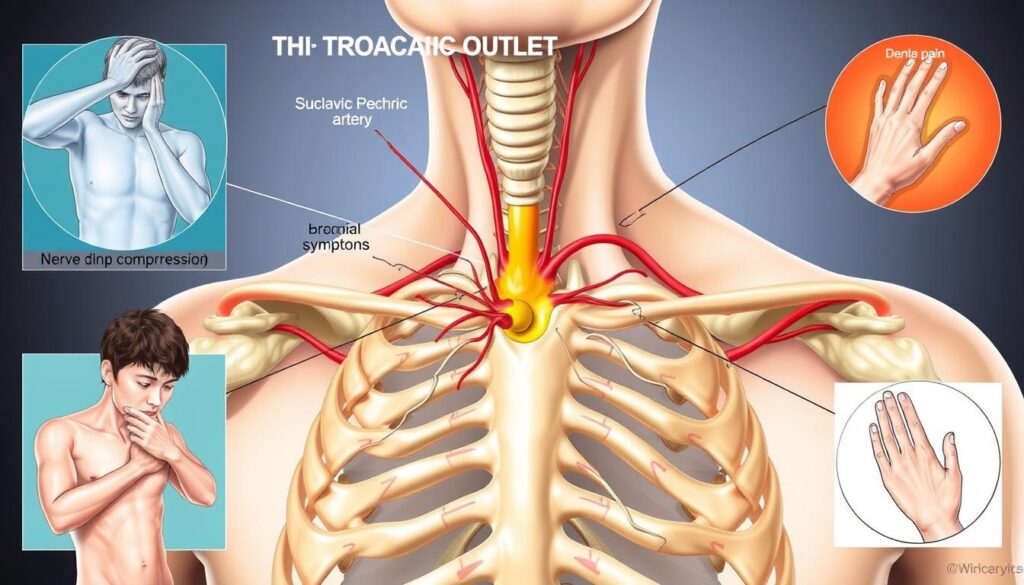
Thoracic Outlet Syndrome (TOS) is a complex condition affecting daily life. It’s a vascular compression disorder that strikes women three times more often than men1. TOS typically appears in adults aged 20 to 501.
TOS occurs when nerves and blood vessels get squeezed between the collarbone and first rib. This can lead to Brachial Plexus Injuries. Neurogenic thoracic outlet syndrome is the most common type12.
The causes of TOS are important to understand. Poor posture, trauma, and repetitive movements can trigger neurogenic pain1. Some people may have a cervical rib, increasing their risk of compression1.
Key Takeaways
- TOS primarily affects women aged 20-50
- Neurogenic TOS is the most common type
- Repetitive movements and poor posture can trigger symptoms
- Early detection is critical for effective management
- Treatment options range from physical therapy to surgery
What is Thoracic Outlet Syndrome and Its Impact
Thoracic outlet syndrome (TOS) affects the space between your collarbone and first rib. This area contains important blood vessels, nerves, and muscles. These parts are crucial for upper body function1.
TOS has unique anatomical challenges. People with long necks and droopy shoulders may be more likely to develop it3.
Defining the Thoracic Outlet Region
The thoracic outlet is a small passage for vital structures. It connects your chest and arm. Anatomical differences can affect this area, possibly causing compression and problems.
Different Types of TOS
Thoracic outlet syndrome has three main types:
- Neurogenic TOS: Most common, affecting brachial plexus nerves2
- Venous TOS: Compressing veins, accounting for approximately 5% of cases2
- Arterial TOS: Least frequent, representing about 1% of diagnoses2
Common Risk Factors and Causes
Several factors can increase your chances of getting TOS:
- Presence of a cervical rib, occurring in 1-3% of the population2
- Anatomical abnormalities in the scalene muscles
- Repetitive overhead movements
- Poor posture
- Physical trauma
“Understanding your body’s unique structural characteristics is key to managing thoracic outlet syndrome.” – Medical Professionals
Women are more likely to get TOS than men. It usually affects people between 20 and 50 years old1.
Recognizing TOS early can help manage it better. Targeted treatments can be very effective for this complex condition.
Recognizing Key Symptoms and Warning Signs
Thoracic Outlet Syndrome (TOS) shows different signs based on the type of compression. Knowing these signs can help you get medical help quickly. Early detection is key for effective treatment.
Types of Symptoms by TOS Variation
The three main types of TOS have unique symptoms:
- Neurogenic TOS: Causes ongoing nerve pain and issues4:
- Tingling in arms and hands
- Numbness in upper body
- Weak grip
- Pain from neck to arm
- Venous TOS: Involves blood vessel compression:
- Arm swelling
- Skin color changes
- Visible surface veins
- Risk of blood clots
- Arterial TOS: Causes severe blood flow issues:
- Cold and pale hands
- Pain when moving arms
- Possible artery blockage
Subclavian Vein Thrombosis can occur if these symptoms are left untreated5. This condition can lead to serious health problems.
“Early recognition of TOS symptoms is crucial for effective management and prevention of long-term complications.”
Critical Warning Signs
Be alert for these red flags that might point to TOS:
- Constant arm tiredness
- Strange finger color changes
- Throbbing lumps near the collarbone
- Symptoms getting worse when lifting arms
Doctors usually diagnose TOS through a full health history review. They also do physical exams and use advanced imaging like ultrasound and MRI5.
Conclusion
Thoracic Outlet Syndrome (TOS) is a complex condition that can greatly affect your daily life. Symptoms range from mild discomfort to severe vascular compression6. Neurogenic TOS is the most common type, making up about 95% of diagnosed cases6.
Early detection and personalized care are key for managing Brachial Plexus Injuries related to TOS. Soft tissue issues cause 70% of cases6. Specialized doctors who know TOS anatomy can help create an effective treatment plan.
Treatment varies based on the type of TOS you have. For neurogenic cases, physical therapy is often the first step. More advanced treatments may be needed later on.
Medical experts suggest surgery might be necessary for ongoing symptoms, especially with severe vascular compression7. Your active involvement with doctors can make a big difference in managing TOS.
Understanding your condition and following recommended treatments can improve your quality of life. Keep talking openly with your healthcare team to effectively manage Thoracic Outlet Syndrome.
FAQ
What is Thoracic Outlet Syndrome (TOS)?
TOS is a condition where nerves or blood vessels get squeezed between your collarbone and first rib. This can cause pain and weakness in your neck, shoulder, arm, and hand. It usually affects people aged 20-50, with women being more likely to get it.
What are the different types of Thoracic Outlet Syndrome?
There are three main types of TOS: neurogenic, venous, and arterial. Neurogenic TOS is the most common, affecting the brachial plexus nerves. Venous TOS compresses veins, while arterial TOS affects arteries.
Neurogenic TOS makes up over 90% of cases. Venous and arterial types are less common, accounting for about 5% and 1% respectively.
What are the common symptoms of Thoracic Outlet Syndrome?
Symptoms vary depending on the type of TOS. Neurogenic TOS causes pain and numbness in the arm and hand. It can also weaken your grip strength.
Venous TOS leads to swelling and discoloration. Arterial TOS can make hands cold and pale. It may cause pain during arm movement.
Warning signs include arm fatigue, color changes in fingers, and lumps near the collarbone. If you notice these, see a doctor.
What causes Thoracic Outlet Syndrome?
TOS can be caused by many things. These include body differences, poor posture, injuries, and repeated movements. Some specific causes are cervical ribs, whiplash, and bodybuilding.
Repeated overhead motions and weight gain can also lead to TOS. In rare cases, tumors may cause it too.
How is Thoracic Outlet Syndrome diagnosed?
Doctors use several methods to diagnose TOS. They review your medical history and do physical exams. They may also order tests like ultrasounds and X-rays.
Sometimes, nerve studies or MRI scans are needed. These help confirm TOS and figure out which type you have.
What are the treatment options for Thoracic Outlet Syndrome?
Treatment depends on the type of TOS you have. For neurogenic TOS, doctors often start with physical therapy. They might later use botox shots or surgery.
Venous and arterial TOS usually need surgery. This can include removing muscles or ribs. The goal is to relieve pressure and restore normal function.
Who is most at risk for developing Thoracic Outlet Syndrome?
People aged 20-50 are most likely to get TOS. Women have a higher risk than men. Athletes, musicians, and workers who do overhead tasks are also at risk.
People born with extra ribs or other body differences may be more prone to TOS.
Can Thoracic Outlet Syndrome be prevented?
You can’t always prevent TOS, but you can lower your risk. Keep good posture and avoid repeating the same arm movements. Use proper ergonomics at work and home.
Do regular stretches for your neck, shoulder, and arm muscles. This can help keep TOS at bay.
Source Links
- Thoracic outlet syndrome – Symptoms and causes – https://www.mayoclinic.org/diseases-conditions/thoracic-outlet-syndrome/symptoms-causes/syc-20353988
- Thoracic Outlet Syndrome – https://www.hopkinsmedicine.org/health/conditions-and-diseases/thoracic-outlet-syndrome
- Thoracic outlet syndrome – https://www.mountsinai.org/health-library/diseases-conditions/thoracic-outlet-syndrome
- Thoracic outlet syndrome – Symptoms, diagnosis and treatment – https://bestpractice.bmj.com/topics/en-us/592
- Thoracic outlet syndrome – Diagnosis and treatment – https://www.mayoclinic.org/diseases-conditions/thoracic-outlet-syndrome/diagnosis-treatment/drc-20353994
- Thoracic Outlet Syndrome: A Narrative Review – https://www.mdpi.com/2077-0383/10/5/962
- Thoracic outlet syndrome: a review for the primary care provider – https://www.degruyter.com/document/doi/10.1515/jom-2021-0276/html?srsltid=AfmBOorlNbwteIC63vG8DFUOG69KiqLxlQk05NS2HoVoyDfHV-YYvRIM

