
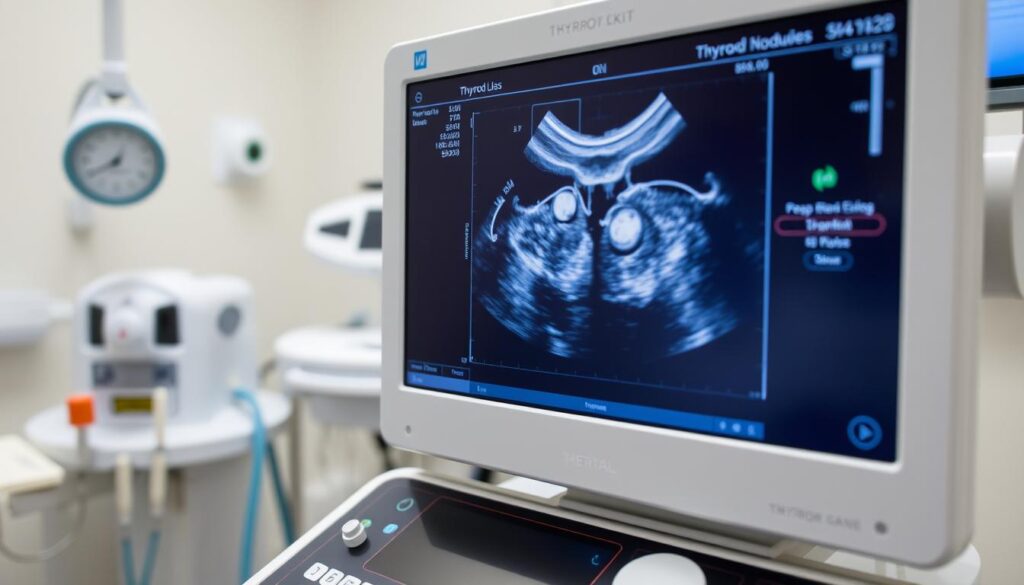
Thyroid nodules are small lumps in your thyroid gland. They can be solid or fluid-filled and are quite common. Most thyroid nodules are harmless, despite sounding worrisome12.
Women face a higher risk of thyroid nodules than men32. The chance of getting these nodules goes up as you get older. By age 60, about half of Americans have a thyroid nodule1.
Knowing about thyroid issues can help you handle health concerns. Your thyroid gland controls metabolism, affecting your overall health. Most nodules are benign, but it’s wise to have them checked regularly2.
Key Takeaways
- Thyroid nodules are common and usually non-cancerous
- Women are more prone to developing thyroid nodules
- Regular medical check-ups can help detect potential issues early
- Age increases the likelihood of developing thyroid nodules
- Most thyroid nodules do not require invasive treatment
What Are Thyroid Nodules and Their Symptoms?
Thyroid nodules are small growths in the thyroid gland. These cell clusters can impact your health significantly. Understanding their signs helps you seek proper medical care when needed.
Recognizing thyroid nodule symptoms is key for early detection. By age 60, about half of all people have thyroid nodules4. Most are harmless, with 95% being benign5.
Definition of Thyroid Nodules
A thyroid nodule is an unusual cell growth in your thyroid gland. These can be solid or fluid-filled and vary in size. Some nodules can cause noticeable hormone imbalances6.
Common Symptoms to Watch
- Visible swelling at the base of the neck
- Difficulty swallowing
- Shortness of breath
- Unexplained weight changes
- Increased sweating
- Rapid or irregular heartbeat
When to Seek Medical Attention
See a doctor if you have ongoing thyroid nodule symptoms. Large nodules might cause trouble swallowing or breathing5.
| Symptom Type | Potential Indicators |
|---|---|
| Hyperthyroidism | Weight loss, tremors, nervousness |
| Hypothyroidism | Fatigue, cold sensitivity, dry skin |
Thyroid ultrasounds can detect and evaluate nodules effectively. About 1 in 10 thyroid nodules might be cancerous4. Early detection is vital for your health.
“Early recognition of thyroid nodule symptoms can lead to timely medical intervention and better health outcomes.”
Not all thyroid nodules need immediate treatment. Small, symptom-free nodules often just need monitoring4.
Causes of Thyroid Nodules
Thyroid nodules have many possible causes. Knowing these can help you manage your thyroid health better. It’s important to recognize potential risk factors7.
Genetic Factors and Family History
Your genes play a big role in thyroid nodule growth. Family history can increase your chances of thyroid issues, especially multinodular goiter8.
Some people inherit genes that make them more likely to have thyroid problems7.
Environmental Influences
Outside factors can affect your thyroid health. Key triggers include:
- Radiation exposure
- Iodine deficiency8
- Chronic inflammatory conditions
Radiation exposure, especially in childhood, can raise your risk of thyroid nodules. Your diet’s iodine levels also affect how your thyroid works.
Learn more about thyroid nodule causes.
Thyroid Conditions Contributing to Nodules
Some thyroid conditions can cause nodules to form:
- Hashimoto’s thyroiditis8
- Chronic thyroid inflammation
- Thyroid adenoma
About 90% of thyroid nodules are not cancer8. Doctors can check nodules with a biopsy. New tests can look at nodule DNA to check for cancer risk7.
Understanding your individual risk factors is crucial for proactive thyroid health management.
Diagnosis and Treatment Options for Thyroid Nodules
Thyroid nodules affect up to two-thirds of Americans. About 90% are noncancerous. Your doctor will suggest tests to evaluate the nodule and decide on treatment.
Diagnosis usually involves blood tests, ultrasounds, and possibly a biopsy. An ultrasound of the thyroid and neck helps assess the nodule’s size and features9.
Around 8-15% of thyroid nodules may be cancerous. Thorough investigation is essential for proper diagnosis10.
Treatment depends on the nodule’s characteristics. Doctors often monitor benign nodules closely. Larger or suspicious nodules might need thyroid surgery11.
Non-surgical options like radiofrequency ablation (RFA) are gaining popularity9. Your doctor will suggest the best approach based on your nodule and overall health.
FAQ
What are thyroid nodules?
Thyroid nodules are lumps in the thyroid gland at the base of your neck. They can be solid or fluid-filled. Most nodules are benign, but a small percentage can be cancerous.
Are thyroid nodules dangerous?
Most thyroid nodules are harmless, but some can be cancerous. Your doctor will recommend tests to check the nodule’s nature. Regular monitoring is crucial, even if immediate treatment isn’t needed.
What symptoms should I watch for?
Watch for trouble swallowing, shortness of breath, or neck swelling. Also, look out for unexplained weight changes, increased sweating, or rapid heartbeat. Consult your doctor if you notice any of these symptoms.
Who is most at risk for developing thyroid nodules?
Women and older adults are more likely to develop thyroid nodules. Risk factors include family history of thyroid disorders and radiation exposure. Certain thyroid conditions like Hashimoto’s thyroiditis also increase the risk.
How are thyroid nodules diagnosed?
Doctors use blood tests to check thyroid hormone levels. Ultrasounds examine the nodule’s structure. Fine needle aspiration collects cell samples for analysis.
Additional imaging like CT scans might be needed in some cases.
What treatment options are available?
Treatment depends on the nodule’s characteristics. Many benign nodules only need regular check-ups. Options include observation, medication, radioactive iodine treatment, or surgery.
Surgery may be needed for larger nodules, those causing symptoms, or suspicious for cancer.
Can lifestyle changes help manage thyroid nodules?
Yes, a healthy diet rich in iodine can support thyroid health. Managing stress and avoiding environmental toxins are also helpful. Always consult your doctor for personalized advice.
Are thyroid nodules hereditary?
Thyroid nodules have a genetic component. A family history of thyroid disorders may increase your risk. However, not everyone with genetic predisposition will develop thyroid nodules.
Source Links
- Thyroid Nodules: When to Worry – https://www.hopkinsmedicine.org/health/conditions-and-diseases/thyroid-nodules-when-to-worry
- What You Should Know About Thyroid Nodules – https://www.healthline.com/health/thyroid-nodule
- Thyroid Nodules and Swellings – https://www.btf-thyroid.org/thyroid-nodules-and-swellingsleaflet
- What Are Thyroid Nodules? – https://www.webmd.com/a-to-z-guides/what-are-thyroid-nodules
- Thyroid Nodules: What are Thyroid Nodules? Thyroid Nodules Symptoms, Treatment, Diagnosis – https://www.uclahealth.org/medical-services/surgery/endocrine-surgery/conditions-treated/thyroid/thyroid-nodules-thyroid-cancer
- ENT Doctor | Head and Neck Cancer Specialist | Yarah Haidar, MD – Thyroid Nodules – https://yarahhaidarmd.com/thyroid-nodules/
- Thyroid Nodules | American Thyroid Association – https://www.thyroid.org/thyroid-nodules/
- 5 Causes of Thyroid Nodules – Associated Endocrinologists – https://www.endocrinemds.com/blogs/5-causes-thyroid-nodules/
- Thyroid Nodules – https://www.hopkinsmedicine.org/health/conditions-and-diseases/thyroid-nodules
- Approach to Thyroid Nodules: Diagnosis and Treatment – https://pmc.ncbi.nlm.nih.gov/articles/PMC10861804/
- Patient education: Thyroid nodules (Beyond the Basics) – https://www.uptodate.com/contents/thyroid-nodules-beyond-the-basics/print

