
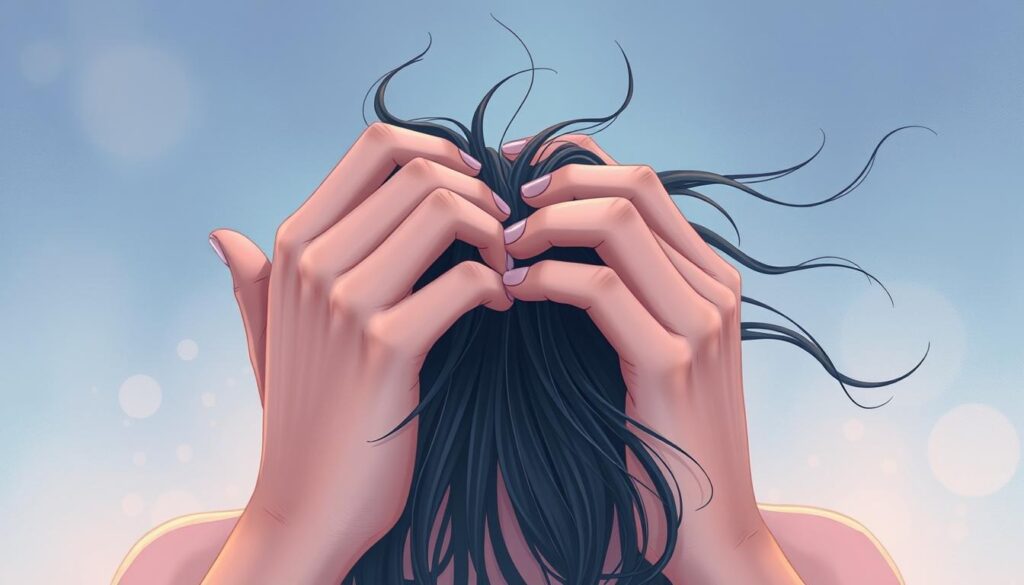
Trichotillomania is a complex mental health condition. It’s a body-focused repetitive behavior that involves hair pulling. This disorder can greatly affect your emotional well-being and daily life1.
The urge to pull out your hair can feel overwhelming. It often leads to feelings of isolation2. Symptoms usually start during early adolescence, between ages 10 and 131.
Hair pulling can happen on various body parts. These include the scalp, eyebrows, eyelashes, arms, and legs12. Trichotillomania is more common than you might think.
About 1-2 in 100 people face similar challenges2. The emotional journey often includes feelings of shame and low self-esteem. Many struggle with a difficult-to-break cycle of pulling1.
Key Takeaways
- Trichotillomania typically starts in early adolescence
- Hair pulling can occur on multiple body parts
- The condition affects 1-2 people per 100
- Emotional impacts include shame and low self-esteem
- Professional help can provide effective management strategies
What is Trichotillomania and Its Common Symptoms
Trichotillomania is a complex impulse control disorder. It involves repetitive hair-pulling behaviors that go beyond simple hair removal. This condition significantly impacts a person’s emotional well-being3.
Recognizing the Signs of Hair Pulling Disorder
Trichotillomania typically starts during childhood or adolescence. Most people experience symptoms between ages 10 and 133. Those affected feel strong urges to pull hair from various body parts.
Common areas include the scalp, eyebrows, and eyelashes4. These urges can be hard to resist and cause distress.
Physical and Emotional Symptoms
- Visible hair loss and patchy bald spots
- Increasing tension before hair pulling
- Temporary relief after pulling hair
- Feelings of shame and low self-esteem
Trichotillomania can deeply affect emotions. Many people feel anxious and stressed about their hair-pulling behaviors4. The condition often occurs with other mental health issues.
These may include obsessive-compulsive disorder and mood disorders5. Recognizing these symptoms is crucial for seeking help.
Types of Hair Pulling Behaviors
Trichotillomania manifests in two primary pulling styles:
- Automatic pulling: Unconscious hair removal
- Focused pulling: Deliberate and intentional hair extraction
This disorder affects about 0.5% to 2% of the population. Women are more likely to experience it3. If left untreated, it can lead to permanent hair loss and skin damage4.
Understanding trichotillomania is the first step toward managing its challenging symptoms and seeking appropriate support.
Understanding the Causes and Risk Factors of Hair Pulling Disorder
Trichotillomania is a complex disorder with multiple causes. Genetic factors and environmental triggers play key roles. Understanding these can help you grasp this challenging mental health condition6.
The disorder usually starts in early teens, between ages 10 and 136. Research points to genetic predisposition as a major factor7.
Key Risk Factors
- Family history of the disorder7
- Presence of other mental health conditions
- High-stress situations7
- Hormonal changes
Trichotillomania affects about 3.5% of people during their lifetime7. Adult women are up to nine times more likely to be diagnosed8.
Environmental Triggers
Several factors can increase hair-pulling behaviors:
“Trichotillomania is not a choice, but a complex interaction of genetic and environmental influences.”
Mental health conditions like anxiety can contribute to trichotillomania7. Without treatment, the disorder may last throughout life6.
About 20% of people with this condition also eat pulled hair, known as trichophagia8.
Treatment Options for Trichotillomania
Trichotillomania is a challenging hair-pulling disorder. Effective treatments can help manage this condition. The right therapy can make a big difference in recovery9.
Trichotillomania affects up to 4% of people. It usually starts during early teen years10. Many treatment options can help you gain control.
Cognitive Behavioral Therapy Approaches
Cognitive Behavioral Therapy (CBT) is key for treating hair-pulling behaviors. Habit reversal training helps people spot and change their pulling patterns10.
- Identify trigger situations
- Develop alternative coping mechanisms
- Practice mindfulness techniques
Habit Reversal Training Techniques
Habit reversal training has shown great success. Studies report a 90% reduction in trichotillomania symptoms9. This therapy focuses on three main areas.
- Awareness training
- Competing response practice
- Motivation and contingency management
Medical and Therapeutic Interventions
Treatment often needs multiple approaches. Medication can help, especially with anxiety or depression10.
| Medication Type | Potential Benefits |
|---|---|
| N-acetylcysteine (NAC) | Reduces hair-pulling urges |
| Selective Serotonin Reuptake Inhibitors (SSRIs) | Addresses associated depression/anxiety |
| Antipsychotic Medications | Helps manage compulsive behaviors |
Remember, effective therapy requires patience, persistence, and a personalized treatment plan9.
Your trichotillomania journey is unique. Working with mental health pros helps create an effective plan for you.
Conclusion
Trichotillomania is a complex mental health issue that deeply affects people’s lives. It requires understanding and strong support systems. This condition impacts 0.5% to 2% of the population.
Remember, trichotillomania doesn’t define you. Habit reversal therapy offers promising ways to manage hair-pulling behaviors. Cognitive techniques can help you cope and regain control.
Raising awareness helps reduce stigma around trichotillomania. Research shows many people also experience depression and anxiety. Seeking help and understanding triggers can improve your overall well-being.
Your recovery journey is unique. With support, professional guidance, and self-compassion, you can overcome trichotillomania’s challenges. You have the power to reclaim your life11.
FAQ
What exactly is trichotillomania?
Trichotillomania is a mental health condition causing an uncontrollable urge to pull out one’s hair. It’s a body-focused repetitive behavior that usually starts in early adolescence. This disorder affects 0.5% to 3.4% of adults.
Where do people typically pull hair from?
People often pull hair from their scalp, eyebrows, and eyelashes. However, hair can be pulled from any body area. This can lead to visible hair loss and bald spots.
What causes trichotillomania?
The exact cause isn’t fully known, but it’s likely a mix of genetic and environmental factors. Risk factors include family history and other mental health conditions. High-stress situations can also play a role.
Is trichotillomania more common in men or women?
Women are more often affected by trichotillomania in adulthood. The disorder typically starts between ages 10 and 13. It can continue into adult years.
What are the different types of hair pulling behaviors?
There are two main types: automatic (unconscious) and focused (deliberate). Both positive and negative emotions can trigger these behaviors. Symptoms may change in severity over time.
How is trichotillomania treated?
Treatment often combines different approaches, mainly Cognitive Behavioral Therapy (CBT) with habit reversal training. Stress management techniques and medication for related conditions may also help. Self-help methods like fidget toys can be useful too.
Can trichotillomania be completely cured?
There’s no definitive “cure,” but trichotillomania can be effectively managed. Many people learn to reduce hair-pulling behaviors through therapy and support. Personalized coping strategies can improve quality of life.
What emotional impacts does trichotillomania have?
People with trichotillomania often feel temporary relief after pulling hair. This is followed by shame and low self-esteem. Social anxiety due to visible hair loss is also common.
Are there any physical health risks associated with trichotillomania?
Yes, physical risks include skin damage at pulling sites. Digestive issues from hair ingestion (trichophagia) can occur. Some people might also experience scalp or skin infections from repeated pulling.
How can I support a loved one with trichotillomania?
Offer kind, non-judgmental support and encourage professional help. Learn about the condition and avoid criticizing their behavior. Help create a low-stress environment. Professional therapy can guide both the individual and their support system.
Source Links
- Trichotillomania (hair pulling disorder) – https://www.nhs.uk/mental-health/conditions/trichotillomania/
- Hair Pulling (Trichotillomania) – https://www.aacap.org/AACAP/Families_and_Youth/Facts_for_Families/FFF-Guide/Hair-Pulling-_Trichotillomania_-096.aspx
- Trichotillomania: Causes, Symptoms, Treatment, & More – https://www.healthline.com/health/anxiety/trichotillomania
- Trichotillomania – https://www.healthdirect.gov.au/trichotillomania
- Diagnosis, Evaluation, and Management of Trichotillomania – https://pmc.ncbi.nlm.nih.gov/articles/PMC4143797/
- Trichotillomania (hair-pulling disorder) – Symptoms and causes – https://www.mayoclinic.org/diseases-conditions/trichotillomania/symptoms-causes/syc-20355188
- What Is Trichotillomania? – https://www.webmd.com/anxiety-panic/trichotillomania
- Trichotillomania (Hair Pulling) – https://my.clevelandclinic.org/health/diseases/9880-trichotillomania
- Trichotillomania – Facts and Treatment – https://adaa.org/learn-from-us/from-the-experts/blog-posts/professional/trichotillomania-facts-and-treatment
- Trichotillomania | Fact Sheet – ABCT – Association for Behavioral and Cognitive Therapies – https://www.abct.org/fact-sheets/trichotillomania/
- 09CU.NUSS.psy – https://cdn.mdedge.com/files/s3fs-public/Document/September-2017/072030191.pdf

