
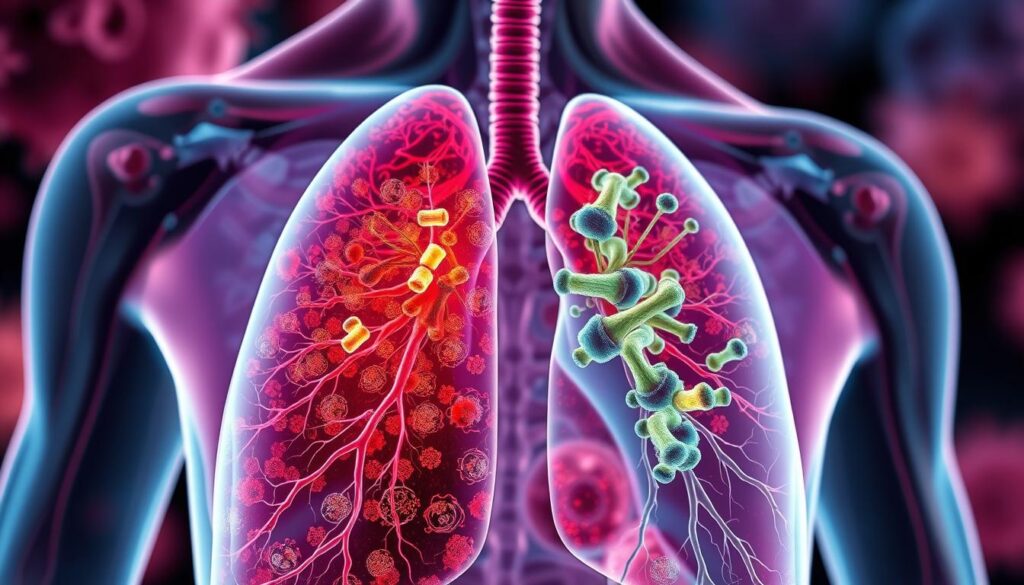
Tuberculosis (TB) is a serious global health issue. It’s an infectious disease that mainly affects the lungs. The Mycobacterium tuberculosis bacteria causes TB1.
TB spreads through the air when infected people cough or sneeze. People with weak immune systems, like those with HIV/AIDS, are more likely to get TB1. Early detection and proper treatment are key to fighting this disease.
TB remains a major threat worldwide. It kills over a million people each year2. Drug-resistant strains are making it harder to treat1.
Key Takeaways
- TB is a serious lung infection caused by Mycobacterium tuberculosis
- The disease spreads through airborne transmission
- Weakened immune systems increase tuberculosis risk
- Global health efforts continue to combat TB
- Early detection and proper treatment are essential
What is Tuberculosis?
Tuberculosis (TB) is a complex infectious disease that challenges global health systems. It’s crucial to grasp its details for effective prevention and spread control.
TB infects about 1.8 billion people worldwide. This is one-quarter of the global population3. These numbers show why understanding TB is so important.
Understanding TB Types
Tuberculosis comes in different forms. These are the main categories:
- Latent TB: An inactive infection where bacteria exist without causing symptoms
- Active TB disease: A contagious state where bacteria multiply and cause illness
- Pulmonary TB: Affecting the lungs
- Extrapulmonary TB: Impacting other body organs
Global TB Transmission
TB spreads through airborne droplets when an infected person coughs, speaks, or sneezes. It spreads faster in crowded, poorly ventilated spaces4.
TB does not discriminate – it impacts all age groups, with over 80% of cases occurring in low and middle-income countries4.
Risk Factors and Vulnerability
| High-Risk Groups | Increased Vulnerability |
|---|---|
| HIV/AIDS patients | 16 times more likely to develop TB4 |
| Cancer patients | Weakened immune system increases risk |
| Organ transplant recipients | Compromised immune defense |
In 2023, about 10.8 million people got TB globally. This includes 6.0 million men, 3.6 million women, and 1.3 million children4.
Grasping TB’s complexity is key to fighting it. This knowledge helps in creating better prevention and treatment strategies.
Causes and Risk Factors
Tuberculosis is a complex disease with many factors influencing its spread. Understanding its causes can help protect you and your loved ones from this serious infection.
Knowing these factors can guide you in taking preventive measures. It’s crucial to be aware of the risks associated with TB.
Bacteria Behind the Disease
The main cause of tuberculosis is the Mycobacterium tuberculosis bacteria. It can stay dormant in your body for years5.
These bacteria are experts at hiding from the immune system. This makes them hard to detect and treat.
Primary Risk Factors for TB
Your risk of getting tuberculosis depends on several key factors:
- Weakened immune system due to conditions like HIV or diabetes6
- Living or traveling in high TB prevalence regions6
- Working in healthcare or group settings with high transmission risks6
- Recent contact with active TB patients5
Lifestyle Impacts on TB Risk
Your daily habits can greatly affect your chance of getting tuberculosis. Smoking increases your risk of TB infection and death7.
Diabetes patients face a higher risk of TB. Studies show they’re more likely to progress from latent to active tuberculosis7.
“Prevention is always better than cure when it comes to tuberculosis.”
Drug-resistant TB is a major global health problem. It’s mainly caused by improper antibiotic use.
Protecting your immune system through healthy choices is your best defense. It can help you avoid this potentially dangerous disease.
Symptoms You Should Know
Tuberculosis (TB) affects various parts of your body. Recognizing symptoms is key for early detection and treatment. Learn more about this complex disease.
Early Warning Signs of TB
TB symptoms can be subtle at first. Pulmonary TB often starts with these signs:
- Persistent cough lasting more than three weeks
- Mild chest pain
- Low-grade fever
- Unexplained fatigue
Most healthy people can fight TB bacteria without symptoms8. Some may develop latent TB, where bacteria stay inactive in the body8.
Advanced TB Symptoms to Watch
As TB progresses, extrapulmonary symptoms become more noticeable. These can include:
- Coughing up blood
- Significant weight loss
- Intense night sweats
- Severe chest pain
Symptoms may take months or years to appear after infection8. Weakened immune systems increase the risk of developing active TB9.
When Medical Attention is Critical
Prompt medical evaluation can make a significant difference in TB treatment outcomes.
Seek immediate medical help if you experience:
- Persistent cough for more than three weeks
- Unexplained weight loss
- Recurring fever
- Difficulty breathing
- Coughing up blood
| TB Type | Common Symptoms | Potential Complications |
|---|---|---|
| Pulmonary TB | Chronic cough, chest pain | Lung damage |
| Extrapulmonary TB | Organ-specific pain, fever | Organ dysfunction |
Early detection is crucial for successful TB treatment8. See a doctor if you might have been exposed to TB or have ongoing symptoms.
Treatment Options Available
Understanding TB treatment options is key for effective recovery. Antibiotics are used to fight the bacterial infection10. Your doctor will create a personalized plan with medications taken over several months targeting tuberculosis infection.
Common Treatment Methods
Active TB treatment usually involves multiple antibiotics for six to twelve months10. These include isoniazid, rifampin, pyrazinamide, and ethambutol.
For latent TB, preventive therapy often requires a daily antibiotic for six to nine months11. Your plan may have an intensive phase followed by a continuation phase11.
Importance of Completing Treatment
Finishing your TB treatment prevents drug-resistant TB and stops infection spread10. Drug-resistant tuberculosis can need 20 to 30 months of treatment with tougher side effects10.
To boost success, create a routine for taking your medication. Use pill dispensers or set daily reminders10.
Preventive Measures You Can Take
During treatment, protect yourself and others by following prevention guidelines. Cover your mouth when coughing and ensure proper room ventilation10.
Your doctor might suggest Directly Observed Therapy (DOT) to support your treatment. DOT helps monitor your progress10. Early detection and consistent treatment are crucial for managing tuberculosis effectively.
FAQ
What is Tuberculosis (TB)?
Tuberculosis is a serious lung infection caused by bacteria. It spreads through the air when infected people cough or sneeze. TB poses a significant health risk worldwide.
What are the different types of TB?
TB has three main types: primary, latent, and active. Pulmonary TB affects the lungs, while extrapulmonary TB impacts other organs. Only active TB can spread to others.
Who is at highest risk of developing TB?
People in close contact with infected individuals face higher TB risk. Those living in high-TB areas or working in healthcare are also vulnerable. Weakened immune systems increase the chances of infection.
Other risk factors include HIV/AIDS, diabetes, and poor nutrition. Substance abuse, smoking, and subpar living conditions also contribute to TB risk.
What are the typical symptoms of TB?
Early TB signs include persistent cough, chest pain, and mild fever. As it worsens, you may cough up blood and experience night sweats. Unexplained weight loss and fatigue are common in advanced stages.
Symptoms of extrapulmonary TB vary based on the affected organ.
How is TB treated?
TB treatment involves a mix of antibiotics taken for 6 to 9 months. Common drugs include isoniazid, rifampin, ethambutol, and pyrazinamide. Completing the full treatment is crucial to prevent drug-resistant TB strains.
Doctors may prescribe preventive therapy for those with latent TB infection.
Can TB be prevented?
Early detection and treatment help prevent TB spread. Improving ventilation in high-risk areas is also effective. Some countries use BCG vaccination for prevention.
If you have latent TB, preventive treatment can lower your risk of active disease.
What makes TB a global health concern?
TB affects millions worldwide, with about 10 million new cases yearly. It causes around 1.5 million deaths annually. TB is especially challenging in areas with high HIV rates and limited healthcare.
How does TB spread?
TB spreads through airborne droplets when infected people cough or sneeze. It thrives in crowded, poorly ventilated spaces. Not everyone infected develops active TB, but those with weak immune systems are at risk.
Source Links
- Tuberculosis-Tuberculosis – Symptoms & causes – Mayo Clinic – https://www.mayoclinic.org/diseases-conditions/tuberculosis/symptoms-causes/syc-20351250
- Understanding Tuberculosis: Causes, Symptoms, and Treatment Options – https://www.webmd.com/lung/understanding-tuberculosis-basics
- Learn About Tuberculosis – https://www.lung.org/lung-health-diseases/lung-disease-lookup/tuberculosis/learn-about-tuberculosis
- Tuberculosis (TB) – https://www.who.int/news-room/fact-sheets/detail/tuberculosis
- Tuberculosis: Causes and How It Spreads – https://www.cdc.gov/tb/causes/index.html
- Tuberculosis Risk Factors – https://www.cdc.gov/tb/risk-factors/index.html
- Risk factors for tuberculosis: diabetes, smoking, alcohol use, and the use of other drugs – https://pmc.ncbi.nlm.nih.gov/articles/PMC6044656/
- Tuberculosis (TB) symptoms and treatments – https://www.nhsinform.scot/illnesses-and-conditions/infections-and-poisoning/tuberculosis-tb/
- Pulmonary Tuberculosis: TB Causes, Symptoms, & Treatments | Houston Methodist – https://www.houstonmethodist.org/pulmonology/tuberculosis/
- Diagnosing and Treating Tuberculosis – https://www.lung.org/lung-health-diseases/lung-disease-lookup/tuberculosis/treating-and-managing
- Tuberculosis (TB) – Treatment for TB Disease – https://www.cdc.gov/tb/topic/treatment/tbdisease.htm

