
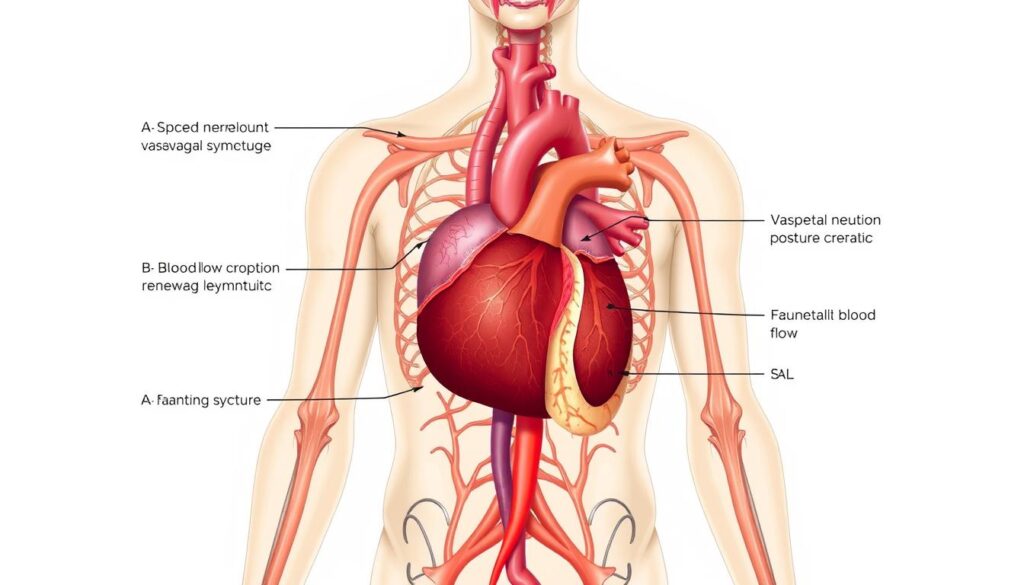
Vasovagal syncope is a common type of fainting that can surprise you. It happens when your body overreacts to certain triggers. This causes a sudden drop in heart rate and blood pressure1.
While usually harmless, it can lead to unexpected fainting spells. These episodes may startle both you and those around you2. Neurocardiogenic syncope affects 25-30% of all fainting cases3.
Your body might react to various stimuli like standing too long. Heat exposure or emotional stress can also trigger an episode1. Warning signs include pale skin, lightheadedness, and tunnel vision.
These symptoms often come before a brief loss of consciousness. Most episodes resolve within a minute1. Knowing your triggers and spotting early signs can help you manage this condition better.
Key Takeaways
- Vasovagal syncope is a common fainting disorder triggered by specific stimuli
- Most episodes are brief and resolve within a minute
- Recognizing warning signs can help prevent full fainting episodes
- Always consult a healthcare professional after unexpected fainting
- Proper management can significantly reduce the frequency of syncope events
What is Vasovagal Syncope and How Does It Happen?
Vasovagal syncope affects your body’s autonomic nervous system. It’s a complex neurological event that can cause fainting. Knowing about this condition helps you manage potential fainting episodes better4.
Understanding the Mechanism
Autonomic dysfunction can trigger a sudden neurological response. This leads to a dramatic shift in blood pressure and heart rate. As a result, orthostatic hypotension occurs, causing temporary loss of consciousness5.
Common Triggers of Situational Syncope
- Emotional stress
- Sight of blood
- Prolonged standing
- Heat exposure
- Extreme pain
Symptoms to Recognize
Before fainting, you might notice several warning signs:
- Lightheadedness
- Pale skin
- Tunnel vision
- Nausea
- Cold sweats
Most syncope cases in young adults are not associated with serious medical problems4.
Vasovagal syncope isn’t usually life-threatening. However, recognizing its patterns can help prevent potential injuries6.
Identifying and Diagnosing Vasovagal Syncope
Diagnosing Neurally Mediated Syncope is vital for proper care. Your doctor will evaluate you if you have unexpected fainting episodes. They’ll look for the cause of your Vaso-Vagal Attack7.
Diagnostic Tests for Vasovagal Reaction
Doctors use various tests to find the cause of syncope. These include blood tests, electrocardiogram (EKG), and electroencephalogram (EEG).
They may also use a tilt-table test. This test induces and observes syncope in a controlled setting7.
- Blood tests to rule out conditions like anemia
- Electrocardiogram (EKG) to check heart function8
- Electroencephalogram (EEG) to detect potential seizure activity
- Tilt-table test to induce and observe syncope in a controlled environment7
Understanding Your Diagnostic Journey
Syncope affects about 40% of Americans during their lifetime8. Doctors focus on three key questions during your evaluation.
- Determining if the loss of consciousness is truly syncope
- Identifying specific features in your medical history
- Assessing potential heart-related causes7
Your doctor might explore different types of syncope. These include neurally-mediated, cardiac-related, or orthostatic varieties7.
When to Seek Immediate Medical Attention
Call your doctor right away if you have unexpected fainting episodes. Also, seek help if you injure your head during syncope.
- Unexpected fainting episodes
- Head injury during a syncope event
- Fainting while on blood-thinning medications
With proper medical evaluation, most patients get a clear diagnosis. This ensures you receive the right treatment for your condition8.
Effective Treatment and Management Options
Managing vasovagal syncope requires a personalized approach. It starts with understanding your body’s specific responses. Developing strategies to prevent fainting episodes is crucial9.
Your doctor may suggest avoiding known triggers. These can include prolonged standing, extreme heat, or intense emotional situations9.
Treatment options often include lifestyle changes and targeted medications. Alpha-1-adrenergic agonists or selective serotonin reuptake inhibitors may help control symptoms9.
Comprehensive treatment plans can include increasing salt intake and hydration. They may also include techniques to manage orthostatic hypotension10.
Watch for warning signs like dizziness, sweaty palms, or a pale face. Use anti-syncope techniques such as leg crossing or arm tensing to maintain blood pressure9.
Your doctor might recommend beta blockers in some cases. For severe instances, they may even consider a pacemaker10. Seek medical help if fainting becomes frequent or happens in risky settings9.
Most people with vasovagal syncope can manage their condition effectively. Careful monitoring and proactive strategies are key. Regular check-ups with your doctor ensure you get the right treatment10.
FAQ
What is vasovagal syncope?
Vasovagal syncope is a common fainting type caused by an overreactive autonomic nervous system. It happens when heart rate and blood pressure drop suddenly. This reduces brain blood flow, leading to temporary unconsciousness.
While usually harmless, it can cause injuries from falling. Recognizing symptoms early can help prevent full fainting episodes.
What are the most common triggers for vasovagal syncope?
Common triggers include prolonged standing, heat exposure, and seeing blood. Emotional stress, fear of injury, and physical strain can also prompt vasovagal responses.
Sudden emotional or physical stress often triggers this reaction in susceptible individuals. Recognizing these triggers can help manage the condition effectively.
What symptoms should I watch for before fainting?
Warning signs include lightheadedness, pale skin, tunnel vision, and nausea. You might also experience cold sweats, weakness, dizziness, or ringing in your ears.
These early symptoms can signal an impending fainting episode. Recognizing them quickly can help prevent full loss of consciousness.
How is vasovagal syncope diagnosed?
Diagnosis involves a thorough medical evaluation, including blood tests and an electrocardiogram (EKG). Doctors may also conduct a tilt-table test to understand your specific condition.
They’ll review your medical history and symptoms. Hemodynamic tests might be done to get a clearer picture of your condition.
Is vasovagal syncope dangerous?
While not usually life-threatening, vasovagal syncope can lead to injuries from falling. Seek medical attention, especially after your first episode or if you hit your head.
Most people recover quickly. However, professional evaluation helps rule out more serious underlying conditions.
How can I prevent vasovagal syncope episodes?
Stay hydrated and avoid known triggers. Learn anti-syncope techniques like leg crossing and arm tensing. Recognize early warning signs to prevent full episodes.
If you feel faint, sit or lie down immediately. This helps restore blood flow to your brain quickly.
What treatment options are available?
Treatment focuses on managing symptoms and preventing future episodes. This may include lifestyle changes and learning recognition techniques.
Medications for heart rhythm or blood pressure might be prescribed. In rare cases, doctors might consider a pacemaker for severe instances.
When should I see a doctor about vasovagal syncope?
Seek immediate medical care if you experience unexpected fainting or hit your head during a fall. Also consult a doctor if you’re on blood-thinning medications or have recurring episodes.
A healthcare professional can determine if your syncope is caused by a more serious condition. Early intervention can prevent complications and improve quality of life.
Source Links
- Vasovagal syncope – Symptoms and causes – https://www.mayoclinic.org/diseases-conditions/vasovagal-syncope/symptoms-causes/syc-20350527
- Vasovagal Syncope: Symptoms, Causes and Treatment – https://my.clevelandclinic.org/health/symptoms/23325-vasovagal-syncope
- Syncope: Symptoms, Causes & Treatments – https://my.clevelandclinic.org/health/diseases/17536-syncope
- Patient education: Syncope (fainting) (Beyond the Basics) – https://www.uptodate.com/contents/syncope-fainting-beyond-the-basics/print
- Syncope: what is the trigger? – https://pmc.ncbi.nlm.nih.gov/articles/PMC1767547/
- Understanding Vasovagal Syncope – https://www.saintlukeskc.org/health-library/understanding-vasovagal-syncope
- Diagnosis and treatment of syncope – https://pmc.ncbi.nlm.nih.gov/articles/PMC1861366/
- Syncope: Evaluation and Differential Diagnosis – https://www.aafp.org/pubs/afp/issues/2017/0301/p303.html
- Treatment for Vasovagal Syncope – https://www.saintlukeskc.org/health-library/treatment-vasovagal-syncope
- Evaluation and Management of Vasovagal Syncope – https://www.aafp.org/pubs/afp/issues/2001/0515/p2053.html

