
A Nasolacrimal Duct Obstruction can be frustrating and uncomfortable. It affects people of all ages, from newborns to adults. This condition can disrupt normal eye function and cause significant distress1.
Tear Duct Stenosis blocks your eye’s natural drainage system. It prevents tears from flowing normally. This can lead to excessive tearing, eye redness, and recurring infections1.
About 1 in 20 babies are born with this condition. Fortunately, it often resolves on its own within their first year2.
Adults might experience Epiphora for various reasons. These include injuries, infections, or rarely, tumors1. Eye infections are a common trigger for blocked tear ducts in adults2.
Understanding the causes can help you seek proper treatment. It’s important to address the issue promptly to prevent potential complications.
Key Takeaways
- Blocked tear ducts can affect individuals of all ages
- Symptoms include excessive tearing and eye redness
- Most infant cases resolve naturally within the first year
- Treatment depends on the specific cause and individual’s age
- Prompt medical attention can prevent potential complications
What Are Blocked Tear Ducts and How Do They Function?
Your tear drainage system is vital for eye health. It’s a complex network that keeps your eyes comfortable. Knowing how it works helps spot Lacrimal System Disorders early.
The Anatomy of Your Tear Drainage System
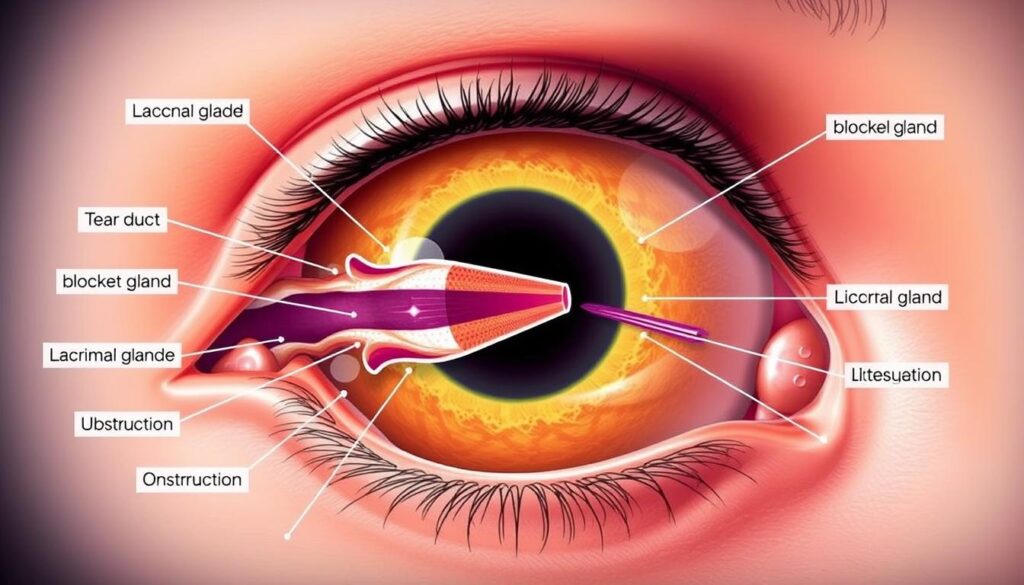
Your eyes have a built-in fluid system. Tear Glands and Lacrimal Glands produce tears to protect your eyes. The drainage process involves several parts.
- Lacrimal Glands located above each eyeball
- Puncta (tiny openings in the eyelids)
- Canaliculi (small drainage canals)
- Lacrimal sac
- Nasolacrimal duct
Normal Tear Flow Process
Blinking spreads tears across your eye. This cleans and moistens the area. Extra fluid drains through the puncta into your nose.
Blocked tear ducts can disrupt this process. This leads to uncomfortable symptoms3.
Signs of Tear Duct Obstruction
Dacryostenosis can show through several signs. Look out for these warning signals:
- Persistent watery eyes
- Eye redness
- Recurrent eye infections
- Painful swelling near the eye’s inner corner
- Mucus or pus discharge
Blocked tear ducts can occur in both babies and adults, with different underlying causes4.
Knowing these symptoms helps catch issues early. This allows you to get proper medical care for your eyes.
Common Causes of Blocked Tear Duct
Tear duct blockages can occur at various life stages. The causes differ between infants and adults. Understanding these causes helps manage eye health better.
Blocked tear ducts are common in infants. About 5% of newborns have a tissue membrane covering the tear duct. This usually clears up within a couple of months after birth5.
Most blocked tear ducts in babies resolve naturally before the child’s first birthday6. For adults, the causes are more complex.
- Age-related changes can narrow tear drainage passages7
- Chronic eye infections and inflammation7
- Facial injuries or trauma7
- Medical treatments like chemotherapy or radiation5
Women over 40 are more likely to develop blocked tear ducts. This may be due to hormonal changes5. Some medical treatments can also cause this condition.
- Glaucoma eye drops
- Radioactive iodine treatment
- Chemotherapy medications
Untreated blocked tear ducts can lead to dacryocystitis, an infection. This increases the risk of eye infections. It can cause constant tearing, swelling, and mucus discharge7.
“Early recognition and treatment of tear duct blockages can prevent potential complications and improve overall eye health.”
Take steps to prevent tear duct blockages. Treat nasal and eye infections properly. Use protective eyewear when needed. Seek medical help for persistent eye drainage or discomfort6.
Treatment Options for Nasolacrimal Duct Obstruction
Blocked tear ducts have several treatment options. Your age, symptoms, and underlying cause determine the best approach. Your doctor will guide you to the right solution for your condition.
Conservative Management Approaches
Gentle massage often helps infants with blocked tear ducts. Most babies’ drainage systems clear up on their own as they grow8.
For persistent cases, doctors may suggest:
- Gentle tear duct massage
- Warm compresses
- Antibiotic eye drops for potential Lacrimal Sac Infection
Surgical Interventions
Surgery becomes necessary when conservative methods fail. Dacryocystorhinostomy (DCR) creates a new tear drainage pathway9. This procedure has two main methods:
| Surgical Method | Approach | Key Characteristics |
|---|---|---|
| External DCR | Small cut on nose side | Traditional approach with visible incision |
| Endoscopic DCR | Nasal opening | Minimally invasive with camera guidance |
Children with persistent blockages may need additional procedures. These include Conjunctivodacryocystorhinostomy (CDCR), probing, or intubation8. These techniques help restore proper tear drainage.
Recovery and Aftercare
After surgery, you may experience some temporary side effects. These can include mild soreness and potential bruising. You might also have minimal activity restrictions.
- Mild soreness
- Potential bruising
- Minimal activity restrictions
Proper follow-up and adherence to your doctor’s instructions are crucial for successful treatment.
Your doctor will likely prescribe antibiotics and eye drops. These prevent infection and support healing9. Regular check-ups will monitor your progress and ensure optimal recovery.
Conclusion
Blocked tear ducts can affect people of all ages, especially babies1011. Most cases get better on their own. About 85% of children improve without major medical help11.
Be proactive about Tear Duct Prevention. Regular eye exams can catch problems early. This lowers the risk of long-term infections. If you notice constant tearing or discharge, see an eye doctor.
Special medical resources offer detailed advice on eye health care. Eye Infection Prevention depends on your specific eye health needs. Most blocked tear ducts in babies clear up by themselves12.
Adults may need more targeted treatments. Keep good eye hygiene and treat inflammation quickly. Follow proper contact lens care to reduce complications10.
Your eye health is vital for overall wellness. With proper care and timely medical help, you can manage tear duct issues. This ensures your eyes stay healthy and comfortable.
FAQ
What exactly is a blocked tear duct?
A blocked tear duct stops your eye’s natural drainage system from working properly. It causes excessive tearing, eye redness, and possible recurring infections. The blockage can happen anywhere in the tear drainage system.
Are blocked tear ducts more common in certain age groups?
Blocked tear ducts affect all ages but are most common in two groups. Infants often have congenital blockages due to underdeveloped drainage systems. In adults, age-related changes, infections, and other factors can cause obstructions.
What are the main symptoms of a blocked tear duct?
The main signs include excessive tearing, eye redness, and recurrent eye infections. You might also notice mucus or pus discharge and swelling near the eye. Blurred vision or discomfort can occur when tears can’t drain properly.
How are blocked tear ducts typically treated?
Treatment depends on age and cause. For babies, doctors often suggest gentle massage or waiting it out. Adults may need antibiotics for infections or surgery like dacryocystorhinostomy (DCR).
Can blocked tear ducts be prevented?
You can lower your risk by keeping good eye hygiene and treating infections quickly. Use contact lenses carefully and avoid eye strain. Regular check-ups help spot and manage issues early.
Are blocked tear ducts dangerous?
Untreated blocked tear ducts can lead to chronic infections and vision problems. They can cause ongoing discomfort but are usually not life-threatening. See an eye doctor if you have persistent symptoms.
How long does treatment for a blocked tear duct typically take?
Treatment time varies. Many infant blockages clear up by the first birthday. For adults, it can take weeks with antibiotics or months with surgery. Your eye doctor can give you a more specific timeline.
Can medications cause blocked tear ducts?
Yes, some medications can lead to tear duct obstruction. Long-term use of glaucoma eye drops or chemotherapy can increase the risk. Always talk to your doctor about possible side effects of your medications.
Source Links
- Blocked tear duct-Blocked tear duct – Symptoms & causes – Mayo Clinic – https://www.mayoclinic.org/diseases-conditions/blocked-tear-duct/symptoms-causes/syc-20351369
- Blocked tear duct – https://www.healthdirect.gov.au/blocked-tear-duct
- What Are Blocked Tear Ducts? – https://www.webmd.com/eye-health/what-are-blocked-tear-ducts
- Blocked tear duct procedure: Restoring comfort and clear vision with less scarring | HCA Florida Physicians – https://www.hcafloridaphysicians.com/about-us/blog/blocked-tear-duct-procedure-restoring-comfort-and-clear-vision-with-less-scarring
- Why Is My Tear Duct Blocked? – https://www.webmd.com/eye-health/why-tear-duct-blocked
- Blocked tear duct – https://www.mountsinai.org/health-library/diseases-conditions/blocked-tear-duct
- Nasolacrimal Duct Obstruction – Brigham and Women’s Hospital – https://www.brighamandwomens.org/surgery/otolaryngology/nose-and-sinus/nasolacrimal-duct-obstruction
- What’s the Treatment for a Blocked Tear Duct? – https://www.webmd.com/eye-health/blocked-tear-ducts
- Dacryocystorhinostomy: Treatment for a Blocked Tear Duct – https://www.hopkinsmedicine.org/health/conditions-and-diseases/dacryocystorhinostomy
- Blocked Tear Ducts | Kaiser Permanente – https://healthy.kaiserpermanente.org/health-wellness/health-encyclopedia/he.blocked-tear-ducts.hw3084
- Nasolacrimal Duct Obstruction – Blocked Tear Ducts – Treatments – https://www.blackrockeyecare.com/childrens-eye-conditions/nasolacrimal-duct-obstruction-in-children/
- Blocked tear ducts in babies – https://www.waterlooeye.ca/procedures/blocked-tear-ducts-in-babies

