
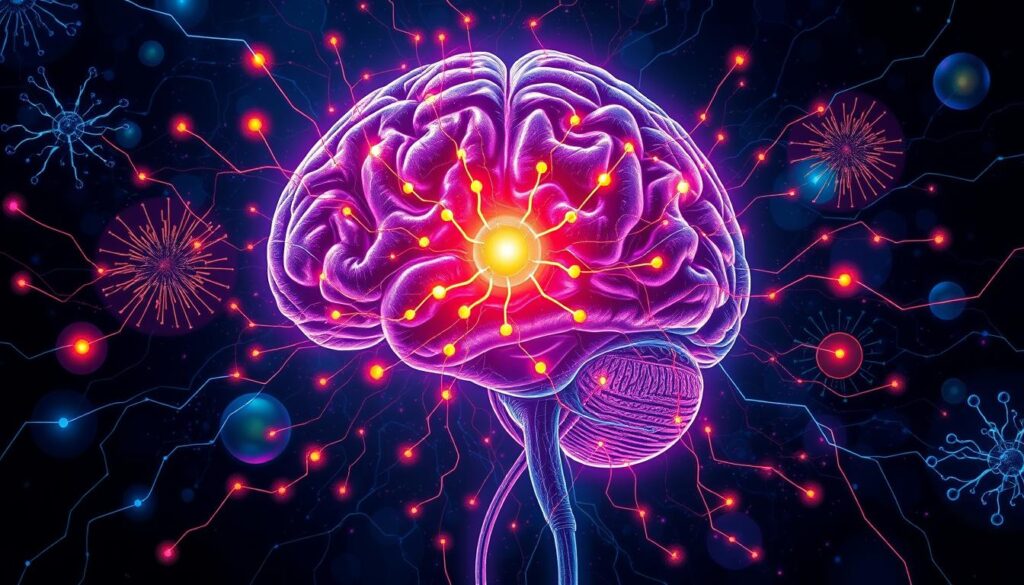
Anxiety is more than just a feeling. It’s a complex neurological experience affecting millions worldwide. Your brain’s anxiety circuit is a network of neural pathways that shapes stress responses.
Anxiety disorders are common, impacting nearly 30% of adults in their lifetime12. Modern neuroscience has transformed our understanding of emotional regulation. Advanced technologies like functional MRI reveal intricate brain mechanisms during stress responses1.
Your brain’s neuroplasticity allows these circuits to change and adapt over time. Key regions like the amygdala and prefrontal cortex form the core of your anxiety circuit. When anxious, these areas become hyperactive, triggering intense emotional and physical responses1.
Grasping this circuit can help you develop better strategies for managing stress. It can also improve your overall emotional well-being.
Key Takeaways
- Anxiety disorders affect approximately 30% of adults
- Brain circuits play a crucial role in anxiety responses
- Neuroplasticity allows for potential anxiety management
- Advanced imaging helps us understand emotional processing
- Brain anxiety circuits can be modified through targeted interventions
What is the Brain Anxiety Circuit?
Your brain has a complex system for processing anxiety and fear. It involves intricate neural pathways. Understanding this system can help you manage anxiety better3.
The brain’s anxiety circuit is a sophisticated network. It mainly involves two key regions: the amygdala and prefrontal cortex. These areas work together to handle potential threats4.
The Science Behind Brain Stress Processing
When you face stress, your brain starts a quick fear response. This happens through two main pathways:
- The “Low Road”: Rapid threat detection by the amygdala
- The “High Road”: Detailed threat assessment by the prefrontal cortex
Understanding the Amygdala’s Role
The amygdala is your brain’s emotional alarm system. It quickly processes potential threats and triggers fight-or-flight responses. In anxiety disorders, the amygdala becomes overactive3.
Prefrontal Cortex: Your Rational Brain Center
Your prefrontal cortex helps manage emotional responses. It can calm the amygdala’s intense fear signals. This area is crucial for regulating stress4.
| Brain Region | Primary Function | Role in Anxiety |
|---|---|---|
| Amygdala | Threat Detection | Initiates Fear Response |
| Prefrontal Cortex | Emotional Regulation | Manages Stress Signals |
“Understanding your brain’s anxiety circuit is the first step towards managing stress effectively.”
Knowing how these neural pathways work can help you. You can develop better strategies to control anxiety. This knowledge can improve your mental well-being4.
How Anxiety Affects Your Daily Life
Anxiety disorders can reshape your everyday experiences. They create invisible barriers that impact nearly every part of your life. Understanding these challenges is key to effective stress management and improving well-being.
Common Symptoms of Anxiety
Anxiety shows up through various symptoms that can be overwhelming. These may include:
- Persistent worry and racing thoughts
- Rapid heartbeat and shortness of breath
- Muscle tension and unexplained physical discomfort
- Difficulty concentrating and making decisions5
Impact on Physical Health
Chronic anxiety doesn’t just affect your mind—it can harm your physical health too. The constant state of alertness triggers stress responses. These may lead to:
| Physical System | Potential Anxiety Effects |
|---|---|
| Cardiovascular | Increased heart rate, potential hypertension |
| Immune | Reduced immune system functionality |
| Digestive | Stomach issues, appetite changes |
Effects on Relationships and Work
Anxiety disorders can create big challenges in personal and work life. At work, you might find it hard to focus and be productive5.
In relationships, anxiety can lead to communication problems. It can also cause emotional distance between people6.
The brain’s fear network involves complex interactions between multiple regions, making anxiety a nuanced experience6.
Your journey through anxiety is unique. Remember, with proper support and strategies, you can learn to manage these challenges effectively.
Strategies to Manage Your Brain Anxiety Circuit
Mastering anxiety involves multiple approaches to control your mental health. Effective strategies can help regulate your brain’s anxiety circuit. These methods build resilience against stress7.
Mindfulness and Meditation Techniques
Mindfulness is a powerful stress management tool. Meditation teaches you to observe thoughts without judgment8. These practices break anxious thinking cycles.
They create space between emotions and reactions. This separation allows for better emotional control.
- Practice deep breathing exercises
- Engage in daily meditation
- Use guided mindfulness apps
Cognitive Behavioral Therapy (CBT)
CBT is a proven approach for managing anxiety. Research shows CBT can effectively change brain responses linked to anxiety7. This therapy helps identify and challenge negative thoughts.
“Your thoughts are not facts, but they can be reshaped.”
Lifestyle Changes for Reducing Anxiety
Anxiety management goes beyond therapy. Lifestyle changes can greatly affect your mental health. Try these strategies:
- Regular physical exercise
- Consistent sleep schedule
- Balanced nutrition
- Limiting caffeine and alcohol
Anti-anxiety medications can help but aren’t always the full solution. Some meds risk addiction7. Always talk to a mental health pro for personalized anxiety management.
Resources for Further Support
Anxiety affects over 40 million adults in the U.S. You’re not alone in your struggle. The right support can significantly improve your mental health and life quality.
Explore various options for anxiety management. These include therapy, self-help books, and support groups. Treatment can involve counseling, medication, lifestyle changes, and mindfulness practices9.
Online communities offer valuable connections. They help you feel understood by others facing similar challenges.
Professional therapy provides personalized strategies. Mental health experts can identify your specific anxiety type9. This could be generalized anxiety, social anxiety, or panic disorder.
Anxiety disorders cost $42 billion annually in the U.S10. This highlights the need for accessible mental health resources.
Seeking help shows strength, not weakness. Look into local support groups and online forums. Consider professional counseling services too.
Your journey to manage anxiety is unique. With the right resources, you can develop effective coping strategies.
FAQ
What exactly is the brain anxiety circuit?
The brain anxiety circuit is a complex neural network that processes stress and fear. It includes two main pathways: the “low road” and the “high road”. The “low road” activates the amygdala for quick threat response.
The “high road” involves the prefrontal cortex for detailed emotional processing. In anxiety disorders, this circuit becomes unbalanced. The amygdala becomes overactive, while the prefrontal cortex underperforms.
How do anxiety disorders impact brain functioning?
Anxiety disorders disrupt emotional brain centers, leading to heightened threat detection and increased physical symptoms. The HPA axis becomes overactive, releasing stress hormones like cortisol. Neurotransmitters such as serotonin and dopamine also play a role in anxiety symptoms.
Can I actually change my brain’s anxiety response?
Yes, you can modify your brain’s anxiety circuit through neuroplasticity. Techniques like CBT, mindfulness meditation, and exercise can help rewire neural pathways. These approaches can reduce activation in anxiety-related brain areas.
They help develop better stress management strategies and emotional regulation skills.
What role does the amygdala play in anxiety?
The amygdala is crucial in processing fear and emotional responses. It acts as a rapid threat detection center, triggering the “fight or flight” response. In anxiety disorders, the amygdala becomes hyper-responsive, overreacting to minimal or non-existent threats.
Are anxiety disorders genetic?
Genetic factors contribute to anxiety vulnerability. Research focuses on genes regulating the HPA axis and monoaminergic signaling. However, genetics is just one part of the puzzle.
Environmental factors, life experiences, and personal coping mechanisms also play significant roles in anxiety disorders.
What are the most effective treatments for managing anxiety?
The most effective approach combines multiple strategies. These include CBT, mindfulness techniques, lifestyle changes, and sometimes medication. Pharmacological treatments like SSRIs and SNRIs can help manage symptoms.
However, they work best when combined with therapies that teach long-term coping skills.
How prevalent are anxiety disorders?
Anxiety disorders are extremely common, with a lifetime prevalence of almost 30%. They are one of the most frequently diagnosed mental health conditions worldwide. Advanced brain imaging technologies have improved diagnosis and treatment approaches.
Source Links
- Understanding Brain Circuits of Fear, Stress, and Anxiety – https://www.psychologytoday.com/intl/blog/the-mindful-self-express/201909/understanding-brain-circuits-fear-stress-and-anxiety
- The Neurocircuitry of Fear, Stress, and Anxiety Disorders – https://pmc.ncbi.nlm.nih.gov/articles/PMC3055419/
- Researchers Find Brain Circuit That Drives Anxiety – https://bbrfoundation.org/content/researchers-find-brain-circuit-drives-anxiety
- Neural circuits in anxiety and stress disorders: a focused review – https://pmc.ncbi.nlm.nih.gov/articles/PMC4315464/
- The impact of anxiety upon cognition: perspectives from human threat of shock studies – https://pmc.ncbi.nlm.nih.gov/articles/PMC3656338/
- What Part of the Brain Deals With Anxiety? What Can Brains Affected by Anxiety Tell us? – https://www.brainfacts.org/diseases-and-disorders/mental-health/2018/what-part-of-the-brain-deals-with-anxiety-what-can-brains-affected-by-anxiety-tell-us-062918
- Scientists Switch Off Brain’s Anxiety Circuit – https://www.nih.gov/news-events/nih-research-matters/scientists-switch-brains-anxiety-circuit
- Brain-Friendly “Circuit Breakers” for Fear, Stress, and Anxiety – Marsha Lucas PhD – Psychologist – https://marshalucasphd.com/brain-friendly-circuit-breakers-for-fear-stress-and-anxiety/
- Anxiety Resources – https://www.etsu.edu/students/counseling/anxiety.php
- New Venture Aims to Understand and Heal Disrupted Brain Circuitry to Treat Mental Illnesses – https://www.ucsf.edu/news/2014/05/114621/new-venture-aims-understand-and-heal-disrupted-brain-circuitry-treat-mental

