
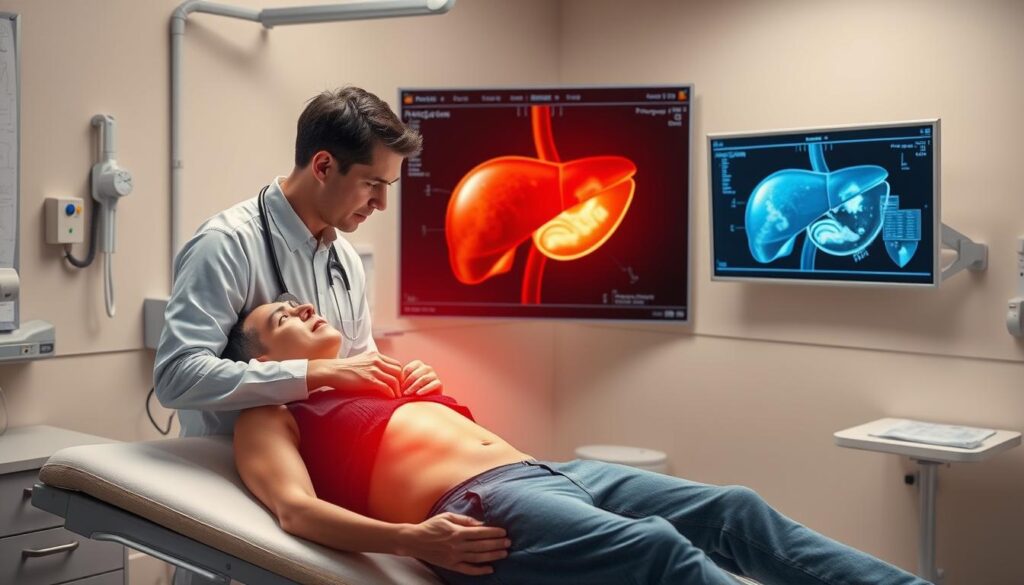
An enlarged liver, or hepatomegaly, signals underlying medical issues. Your liver might swell due to factors impacting its normal function1. This condition could indicate potential health risks needing immediate attention2.
Liver problems stem from various sources. These include excessive alcohol use, viral infections, and metabolic disorders3. Heavy drinking greatly increases the risk of an enlarged liver3.
Hepatitis A, B, and C viruses can cause serious liver damage3. Being overweight may also lead to liver complications3. Some supplements like black cohosh and valerian might raise liver damage risk3.
Knowing these risk factors helps you protect your liver health. Regular check-ups can catch issues early. Making healthy choices supports your liver’s wellbeing.
Key Takeaways
- Hepatomegaly is a condition indicating underlying health issues
- Alcohol consumption significantly impacts liver health
- Viral hepatitis can cause substantial liver damage
- Lifestyle factors play a crucial role in liver wellness
- Regular medical check-ups are essential for early detection
What is an Enlarged Liver (Hepatomegaly)?
Your liver is vital for overall health. Sometimes, it can become enlarged, a condition called hepatomegaly. This can signal health issues like Liver Inflammation, Fatty Liver Disease, and Liver Cirrhosis4.
An enlarged liver happens when the organ grows beyond its normal size. This can occur due to various medical conditions. Many people with a slightly enlarged liver may not notice any symptoms4.
Normal Liver Size and Function
In healthy adults, the liver typically spans:
- Women: 13.5 cm (±1.7 cm)
- Men: 14.5 cm (±1.6 cm)
This vital organ performs multiple critical functions. It digests fats, stores sugar, fights infections, and breaks down toxins.
Signs and Symptoms of Liver Enlargement
Potential indicators of an enlarged liver include:
- Abdominal pain
- Persistent fatigue
- Nausea
- Vomiting
- Jaundice
Each year, about 41,260 people in the U.S. are diagnosed with primary liver cancer. This shows how important it is to understand liver health5.
When to Seek Medical Attention
See a doctor if you have ongoing belly pain, unexplained yellowing of skin, or recurring liver-related symptoms. Quick medical help can prevent complications and improve outcomes4.
“Early detection and understanding of liver changes can be your first line of defense against serious health complications.”
Common Causes of Enlarged Liver and Risk Factors
Knowing what causes an enlarged liver helps protect your health. Excessive drinking can seriously harm your liver’s function. Many factors affect liver size and health.
- Excessive alcohol consumption6
- Obesity and poor dietary habits6
- Viral hepatitis infections6
- Certain medications and supplements6
Liver tumors are another major concern. Early detection of liver issues can greatly improve treatment results. About 1.8% of U.S. adults face liver disease challenges.
Men are more likely to be diagnosed with liver problems. This highlights the need for regular check-ups.
| Liver Disease Category | Key Risk Factors |
|---|---|
| Alcoholic Liver Disease | Chronic alcohol abuse |
| Liver Abscess | Bacterial or parasitic infections |
| Liver Tumor | Genetic predisposition, environmental factors |
“Your liver’s health is a reflection of your lifestyle choices.” – Medical Experts
Infections can also harm your liver. Viral, bacterial, and parasitic infections may increase your risk of liver problems. Keeping a healthy weight and diet helps prevent liver issues.
Liver disease causes about 2 million deaths worldwide each year. This shows why taking care of your liver is so important.
Conclusion
Managing an enlarged liver requires a comprehensive approach to liver disease prevention. Your liver health journey starts with understanding this vital organ’s role. Liver health management involves proactive strategies and medical guidance7.
Nearly 2 million deaths occur yearly worldwide due to liver disease. This fact highlights the importance of early detection and intervention8.
Liver protection begins with lifestyle changes. Regular exercise, healthy eating, and limiting alcohol can reduce liver complication risks7. Quitting smoking and following safety rules around toxic chemicals are crucial steps.
Treatment options vary based on your condition. They range from medicines and lifestyle changes to chemotherapy or liver transplantation7. Regular check-ups and tests can catch problems early, improving management and recovery chances.
Your liver filters toxins and supports overall health. Stay informed, make smart choices, and work with doctors to protect your liver. Liver disease prevention isn’t just medical advice – it’s a commitment to your well-being.
FAQ
What is an enlarged liver (hepatomegaly)?
Hepatomegaly means your liver is bigger than usual. It’s a sign of an underlying health issue, not a disease itself. Liver size varies by person, with average spans of 13.5 cm for women and 14.5 cm for men.
What are the common symptoms of an enlarged liver?
Symptoms may include belly pain, tiredness, nausea, vomiting, and yellowing skin. Some people might not notice any signs at all. If you have lasting stomach discomfort or yellow skin, see a doctor right away.
What causes an enlarged liver?
Many things can make your liver grow. These include liver diseases, cancers, heart problems, and genetic disorders. Drinking too much alcohol, being overweight, certain meds, and toxins are risk factors.
Can an enlarged liver be treated?
Treatment depends on what’s causing the problem. It may involve medicine, diet changes, stopping alcohol use, or even a liver transplant. To prevent it, stay healthy and avoid harmful substances.
How can I prevent liver enlargement?
Keep a healthy weight and exercise often. Don’t drink too much alcohol. Eat a balanced diet and stay away from toxins. Regular check-ups and liver tests can catch issues early.
Is an enlarged liver a serious condition?
An enlarged liver can point to serious health issues. But many liver problems can be managed well with proper care. Quick action and treatment are key to avoiding complications.
What are the risk factors for developing an enlarged liver?
Being overweight and drinking too much alcohol are big risks. Other factors include diabetes, high cholesterol, and certain genetic disorders. Hepatitis, some meds, and toxins can also cause problems.
Source Links
- Enlarged liver – UF Health – https://ufhealth.org/conditions-and-treatments/enlarged-liver
- Everything You Need to Know About an Enlarged Liver – https://www.healthline.com/health/hepatomegaly
- Enlarged liver-Enlarged liver – Symptoms & causes – Mayo Clinic – https://www.mayoclinic.org/diseases-conditions/enlarged-liver/symptoms-causes/syc-20372167
- Hepatomegaly – https://www.webmd.com/hepatitis/enlarged-liver-causes
- Hepatomegaly (enlarged liver): Symptoms, causes, and treatment – https://www.medicalnewstoday.com/articles/hepatomegaly-enlarged-liver
- Enlarged liver – https://www.mymlc.com/health-information/diseases-and-conditions/e/enlarged-liver2/?section=Risk factors
- Hepatomegaly: Causes & Symptoms of an Enlarged Liver – https://www.metropolisindia.com/blog/preventive-healthcare/hepatomegaly-symptoms-causes-diagnosis-and-more
- All about Enlarged Liver – CK Birla Hospital – https://www.ckbhospital.com/blogs/all-about-enlarged-liver/

