
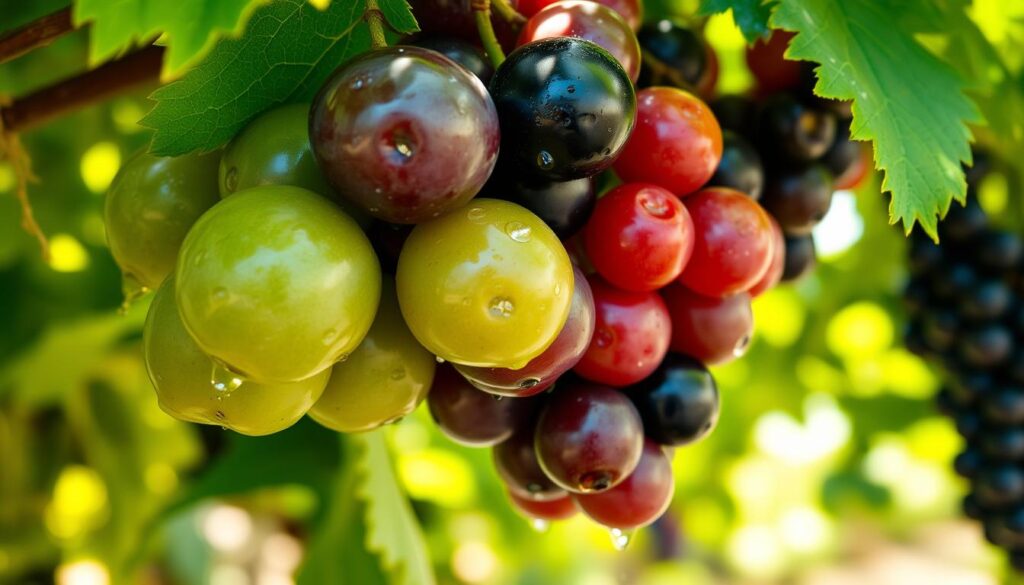
Grapes are small fruits with big health perks. They can transform your well-being in amazing ways. Let’s explore how these tasty treats can boost your health1.
These fruits are packed with nutrition. They offer vitamin C, antioxidants, vitamin K, and potassium1. Grapes can keep you hydrated and full of energy2.
Eating grapes can strengthen your immune system. Their vitamin C helps protect you from infections1. The antioxidants in grapes may lower cancer risks1.
Grapes are great for heart health. They’re low in sodium and high in potassium1. This helps control blood pressure. Regular grape consumption might reduce heart disease risks1.
Key Takeaways
- Packed with essential vitamins and minerals
- Supports immune system health
- Promotes cardiovascular wellness
- Contains powerful antioxidants
- Helps maintain hydration
- May reduce oxidative stress
- Contributes to overall nutritional balance
Understanding the Rich History and Varieties of Grapes
Grapes have captivated humans for thousands of years. They represent a journey of agricultural innovation and cultural significance. These remarkable fruits offer a complex world of varieties, cultivation techniques, and global production.
Grape production is incredibly diverse, with 72 million tons produced annually3. These versatile fruits span multiple industries, from wine to fresh consumption. Each variety has unique characteristics and cultivation methods.
Ancient Origins and Global Spread
Grape cultivation has roots stretching back millennia. Different species emerged across continents. Native North American grapes show remarkable cold hardiness and disease resistance3.
European grapes (V. vinifera) dominate global wine production. They represent a rich agricultural heritage.
Popular Grape Varieties
- European Varieties: Primarily used for wine production
- American Varieties: Known for disease resistance
- Hybrid Varieties: Combining beneficial traits
California leads in grape cultivation in the United States. It produces over 99% of commercially grown grapes4. The state boasts 89 grape varieties.
In 2023, California harvested more than 77 million boxes of grapes4.
Global Distribution and Production
| Region | Production Characteristic |
|---|---|
| Europe | Contributes 80% of world wine production3 |
| United States | Grape industry contributes $125 billion annually3 |
| Global | Fresh grapes represent less than 12% of total production3 |
“Grapes are not just a fruit, but a testament to human agricultural ingenuity.”
Grapes play a significant role in global agriculture and culinary traditions. They’re vital in grape cultivation, wine production, and as fresh table grapes.
The Science Behind Benefits of Grapes
Grapes offer more than just a tasty treat. They’re packed with bioactive compounds that boost your health. Grape polyphenols are the star players, supporting your overall wellness.
Scientific research reveals grapes’ impressive protective properties. Grape seed extract contains powerful antioxidants. These may help prevent various health issues.
- Potential cancer prevention mechanisms
- Support for cardiovascular health
- Reduction of oxidative stress
- Protection against age-related diseases
Grape skin benefits go beyond basic nutrition. Resveratrol, a key grape compound, has been widely studied. Nearly 2000 reports highlight its diverse health-promoting activities5.
- Antibacterial properties
- Anti-inflammatory effects
- Potential cardioprotective benefits
“The complexity of grapes goes far beyond their sweet taste – they’re a natural medicine cabinet waiting to be explored.” – Nutritional Science Research Team
Grape polyphenols may help manage various health conditions. Studies suggest they could boost immune function. They might also help control blood pressure and improve cognitive health65.
When choosing grapes, quality is key. Go for organic to reduce pesticide exposure. Grapes rank 4th on the Environmental Working Group’s Dirty Dozen list6.
Powerful Antioxidants and Disease-Fighting Properties
Grapes are nutritional powerhouses packed with remarkable antioxidants. These tiny fruits offer protective compounds that shield your body from cellular damage7.
Grapes have potent anti-inflammatory properties for natural disease prevention. Grape skin and seed extracts contain 63–182 mg of phenolic compounds per 100 grams7.
Resveratrol and Cancer Prevention
Resveratrol is a powerful compound in grapes linked to cancer prevention. Research shows resveratrol may inhibit cancer cells, especially in colon and prostate studies8.
Polyphenols and Heart Health
Grape juice benefits go beyond cancer prevention. Polyphenols in grapes boost cardiovascular wellness. Red wine, with more resveratrol, shows how these antioxidants support heart health8.
Anti-inflammatory Effects
- Reduce oxidative stress
- Protect cellular integrity
- Support overall immune function
Grapes’ anti-inflammatory properties fight chronic diseases by neutralizing harmful free radicals. Studies show grape extracts have strong free radical scavenging abilities7.
“Nature’s small miracles can provide powerful protection for your body.” – Nutrition Expert
Eating grapes isn’t just tasty; it’s a smart health choice. You’re boosting your body’s natural defenses with every bite8.
Conclusion
Grapes offer more than just nutrition. They’re packed with protective compounds that boost your body’s defenses9. These small fruits support heart health and may help prevent diseases10.
Darker grapes contain powerful antioxidants. These may shield you from oxidative stress and improve overall health10. Grape seed extract might help manage cholesterol and reduce inflammation10.
Grapes are vital for global nutrition. Worldwide production reaches about 23.38 million metric tons9. Scientists are excited about the diverse bioactive molecules in grapes9. Explore grape research for more information.
Add grapes to your diet in moderation. Balance is key for a healthy eating plan. Talk to your doctor before making big diet changes.
Grape research is ongoing. Scientists keep finding new benefits of these amazing fruits. Stay tuned for more exciting discoveries about grapes and health.
FAQ
What are the main health benefits of grapes?
Grapes pack a powerful antioxidant punch. They contain resveratrol and quercetin, which may fight cancer and boost heart health. A serving provides 25% of daily Vitamin C with only 90 calories.
Are there different types of grapes available?
The grape industry has introduced over 20 new varieties recently. White grapes include Array 15®, Sugar Crisp®, and Sweet Globe®. Red varieties feature Sweet Celebration® and Candy Snaps®.
Black grapes like Sweet Sapphire®, Sable®, and Midnight Beauty® offer unique flavors and nutrients.
How long have grapes been cultivated?
Grape cultivation spans over 5,000 years, originating in Europe. They’ve since spread worldwide. Brazil began growing Vitis vinifera, followed by Isabel grapes in the mid-19th century.
What makes grape polyphenols so special?
Grape polyphenols have powerful anti-inflammatory and antioxidant properties. They may reduce chronic disease risk by neutralizing free radicals and preventing DNA damage. Grape seed extract shows promise in lab studies for inhibiting cancer cell growth.
Are grapes safe to eat regularly?
Grapes are safe and recommended as part of a balanced diet. U.S.-grown grapes are considered safer than imported varieties. They’re low in calories and rich in nutrients.
What nutritional components do grapes contain?
Grapes are packed with diverse nutrients. They contain sugars, organic acids, amino acids, proteins, vitamins, and carotenoids. They’re rich in resveratrol, quercetin, and catechins, which offer health-promoting benefits.
How do grapes support heart health?
Grape polyphenols may improve heart health by reducing inflammation and oxidative stress. Resveratrol and quercetin help protect cardiovascular cells. Regular grape consumption might contribute to better heart function and reduced inflammation.
Source Links
- 10 Health Benefits of Grapes – https://health.clevelandclinic.org/health-benefits-of-grapes
- Are Grapes Good for You? 7 Benefits – https://www.health.com/food/benefits-of-grapes
- Grapes: A Brief History (David Trinklein) – https://ipm.missouri.edu/meg/2013/8/Grapes-A-Brief-History/
- All About Grapes | Grapes from California – https://www.grapesfromcalifornia.com/all-about-grapes/
- Unraveling the Relationship between Grapes and Health – https://pmc.ncbi.nlm.nih.gov/articles/PMC2728694/
- Grapes: Health benefits, tips, and risks – https://www.medicalnewstoday.com/articles/271156
- Potential Anticancer Properties of Grape Antioxidants – https://pmc.ncbi.nlm.nih.gov/articles/PMC3420094/
- Health Benefits of Red Grapes – https://www.webmd.com/diet/health-benefits-red-grapes
- Grape bioactive molecules, and the potential health benefits in reducing the risk of heart diseases – https://pmc.ncbi.nlm.nih.gov/articles/PMC8567006/
- Grapes Guide: Nutrition, Benefits, Side Effects, More – https://www.everydayhealth.com/diet-nutrition/diet/grapes-benefits-risks-types-how-grow-more/

