
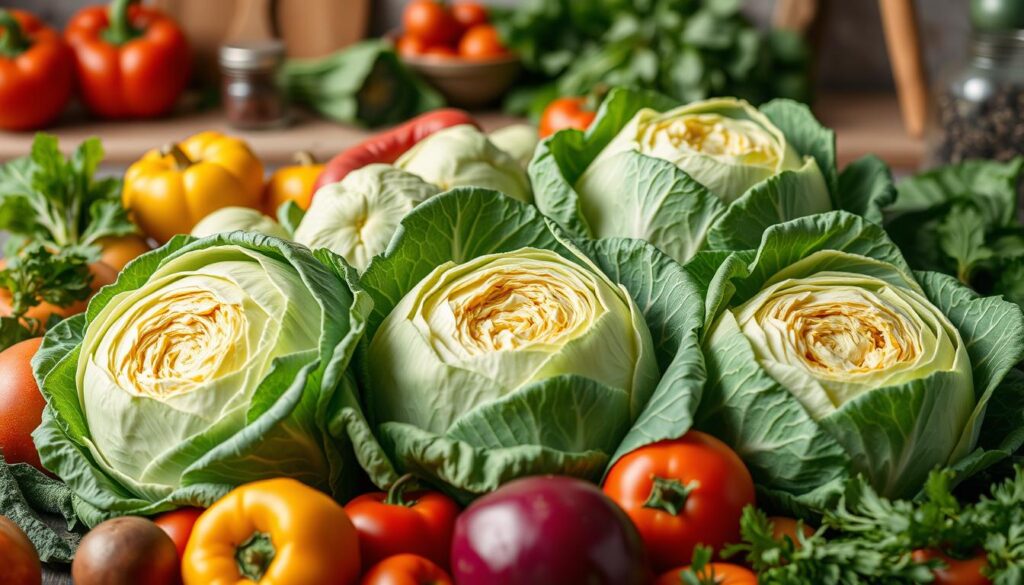
Cabbage is a nutritional powerhouse that can transform your health. This versatile veggie packs a punch of nutrients to support your wellness goals. Its low calorie content and rich profile offer many benefits for your body and mind.
This humble cruciferous vegetable could be your key to optimal health. Cabbage contains vital vitamins and minerals that boost immunity and support heart health. It also provides powerful antioxidant protection for your body.
Each cabbage variety brings unique nutritional advantages to your diet. Red, green, or white – all offer distinct benefits to enhance your meals.
Cabbage supports digestive wellness and may reduce disease risks. Its rich nutrient composition makes it a flavorful and healthy addition to your meals.
Key Takeaways
- Cabbage is a low-calorie, nutrient-dense vegetable
- Contains powerful antioxidants that support overall health
- Offers multiple varieties with unique nutritional profiles
- Supports immune system and cardiovascular function
- Can be easily incorporated into various dishes
Understanding Cabbage: A Nutrient-Dense Powerhouse
Cabbage is a remarkable vegetable that packs a powerful nutritional punch. It’s a low-calorie food with impressive health benefits. This leafy vegetable supports heart health and provides essential vitamins.
Types of Cabbage and Their Unique Properties
Explore the diverse world of cabbage varieties. Each type brings unique nutritional advantages to your plate.
- Green Cabbage: Classic and crisp
- Red Cabbage: Rich in anthocyanin antioxidants
- Savoy Cabbage: Tender with delicate flavor
- Napa Cabbage: Mild and perfect for fermentation
Essential Nutrients and Vitamins in Cabbage
Cabbage is a nutritional powerhouse packed with vital vitamins. One hundred grams of raw cabbage offers impressive vitamin content.
| Vitamin | Percentage of RDA |
|---|---|
| Vitamin C | 61% |
| Vitamin K | 95% |
| Vitamin B6 | 6% |
| Folate | 11% |
The vitamins in cabbage support multiple bodily functions. Vitamin C boosts your immune system1. Vitamin K plays a crucial role in blood clotting and bone strength1.
Caloric Content and Macronutrients
Cabbage is an excellent low-calorie food choice. A raw cup contains just 18 calories2. Its nutritional profile is impressive.
“Cabbage is nature’s multivitamin, offering incredible nutrition in a low-calorie package.”
Cabbage antioxidants work together to support your overall health. It’s an ideal addition to a balanced diet1.
Benefits of Cabbage: From Heart Health to Disease Prevention
Cabbage offers remarkable health benefits for your entire body. This versatile veggie packs a powerful punch for your overall wellness3. It supports heart health and may prevent chronic diseases.
Let’s dive into the incredible health perks of this nutritional champion:
- Heart Protection: Cabbage contains antioxidants like beta-carotene and lutein. These may help lower oxidized LDL cholesterol3
- Cancer Prevention: Studies suggest cabbage’s phytonutrients might fight potential cancer cells4
- Weight Management: With just 22 calories per cup, cabbage is great for weight loss5
Cabbage benefits for skin are equally impressive. Its high vitamin C content boosts collagen production. This helps maintain skin elasticity and supports a healthy, radiant complexion4.
The vegetable’s antioxidants can protect your skin from environmental damage. They may also reduce signs of aging.
| Nutrient | Amount per Cup | Health Benefit |
|---|---|---|
| Vitamin C | 54% Daily Value | Immune Support |
| Vitamin K | 85% Daily Value | Bone Health |
| Fiber | 2.2g | Digestive Health |
“Cabbage is nature’s multivitamin, offering a wide range of health benefits in one affordable, delicious package.”
Cabbage can help reduce inflammation and support digestive health. It may also lower the risk of chronic diseases5. Enjoy it raw, cooked, or fermented for a tasty health boost.
How to Include Cabbage in Your Diet
Cabbage can transform your meals and boost your nutrition. This versatile veggie offers many tasty ways to improve your diet. Explore cabbage recipes or try the cabbage soup diet for a nutrient-packed meal6.
Raw Cabbage Preparation Methods
Raw cabbage keeps its nutrients and can be enjoyed in various ways. Try these simple prep techniques:
- Slice thinly for crisp salads
- Grate for coleslaw
- Chop for fresh vegetable platters
Red cabbage offers more antioxidants than green varieties6. One cup of raw, shredded cabbage has only about 17.5 calories. This makes it great for weight management7.
Cooking Techniques to Preserve Nutrients
When cooking cabbage, use gentle methods to keep its nutrients. Try these options:
- Steaming (best for preserving glucosinolates)
- Light stir-frying
- Adding to soups
- Incorporating into casseroles
“Cooking cabbage doesn’t mean losing its incredible health benefits”
Fermented Cabbage Options
Sauerkraut and kimchi are fermented cabbage products with probiotic benefits. They offer unique flavors and support digestive health. Science backs up these benefits.
The cabbage soup diet promises fast weight loss8. But it’s only a short-term fix. For lasting health, add cabbage to a balanced diet with many veggies.
Conclusion
Cabbage is a nutritional powerhouse with incredible potential. It supports heart health and may reduce cancer risks. Cruciferous vegetables like cabbage can significantly boost your wellness strategy9.
Cabbage offers more than just nutrition. It’s low in calories, making it great for weight management. It also provides essential nutrients like magnesium, folate, and potassium9.
Studies suggest cabbage may help prevent diabetes, obesity, and heart problems. Different varieties offer unique health perks. Red cabbage, for example, has extra antioxidants like beta-carotene and zeaxanthin9.
You can enjoy cabbage raw, fermented, or cooked. This versatile veggie can be a tasty part of a healthy lifestyle10.
Moderation is important when adding cabbage to your diet. Be aware of possible digestive issues. Ask your doctor for personalized advice on dietary changes10.
Embracing this nutrient-dense, cancer-fighting vegetable could be your path to better health. Start enjoying the benefits of cabbage today!
FAQ
What are the main health benefits of eating cabbage?
Cabbage packs a powerful health punch. It reduces inflammation and supports heart health. This veggie aids digestion and may help prevent chronic diseases.
Cabbage is rich in antioxidants and vitamins C and K. It may lower blood pressure and boost bone health.
How many calories are in a serving of cabbage?
One cup of raw green cabbage has only 22 calories. It’s a great choice for weight management. This nutrient-dense food is high in vitamins K, C, and folate.
What’s the difference between green and red cabbage?
Red cabbage has more anthocyanins and vitamin C than green cabbage. You can use red cabbage in place of green in most recipes. It adds extra antioxidants and a bright color to your meals.
What are the best ways to prepare cabbage?
Enjoy cabbage raw in salads or steam it to keep nutrients intact. Try stir-frying it or adding it to soups and casseroles. Fermented options like sauerkraut offer probiotic benefits.
Is cabbage good for weight loss?
Yes, cabbage is great for weight loss. It’s low in calories but high in fiber and nutrients. The fiber helps you feel full, making it ideal for weight management.
Can cabbage help with skin health?
Cabbage’s vitamin C boosts collagen production, supporting skin health. Its antioxidants protect your skin from damage. This may lead to healthier, younger-looking skin.
Are there any special uses for cabbage leaves?
Clean, chilled cabbage leaves can ease breast pain for nursing moms. Cabbage has many uses in health and cooking. It’s found in everything from soups to fermented foods.
Is the cabbage soup diet a good long-term weight loss solution?
The cabbage soup diet isn’t good for long-term weight loss. It may work short-term but lacks balanced nutrition. For lasting results, focus on a healthy diet and regular exercise.
Source Links
- 21 Impressive Health Benefits of Cabbage: Nutrition Content Chart – https://www.medicinenet.com/21_impressive_health_benefits_of_cabbage/article.htm
- What Happens to Your Body When You Eat Cabbage Regularly – https://www.eatingwell.com/health-benefits-of-cabbage-8557536
- Benefits of Cabbage – https://www.webmd.com/food-recipes/ss/slideshow-cabbage-benefits
- 8 Health Benefits of Cabbage – https://health.clevelandclinic.org/benefits-of-cabbage
- Cabbage and the Benefits of this Overlooked Superfood – https://www.brownhealth.org/be-well/cabbage-and-benefits-overlooked-superfood
- Health Benefits of Cabbage – https://www.webmd.com/diet/health-benefits-cabbage
- 8 Reasons To Add Cabbage to Your Diet – https://www.health.com/food/health-benefits-of-cabbage
- The Cabbage Soup Diet: Benefits, Risks, and More – https://www.healthline.com/nutrition/the-cabbage-soup-diet
- Cabbage: Health benefits, facts, research – https://www.medicalnewstoday.com/articles/284823
- Cabbage Juice: Uses, Benefits, and Side Effects – https://www.healthline.com/nutrition/cabbage-juice

