
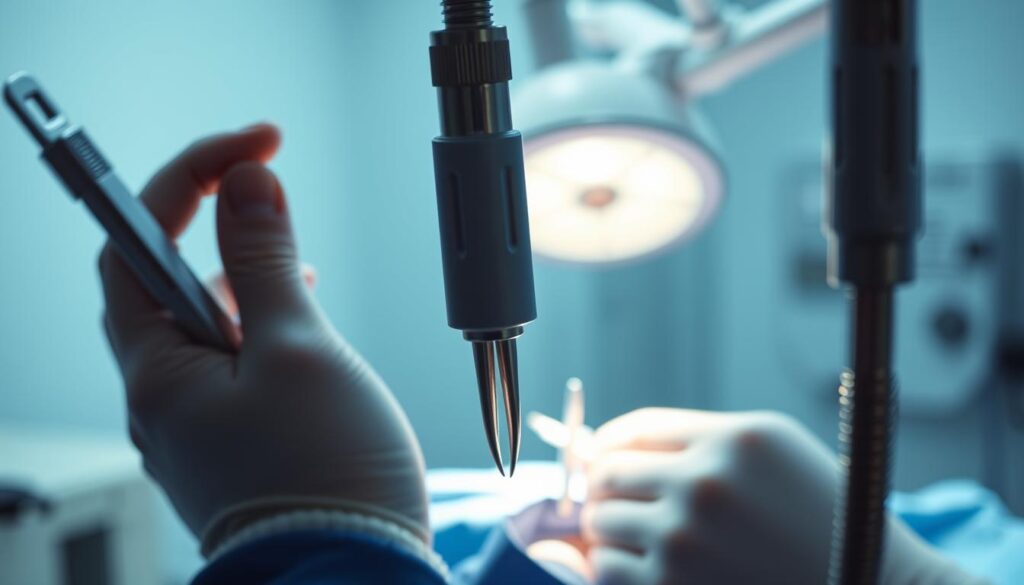
Vasectomy is a game-changing approach to contraception. It empowers men to control their family planning choices. This minimally invasive procedure offers reliable birth control for those done with family-building12.
Vasectomy is an incredibly effective contraception option. It boasts an impressive success rate of over 99%32. Doctors perform this outpatient procedure under local anesthesia in just 20-30 minutes2.
The procedure involves cutting and sealing the vas deferens. This blocks sperm from reaching the urethra1. Vasectomy provides a permanent solution, eliminating the need for ongoing contraception2.
Key Takeaways
- Vasectomy offers a 99% effective permanent contraception method
- The procedure takes approximately 30 minutes
- Local anesthesia ensures minimal discomfort during the surgery
- Eliminates ongoing contraception expenses
- Provides a definitive solution for family planning
Understanding Vasectomy as a Birth Control Method
A no-scalpel vasectomy offers men a reliable birth control solution. It provides long-term contraception with minimal medical intervention. This permanent method requires careful consideration before choosing.
What is a Vasectomy Procedure?
A vasectomy interrupts sperm transportation by sealing the vas deferens. It’s a quick outpatient procedure that takes less than 30 minutes. The healthcare provider creates a small opening in the scrotum to access the sperm duct4.
How Vasectomy Works in the Male Reproductive System
Vasectomy blocks sperm from mixing with semen during ejaculation. It cuts or seals the vas deferens, preventing sperm from traveling from the testicles5. This effectively stops pregnancy from occurring.
- Prevents sperm from entering seminal fluid
- Maintains hormone production
- Does not impact sexual function
Success Rates and Effectiveness
Vasectomies are highly reliable for birth control. About 500,000 men choose this procedure yearly in the United States4. The pregnancy prevention rate exceeds 99%, with only a 1 in 2,000 chance of conception54.
A vasectomy provides a permanent solution for couples who have completed their family planning.
Patients should clear remaining sperm through 20 ejaculations after the procedure. A follow-up semen analysis confirms the vasectomy’s success5. 20 ejaculations are typically required to clear remaining sperm.
The Rising Trend of Vasectomies in Modern Society
Family planning is changing dramatically. More men are choosing vasectomies for birth control. Recent data shows a significant shift in male reproductive health choices6.
The percentage of U.S. men getting vasectomies has risen. It went from 0.427% in 2014 to 0.537% in 2021. This marks a 26% increase6.
Several key factors are driving this trend:
- Reproductive rights concerns
- Economic uncertainties
- Climate change considerations
- Increased male responsibility in contraception
The Supreme Court’s Roe v. Wade decision sped up this shift. After the Dobbs ruling, vasectomy consultations changed significantly7:
| Demographic Trend | 2021 | 2022 |
|---|---|---|
| Median Age of Men | 38 years | 35 years |
| Men Under 30 Seeking Consultation | 10.3% | 23.9% |
| Childless Men Seeking Vasectomy | 8.6% | 16.9% |
About 4% of men report getting sterilized in their lifetime6. This trend is strong among younger men. Many are rethinking traditional family planning.
“Men are increasingly taking proactive steps in family planning, recognizing their role in reproductive decisions.” – Contemporary Reproductive Health Research
Vasectomy rates vary across different groups. Rural areas saw bigger changes than urban ones. This shows the trend is spreading widely6.
Recovery and Post-Procedure Care
A vasectomy is an outpatient procedure in male reproductive health. Understanding the recovery process is crucial for smooth healing. The journey involves several key stages that need your attention and care.
Initial Recovery Timeline
Your recovery starts right after the procedure. Most men can return to work or normal routines quickly8.
Here’s a breakdown of the initial recovery stages:
- Day 1-2: Rest and minimal activity
- First week: Gradual return to light activities
- 2-3 days: Potential delay for physically demanding jobs8
Managing Post-Procedure Discomfort
Discomfort is normal after a vasectomy. Several strategies can help manage your pain:
- Wear snug underwear or compression shorts for 2-3 days8
- Apply ice packs to the scrotum for 10-20 minutes every 4-6 hours8
- Take over-the-counter pain medication as recommended
“Proper care in the first week can significantly reduce recovery time and discomfort.”
Returning to Normal Activities
Your return to full activity should be gradual. Avoid strenuous activities like heavy lifting, jogging, or biking for approximately one week8.
Showering is typically allowed, but baths should be avoided for about 5 days8. The vasectomy is 99% effective9.
Continue using birth control until a follow-up semen analysis confirms no sperm. This usually occurs 6-8 weeks after the procedure8.
Conclusion
Vasectomy is a powerful choice for reliable contraception. Nearly 43 million males worldwide have embraced this permanent birth control method10. In the United States, about half a million men choose this procedure annually11.
The procedure offers reassuring medical insights. It boasts impressive safety profiles with minimal risks. Infection rates range from 0.2% to 1.5%10.
Research shows no increased risks of sexual dysfunction or prostate cancer. Cardiovascular complications are also not a concern10. If family plans change, options like vasovasostomy remain viable10.
Vasectomy utilization has seen some changes11. Yet, it remains a cost-effective and responsible choice. Your age, marital status, and education can influence this decision11.
By choosing vasectomy, you’re taking an active role in family planning. It demonstrates a modern approach to comprehensive family planning and reproductive health.
Vasectomy empowers you to control your reproductive future. It’s a reliable, safe, and straightforward solution for managing fertility. Medical advancements and changing attitudes continue to support this birth control method.
FAQ
What exactly is a vasectomy?
A vasectomy is a permanent male sterilization procedure. It blocks sperm from mixing with semen. This minor surgery cuts and seals the tubes that carry sperm, preventing pregnancy with over 99% effectiveness.
Is the vasectomy procedure painful?
The procedure uses local anesthesia and causes minimal discomfort. Most men feel only mild pain during and after. Over-the-counter pain meds and ice packs can manage any discomfort.
How long does recovery take?
Recovery is typically quick, with most men resuming normal activities within days. You can usually have sex within a week. Use extra birth control for three months after the procedure.
A follow-up semen test confirms the procedure’s success.
Will a vasectomy affect my sexual performance?
No, a vasectomy doesn’t impact sexual function. You’ll still have normal erections, orgasms, and testosterone production. The only change is that your semen won’t contain sperm.
How effective is a vasectomy at preventing pregnancy?
Vasectomies are extremely effective, with a 99% success rate. They’re one of the most reliable forms of birth control available.
Can a vasectomy be reversed?
Vasectomy reversal is possible but not always successful. Consider it a permanent form of birth control. Be certain about your decision before proceeding.
How long does the actual procedure take?
The vasectomy procedure is quick, lasting only 20 to 30 minutes. It’s an outpatient procedure, so you can go home the same day.
What has prompted the recent increase in vasectomies?
Changes in reproductive rights and economic conditions have sparked interest in vasectomies. More men are taking responsibility for contraception. Some areas have seen a rise in procedures, especially among younger men.
Are there any risks associated with a vasectomy?
Like any medical procedure, vasectomies have minimal risks. These include infection or temporary discomfort. However, they’re generally safe when performed by experienced professionals.
How soon after the procedure can I stop using other forms of birth control?
Continue using other birth control for three months after the procedure. A follow-up semen test confirms no sperm in the semen. Only then should you rely solely on the vasectomy.
Source Links
- Vasectomy – https://www.hopkinsmedicine.org/health/treatment-tests-and-therapies/vasectomy
- Vasectomy: A Permanent Birth Control Solution for Men – Kane County Hospital – https://kchosp.net/health-healing/2024/vasectomy-a-permanent-birth-control-solution-for-men/
- Exploring your options for permanent contraception: Vasectomy and tubal ligation – UChicago Medicine – https://www.uchicagomedicine.org/forefront/womens-health-articles/2022/october/permanent-contraception-vasectomy-tubal-ligation
- Vasectomy: Procedure, Recovery & Effectiveness – https://my.clevelandclinic.org/health/treatments/4423-vasectomy
- Vasectomy – Mayo Clinic – https://www.mayoclinic.org/tests-procedures/vasectomy/about/pac-20384580
- Insurance data reveal that vasectomies are becoming more common in the U.S. – UChicago Medicine – https://www.uchicagomedicine.org/forefront/surgery-articles/2023/august/vasectomy-trends-research
- Rising vasectomy volume following reversal of federal protections for abortion rights in the United States – International Journal of Impotence Research – https://www.nature.com/articles/s41443-023-00672-x
- What to Expect at Home – https://myhealth.alberta.ca/Health/aftercareinformation/pages/conditions.aspx?hwid=zc2394
- What to Expect After a Vasectomy | Sex After Vasectomy – https://www.plannedparenthood.org/learn/birth-control/vasectomy/what-can-i-expect-if-i-have-vasectomy
- Review of Vasectomy Complications and Safety Concerns – https://pmc.ncbi.nlm.nih.gov/articles/PMC8255399/
- Vasectomy Regret or Lack Thereof | Published in Health Psychology Research – https://healthpsychologyresearch.openmedicalpublishing.org/article/38241-vasectomy-regret-or-lack-thereof

