
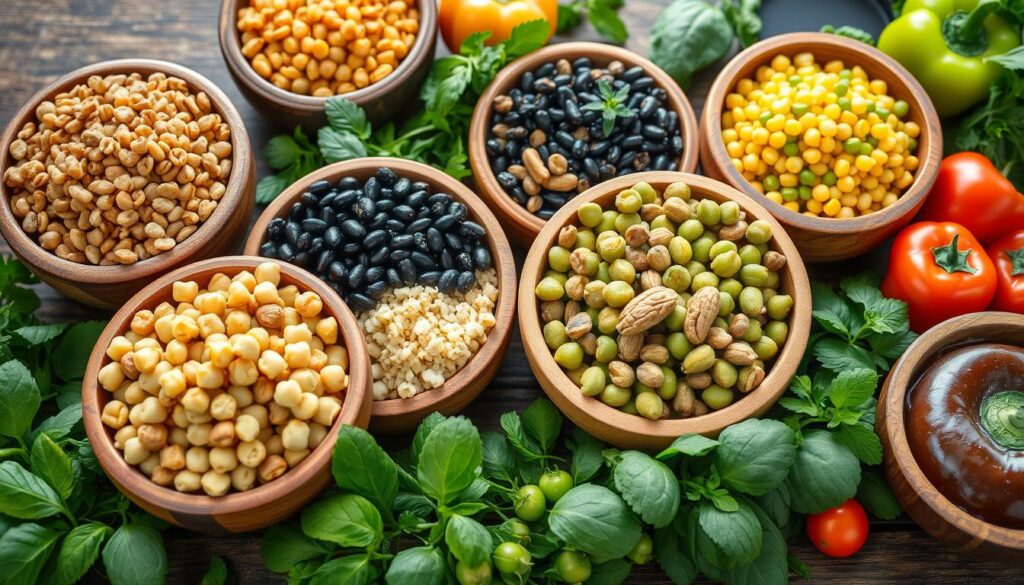
Boosting protein intake for vegans and vegetarians is simpler than you might think. With strategic plant-based choices, you can easily meet your nutritional needs. These protein sources offer powerful health benefits and are crucial for optimal wellness1.
Vegan and vegetarian protein options go beyond beans and tofu. Quinoa and hemp seeds are just two examples of the diverse choices available. More people are discovering these tasty alternatives, as shown by recent survey data1.
Protein is essential for muscle health, immune function, and overall well-being. You can thrive on a plant-based diet by choosing the right vegan protein options. The key is knowing which foods pack the most nutritional value2.
Key Takeaways
- Plant-based proteins offer comprehensive nutrition
- Diverse protein sources exist beyond traditional options
- Vegan diets can successfully meet protein requirements
- Strategic food choices ensure complete protein intake
- Whole food protein sources provide additional health benefits
Understanding Plant-Based Protein Fundamentals
Plant-based protein offers exciting insights into nutrition and health. Protein is vital for your body’s function and well-being. It builds muscle, creates enzymes, and supports immune function.
Protein also repairs cellular structures. It’s a key nutrient for maintaining overall health. Understanding its role can help you make better dietary choices.
What Protein Does for Your Body
Your body needs 20 different amino acids to work properly. Eight of these are essential amino acids that must come from food. Meat-free protein sources can provide these crucial nutrients effectively3.
- Builds and repairs muscle tissue
- Supports immune system function
- Creates essential enzymes
- Helps transport nutrients throughout the body
Daily Protein Requirements for Plant-Based Diets
Protein needs vary based on your activity level. For inactive people, about 0.36 grams per pound of body weight is recommended3. Athletes might need up to 0.8 grams per pound3.
| Activity Level | Protein Requirement |
|---|---|
| Sedentary | 0.36g per pound |
| Moderate Activity | 0.5g per pound |
| High Activity | 0.7-0.8g per pound |
Debunking Common Protein Myths
Plant protein benefits go beyond traditional nutrition beliefs. You can easily meet protein needs through a vegetarian diet. Plant-based proteins are often lower in saturated fats.
These proteins offer additional health advantages3. They can be just as complete and nutritious as animal-based sources.
“Your protein can come from plants – and it can be just as complete and nutritious as animal-based sources.”
For personalized protein advice, talk to a registered dietitian. They can help create a balanced meal plan for your unique needs3.
Protein for Vegans and Vegetarians: Complete Food Guide
Plant-based diets offer plenty of protein options. Your body needs protein for many important functions. Vegan protein sources are plentiful and varied4.
Aim for 10-35% of daily calories from protein. Your exact needs depend on activity level and personal factors4.
Top plant-based protein sources include:
- Legumes (beans, lentils)
- Nuts and seeds
- Soy products (tofu, tempeh, edamame)
- Whole grains (quinoa, amaranth)
- Nutritional yeast
Amino acids are key to understanding plant proteins. Your body can’t make 9 essential amino acids on its own5. Plant proteins may lack some amino acids.
However, mixing different sources can create complete protein profiles4.
“Protein diversity is key in a vegan diet” – Nutrition Experts
Protein needs vary by person. Adult male vegans usually need about 63 grams daily. Adult females typically require around 52 grams6.
Athletes and very active people might need more protein4.
Pro tip: Mix legumes and grains for all essential amino acids. This approach helps meet your nutritional needs easily4.
Remember, a well-planned vegan diet can provide all the protein your body needs!
High-Protein Plant Foods and Their Benefits
High-protein vegetarian foods can supercharge your plant-based diet. Vegan protein supplements and plant proteins offer amazing health benefits. Discover how these foods can boost your nutrition and well-being.
Plant-based proteins pack a nutritional punch. The Academy of Nutrition and Dietetics says vegetarian diets meet all nutritional needs. This applies to both adults and children7.
Top Sources by Protein Content
Check out these protein-rich plant foods:
- Tempeh: 34 grams per cup8
- Tofu: 20 grams per cup8
- Lentils: 18 grams per cup8
- Seitan: 21 grams per 1/3 cup7
Nutrient Combinations for Optimal Absorption
Boost your protein intake by mixing different sources. Pairing complementary proteins ensures you get all essential amino acids. Try combining beans with rice or nuts with whole grains.
Portion Guidelines for Maximum Benefits
The American Dietetic Association suggests 0.8 grams of protein per kilogram of body weight daily7. For a 165-pound person, that’s about 60 grams of protein per day.
Your protein needs may change based on activity, age, and health. Athletes might need more protein for muscle recovery and growth.
Conclusion
A well-planned plant-based diet can meet your nutritional needs. Vegan protein sources include legumes, nuts, and whole grains. Vegans typically consume 12.8% to 14.4% of their total energy from protein9.
Smart meal planning is key for plant-based protein intake. Experts suggest eating 3-4 servings of high-protein foods daily. These include tofu, quinoa, and legumes10.
Combining protein-rich plant foods ensures a balanced amino acid profile. This helps meet your nutritional requirements10.
Vegan diets may pose some nutrient challenges. Watch out for vitamin B12, iron, and zinc11. With proper planning, your vegan diet can support overall health.
Protein diversity is crucial for optimal health. Try various plant-based protein sources. This will help you enjoy the benefits of your vegetarian or vegan lifestyle.
FAQ
Can vegans and vegetarians get enough protein?
Yes, vegans and vegetarians can easily get enough protein. A well-planned plant-based diet provides all necessary protein. Foods like seitan, tofu, tempeh, lentils, beans, quinoa, and hemp seeds are protein-rich.
Most people, including those on plant-based diets, consume more protein than needed.
What are the best plant-based protein sources?
Top plant-based protein sources include seitan, tempeh, lentils, beans, and nutritional yeast. Quinoa and hemp seeds are also excellent protein sources.
These foods offer protein and other nutrients like fiber, vitamins, and minerals.
How much protein do I need daily?
The daily protein intake should be 10-15% of total calories. This equals about 0.8 grams per kilogram of body weight.
For most people, this means 46-56 grams of protein per day. Athletes may need more, but a varied plant-based diet can meet these needs.
Is plant protein as good as animal protein?
Plant proteins can be just as effective as animal proteins. Eating various plant foods provides all essential amino acids.
Plant-based proteins have lower saturated fat and higher fiber. They’re linked to lower risks of heart disease and certain cancers.
Do I need protein supplements on a vegan diet?
Most vegans can meet protein needs through whole food sources without supplements. Athletes or those with specific dietary needs might consider plant-based protein powders.
Whole foods should always be your main protein source.
How can I combine plant proteins for a complete amino acid profile?
You don’t need to carefully combine proteins at each meal. Eating various plant proteins throughout the day provides all essential amino acids.
Try mixing beans with rice or adding nuts to salads. Combining whole grains with legumes creates protein-rich meals.
Are there any risks associated with plant-based protein?
Plant-based proteins offer many health benefits. They’re typically lower in saturated fat and cholesterol-free. These proteins come packed with additional nutrients.
Eat a varied diet focused on whole, minimally processed plant foods. This ensures you get a wide range of nutrients.
Source Links
- 10 tasty protein sources for vegans and vegetarians, according to a dietitian – https://www.today.com/health/diet-fitness/protein-for-vegans-vegetarians-rcna135111
- The No-B.S. Guide to Vegan Protein – https://www.forksoverknives.com/wellness/vegan-protein-guide-athletes/
- Powering Your Plate: How to Incorporate More Vegetarian and Vegan Protein – https://premiumhealth.us/how-to-eat-more-vegetarian-and-vegan-protein/
- Complete Protein Combinations for Vegans – https://www.verywellfit.com/vegan-protein-combinations-2506396
- What Are Complete Protein Foods? (vs. Incomplete Proteins) – https://www.realsimple.com/complete-protein-foods-6891861
- Protein in the Vegan Diet — The Vegetarian Resource Group – https://www.vrg.org/nutrition/protein.php
- 15 best plant-based protein foods – https://www.medicalnewstoday.com/articles/321474
- The 9 Best Plant-Based Protein Sources, According to Dietitians – https://www.onepeloton.com/blog/plant-based-protein-sources/
- Dietary Protein and Amino Acids in Vegetarian Diets—A Review – https://pmc.ncbi.nlm.nih.gov/articles/PMC6893534/
- Protein Needs of Vegans – https://veganhealth.org/protein/protein-part-2/
- The Impact of a Vegan Diet on Many Aspects of Health: The Overlooked Side of Veganism – https://pmc.ncbi.nlm.nih.gov/articles/PMC10027313/

