
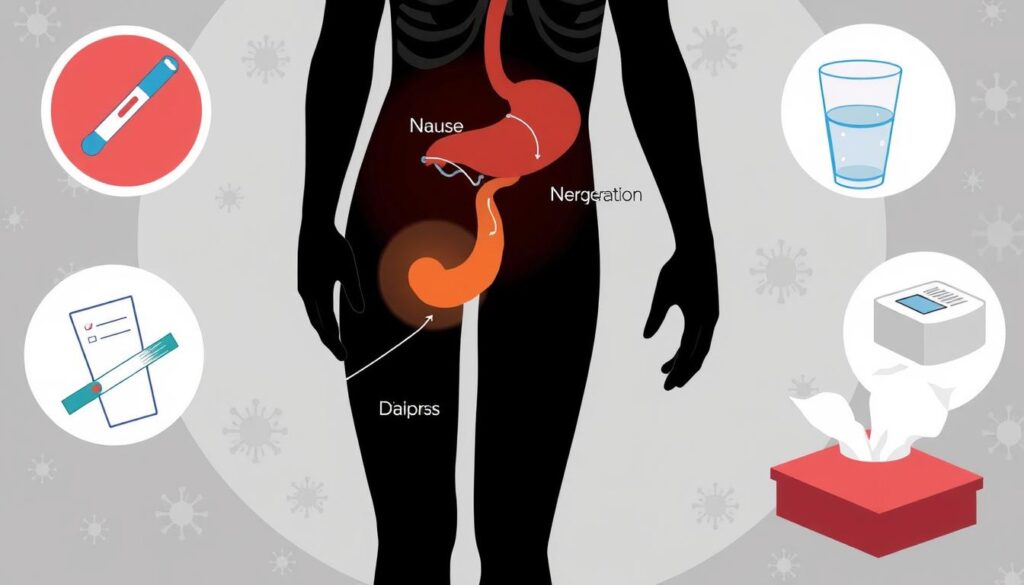
Stomach flu is an intestinal infection that strikes fast. It causes uncomfortable symptoms that disrupt daily life1. Children, older adults, and those with weak immune systems face higher risks1.
The stomach flu isn’t just one virus. It’s a group of viral invaders. Norovirus causes outbreaks in hospitals and on cruise ships2. Rotavirus often targets children1.
Even COVID-19 can cause stomach flu symptoms without affecting breathing1. Symptoms usually appear 4 to 48 hours after exposure. They include stomach pain, diarrhea, nausea, and vomiting1.
Fever and exhaustion are also common. Viral gastroenteritis spreads quickly in group settings worldwide2.
Key Takeaways
- Stomach flu is a viral intestinal infection affecting people of all ages
- Multiple viruses can cause gastroenteritis, including norovirus and rotavirus
- Symptoms typically develop within 1-2 days of exposure
- High-risk groups include children, elderly, and immunocompromised individuals
- Proper hygiene is crucial for prevention
What Is Viral Gastroenteritis?
Viral gastroenteritis, or stomach flu, inflames your digestive system. It’s caused by viruses and can affect anyone. This condition often disrupts daily life and causes discomfort3.
Understanding the Condition
Viral gastroenteritis is a common infection affecting millions worldwide. Norovirus and rotavirus are the main causes of this uncomfortable condition4.
The infection spreads quickly in close spaces. Schools, nursing homes, and community centers are high-risk areas3.
Common Causes
- Norovirus – responsible for 50% of adult stomach flu cases4
- Rotavirus – leading cause of viral gastroenteritis in children3
- Adenovirus – affecting children under 2 years old5
Symptoms to Watch For
The typical symptoms of viral gastroenteritis include:
- Intense abdominal pain
- Watery diarrhea
- Persistent nausea
- Occasional fever
- Muscle aches
The most critical concern with viral gastroenteritis is the risk of dehydration, which can become severe if not managed properly5.
Key points to remember: Viral infections can last from days to weeks. Your immune response affects the duration4.
Infants, elderly, and those with weak immune systems face higher risks. They’re more likely to experience complications3.
Prevention is key to avoiding viral gastroenteritis. Wash hands often and avoid close contact with infected people5.
How Is Viral Gastroenteritis Transmitted?
Viral gastroenteritis spreads in ways that can surprise many people. Knowing how it moves helps protect you and your family. This illness travels through several complex paths.
Contagion through Direct Contact
Viral gastroenteritis spreads easily through many routes. Direct contact is a main way it moves, so clean hands are crucial6. People spread the virus most when sick, but can still pass it on after feeling better7.
- Close physical interactions increase transmission risk
- Contaminated surfaces can harbor viruses for months
- Small particles of infected bodily fluids can spread quickly
Food and Waterborne Risks
Food and water can carry viral gastroenteritis. Norovirus and rotavirus can live in these sources, creating health risks8.
“Prevention starts with understanding how these viruses spread through everyday interactions and environments.”
Transmission risks are particularly high in group settings such as:
- Day care centers
- Schools
- Nursing homes
- Cruise ships
- Restaurants
Norovirus, rotavirus, adenovirus, and astrovirus often cause gastroenteritis7. These viruses spread in similar ways. They can move through different paths.
Protecting yourself requires consistent hand hygiene, careful food handling, and awareness of your surrounding environment.
Managing and Treating Viral Gastroenteritis
Viral gastroenteritis can be tough, but the right treatment helps you recover fast. The key is preventing dehydration and supporting your body’s healing process. Careful treatment strategies are crucial for recovery.
Home Remedies for Relief
Your main goal is keeping electrolyte balance and staying hydrated. Try these home treatment strategies:
- Practice oral rehydration with clear fluids
- Consume easily digestible foods
- Rest and allow your body to recover
“Hydration is your most powerful weapon against viral gastroenteritis”
When to Seek Medical Attention
Some symptoms need immediate medical help. Look out for severe dehydration signs, such as:
- Extreme weakness
- Dark urine
- Rapid heart rate
- Persistent high fever
Viruses cause 60% of all gastroenteritis cases. Norovirus accounts for 50% of viral infections9. Most cases get better on their own.
Keep a close eye on your condition. Seeking help when needed is important9.
Importance of Hydration
Good viral gastroenteritis treatment focuses on staying hydrated. Adults can drink sports drinks for hydration. Children should use pediatric electrolyte solutions10.
Probiotics might help reduce diarrhea in some cases10. Antibiotics don’t work against viral infections10.
Your body needs care and time to beat the virus naturally. Rest and hydration are key to recovery.
Prevention Tips for Viral Gastroenteritis
Hand hygiene and food safety are key to avoiding viral gastroenteritis. Understanding how stomach viruses spread helps prevent infection. Strategic practices can minimize your risk of catching these viruses1112.
Hand Hygiene Matters
Proper hand washing is your best defense against stomach viruses. Use soap and warm water for at least 20 seconds. This is crucial after bathroom use and before food handling11.
Strict hygiene rules in childcare centers and hospitals can greatly reduce virus spread12.
Safe Food Handling Strategies
Food safety is vital in managing outbreaks. Wash produce thoroughly and cook foods to the right temperature. Avoid sharing utensils and clean kitchen surfaces often12.
When traveling, be careful about food and water sources. This is especially important in areas with poor sanitation13.
Staying Healthy During Outbreaks
During outbreaks, avoid close contact with sick people. Consider rotavirus vaccines, particularly for children11.
If exposed, isolate yourself and watch for stomach flu symptoms. These usually clear up in two to three days13.
FAQ
What is viral gastroenteritis, and how is it different from food poisoning?
Viral gastroenteritis is an intestinal infection caused by viruses. It’s different from food poisoning, which bacteria usually cause. Both conditions cause diarrhea and vomiting, but their causes and treatments differ.
Stomach flu spreads through contact with infected people or contaminated surfaces. Food poisoning typically comes from bacterial toxins in food.
How long does viral gastroenteritis typically last?
Most cases of viral gastroenteritis last 1-3 days. Some instances can persist up to 14 days. The duration depends on your immune system and how you manage symptoms.
Children and older adults may take longer to recover. It’s important to stay hydrated and rest during this time.
How can I prevent spreading viral gastroenteritis to my family?
Wash hands with soap and warm water for at least 20 seconds. Disinfect surfaces regularly and use separate personal items. Avoid preparing food for others while infected.
Isolate yourself in a separate room if possible. Ensure proper disposal of contaminated materials like tissues or cleaning supplies.
What are the most important signs of dehydration I should watch for?
Watch for decreased urination, dark-colored urine, extreme thirst, dry mouth, dizziness, and fatigue. In children, look for sunken eyes and lack of tears when crying.
If you notice these symptoms, increase fluid intake. Seek medical attention for vulnerable individuals like infants or older adults.
Can I get viral gastroenteritis more than once?
Yes, you can get viral gastroenteritis multiple times. Different viruses cause the infection, and immunity is often short-lived. Norovirus has multiple strains, and recovering from one doesn’t protect against others.
Good hygiene and a strong immune system can help reduce repeated infections.
Are there any vaccines available for viral gastroenteritis?
Rotavirus vaccines are available for infants and young children. These protect against the most common cause of severe viral gastroenteritis in kids.
There are no widely available vaccines for other viruses like norovirus. Good hygiene remains the most effective prevention strategy.
When should I see a doctor for viral gastroenteritis?
Seek medical help if you have severe symptoms like high fever or bloody stools. Watch for signs of dehydration, extreme weakness, or symptoms lasting more than a few days.
Infants, older adults, and people with weak immune systems need closer monitoring. They may need earlier medical care.
Source Links
- Viral gastroenteritis (stomach flu): MedlinePlus Medical Encyclopedia – https://medlineplus.gov/ency/article/000252.htm
- Viral Gastroenteritis (Stomach Flu): Symptoms and Treatment – https://www.healthline.com/health/viral-gastroenteritis
- Viral gastroenteritis (stomach flu)-Viral gastroenteritis (stomach flu) – Symptoms & causes – Mayo Clinic – https://www.mayoclinic.org/diseases-conditions/viral-gastroenteritis/symptoms-causes/syc-20378847
- Stomach Flu: All You Need To Know – https://my.clevelandclinic.org/health/diseases/12418-stomach-flu
- Understanding Viral Gastroenteritis – https://www.hopkinsmedicine.org/health/conditions-and-diseases/understanding-viral-gastroenteritis
- Viral gastroenteritis (stomach flu) – https://www.mountsinai.org/health-library/diseases-conditions/viral-gastroenteritis-stomach-flu
- Symptoms & Causes of Viral Gastroenteritis (“Stomach Flu”) – NIDDK – https://www.niddk.nih.gov/health-information/digestive-diseases/viral-gastroenteritis/symptoms-causes
- Stomach flu is actually viral gastroenteritis – https://www.uclahealth.org/news/article/stomach-flu-is-actually-viral-gastroenteritis
- Gastroenteritis: Sick in Your Stomach and Intestines – https://my.clevelandclinic.org/health/diseases/gastroenteritis
- Treatment of Viral Gastroenteritis (“Stomach Flu”) – NIDDK – https://www.niddk.nih.gov/health-information/digestive-diseases/viral-gastroenteritis/treatment
- How to Prevent a Stomach Virus after Exposure: Tips – https://www.healthline.com/health/how-to-prevent-stomach-virus-after-exposure
- How to Survive When a Stomach Bug Hits your Household – https://www.chop.edu/news/health-tip/how-survive-when-stomach-bug-hits-your-household
- How to Prevent Stomach Flu (Gastroenteritis) – https://www.healthxchange.sg/digestive-system/stomach/prevent-stomach-flu-gastroenteritis

