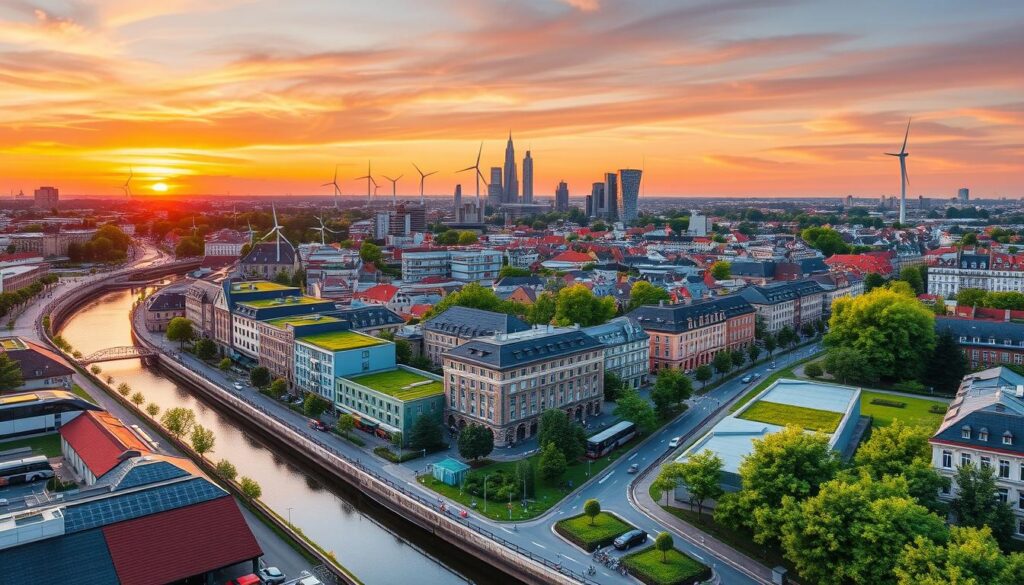
Europe’s eco-friendly cities are reshaping urban life. They’re turning sustainable living into reality through innovative practices. Valencia leads this green revolution as the 2024 European Green Capital.
These cities are more than tourist spots. They’re living labs of environmental progress. European urban centers are creating ethical spaces that balance human needs with nature.
Lahti, Finland, shows how green practices can change whole communities. It’s a prime example of sustainable urban development in action.
These destinations challenge traditional city planning. They blend renewable energy with smart infrastructure and community-driven sustainability. Their approach proves that cities can be both innovative and eco-friendly1.
Key Takeaways
- European cities are global leaders in sustainable urban development
- Innovative green technologies are reshaping urban landscapes
- Sustainability is about creating livable, ethical environments
- Community engagement drives environmental transformation
- Green cities offer unique travel experiences beyond traditional tourism
Why Sustainability Matters in Urban Planning
Urban planning tackles global environmental challenges head-on. With 56% of people living in cities, sustainable development is crucial2. Your grasp of eco-friendly design shapes our future living spaces.
Cities are key players in responsible environmental management. Urban areas produce 70% of global greenhouse gases3. This makes sustainable practices vital for our planet’s health.
The Benefits of Sustainable Cities
Sustainable cities offer many perks for residents and the environment:
- Improved air and water quality
- Reduced carbon footprint
- Enhanced public health
- Efficient clean energy systems
Key Principles of Sustainable Development
| Principle | Key Focus |
|---|---|
| Green Infrastructure | Implementing zero-waste strategies and organic design elements |
| Transportation | Promoting sustainable transit options like electric vehicles and bike lanes |
| Energy Efficiency | Developing renewable energy systems in urban landscapes |
“Sustainable urban planning is about creating environments that meet present needs without compromising future generations”4
Our urban future depends on smart, eco-friendly solutions. By adopting sustainable practices, cities become more resilient and livable4. This approach creates healthier, more attractive spaces for everyone.
Top Sustainable Cities to Explore in Europe
Europe leads in sustainable urban development. These cities blend innovation with environmental consciousness. From cycling paths to renewable energy, they showcase eco-friendly living’s future.
Europe’s sustainable cities inspire eco-friendly urban living. They show how cities can work with nature. Let’s explore some places changing green living.
Copenhagen: A Leader in Green Living
Copenhagen shines in sustainable urban design. It aims to be carbon neutral by 2025. This sets a global standard for eco-friendly cities5.
The Danish capital’s approach includes:
- Extensive bicycle infrastructure
- Green public spaces
- Renewable energy initiatives
- Zero-emission transportation goals
Amsterdam: Cycling into a Sustainable Future
Amsterdam showcases sustainable urban transportation. It prioritizes bikes and reduces car use6. With over 400 km of bike paths, Amsterdam proves green transport creates livable cities.
Oslo: A City Committed to Carbon Neutrality
Oslo has made big leaps in sustainable development. It has cut carbon emissions significantly. Over 75% of residents use zero-emission transport for commuting6.
Oslo’s environmental protection includes:
- Aggressive emission reduction strategies
- Extensive public transportation network
- Urban forest preservation
- Renewable energy investments
“Sustainable cities are not just about technology, but about creating spaces where people and nature can thrive together.”
These cities show urban areas can be eco-friendly and livable. They offer unique experiences for environmentally conscious travelers6.
Source: Urban Sustainability Research5Source: European Green City Rankings
Sustainable Practices You Can Experience
European travel offers amazing chances to engage in responsible tourism. Your trip can become an eco-friendly adventure supporting clean energy and zero-waste efforts. Mindful travel choices can make a big difference.
Eco-Friendly Transportation Options
European cities excel at providing sustainable transportation alternatives. Many places offer bike-sharing schemes for exploring while reducing your carbon footprint7.
Choosing cycling or public transit can significantly lower transportation emissions7. These options make it easy to travel green.
- Rent electric bicycles
- Use comprehensive public transit systems
- Participate in city walking tours
Farm-to-Table Dining Experiences
Enjoy organic culinary adventures that support local communities. Farm-to-table restaurants use locally sourced ingredients, cutting transport emissions and boosting regional farming7.
Choosing meals with local produce helps build sustainable food systems7. It’s a tasty way to make a difference.
| Dining Practice | Sustainability Impact |
|---|---|
| Local Ingredient Sourcing | Reduces Transportation Emissions |
| Seasonal Menu Selection | Supports Regional Agriculture |
| Organic Food Choices | Minimizes Chemical Environmental Impact |
Local Markets and Sustainable Shopping
Find zero-waste shopping experiences in European local markets. These lively places let you support responsible buying while enjoying authentic local culture8.
Look for vendors who focus on sustainable sourcing and minimal packaging7. It’s a fun way to shop green.
“Every sustainable choice is a step towards preserving our planet’s future.”
Your travel choices can boost environmental sustainability across Europe. Small actions add up to big impacts for our planet.
Tips for Visiting Sustainably in Europe
Europe offers amazing chances to embrace sustainable tourism. Your trip can positively impact local communities and the environment. Responsible choices create meaningful experiences while exploring Europe’s wonders.
Offsetting Your Carbon Footprint
European road transport generates over 70% of total transport emissions. Choose public transit, cycling, or walking to minimize your impact. Many European cities offer bike-friendly routes and efficient public transportation.
These green travel options are convenient and fun. They allow you to explore while reducing your carbon footprint.
Choosing Green Accommodations
Pick lodgings that use renewable energy and sustainable practices. Hotels contribute about 2% to global emissions. Look for eco-certified hotels or local guesthouses committed to green initiatives.
Community-based tourism helps preserve cultural heritage. It also supports local economies, making your stay more meaningful.
Supporting Local and Eco-Conscious Businesses
Make your travel count by supporting local artisans and businesses. Buy locally-made products to reduce environmental impact and preserve traditional craftsmanship.
Visit farmer’s markets and join recycling efforts. Choose experiences that connect you with local communities. These choices help minimize your ecological footprint while traveling910.
FAQ
What makes European cities leaders in sustainable urban development?
European cities like Guimarães, Vilnius, and Valencia are Green Capitals due to their sustainability efforts. They focus on reducing emissions, electrifying transport, and promoting cycling. Many aim to cut carbon emissions by 95% by 2030.
These cities showcase innovative practices and strong community engagement in environmental stewardship. Their efforts are setting new standards for urban sustainability worldwide.
How can sustainable urban planning benefit cities and residents?
Sustainable urban planning improves air quality, waste management, and public health. It also reduces environmental impact and drives economic growth. Cities like Freiburg show how renewable energy and sustainable transport create livable spaces.
These approaches often attract environmental research and foster innovation in urban development. The benefits extend beyond the environment to improve overall quality of life.
Which European cities are best known for sustainability?
Copenhagen aims for carbon neutrality by 2025, while Amsterdam promotes sustainable tourism and cycling. Oslo has halved its emissions between 1990 and 2020. Ljubljana offers free bike-sharing, and Grenoble promotes slow travel.
Barcelona implements smart waste management systems. These cities serve as excellent examples of urban sustainability, each with unique approaches.
What transportation options are available in sustainable European cities?
Sustainable European cities offer eco-friendly transport options like bike-sharing schemes and efficient public transit. Ljubljana provides free bike-share access and over 200 kilometers of cycle paths.
In Oslo, over 75% of residents use zero-emission transport for commuting. These cities prioritize green mobility to reduce their carbon footprint.
How can travelers contribute to sustainability when visiting European cities?
Travelers can offset their carbon footprint and choose eco-certified accommodations. They should use public transport or bike-sharing and support local businesses. Following local recycling guidelines also helps.
Cities like Nijmegen actively promote sustainable tourism. This offers environmentally conscious travelers opportunities to make a positive impact during their visits.
What unique sustainable experiences can tourists enjoy in European cities?
European cities offer farm-to-table dining, local organic markets, and community-led tours. Grenoble has “Greeters” tours where locals share their city’s sustainable practices.
Visitors can explore botanical gardens and participate in local food experiences. They can also learn about innovative environmental initiatives directly from local communities.
Are European cities really making a significant impact on environmental sustainability?
Yes, European cities are making remarkable progress in sustainability. Copenhagen ranks among the happiest populations globally while pursuing carbon neutrality.
Oslo has dramatically reduced emissions. Cities across Europe are implementing strategies to address climate change and sustainable urban growth.
Source Links
- Top 10 Sustainable Cities in Europe: Examples and Insights – https://thinkz.ai/top-10-sustainable-cities-europe/
- What is Sustainable Urban Planning? | Green City Times – https://www.greencitytimes.com/sustainable-urban-planning/
- The Importance of Sustainable Cities – https://www.seasidesustainability.org/post/the-importance-of-sustainable-cities
- Examining the Role of Urban Planners in Promoting Sustainability – MIPIM World Blog – https://blog.mipimworld.com/guide-green-real-estate/green-real-estate-role-urban-planners-sustainability/
- Ranked: Europe’s most sustainable cities – https://www.timeout.com/news/ranked-europes-most-sustainable-cities-041624
- Europe Travel: 20 European Cities Ranked Best Green Capitals 2022 – https://www.forbes.com/sites/ceciliarodriguez/2021/10/18/europe-eco-travel-20-european-cities-ranked-best-green-capitals-2022/
- 12 Sustainable Practices You Can Do at Home – https://theearthlingco.com/blogs/news/sustainable-practices-at-home
- 4 Sustainable Business Practices to Make a Difference – https://online.hbs.edu/blog/post/sustainable-business-practices
- Top 10 Tips for Sustainable Travel in Europe – https://visiteurope.com/en/top-10-tips-for-sustainable-travel-in-europe/
- Summer sustainability: Five ways to make your holiday more climate-friendly – https://climate-pact.europa.eu/articles-and-events/pact-articles/sustainable-summer-five-ways-make-your-holiday-more-climate-friendly-2024-06-11_en