
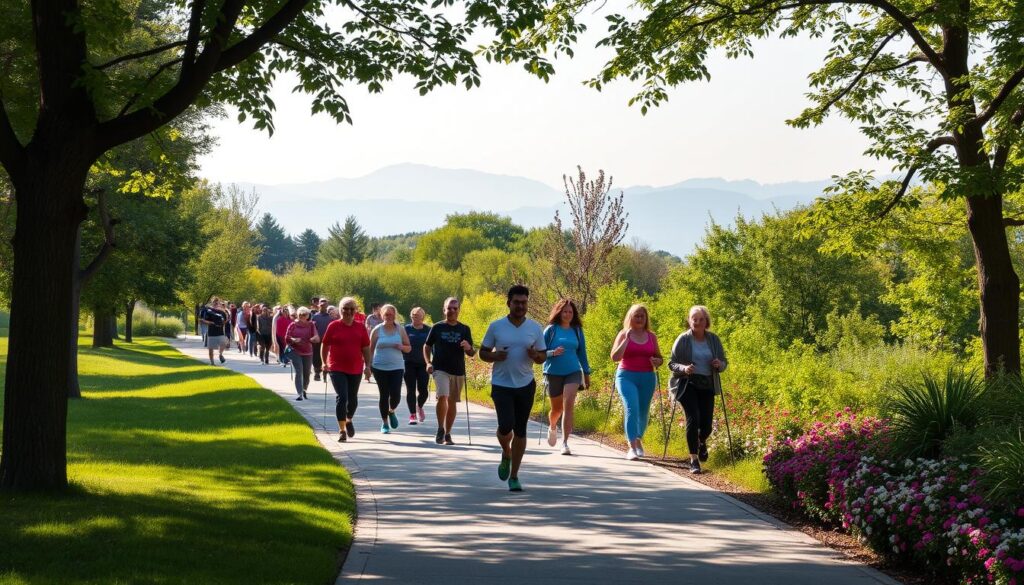
Walking is a simple yet powerful cardiovascular exercise. It’s an easy, low-impact fitness approach that fits into any lifestyle1. Experts recommend 150 minutes of moderate-intensity walking weekly for better health and weight control1.
Your body craves movement, and walking delivers amazing benefits. Just 15 minutes of daily walking can cut your mortality risk by 14%1. It’s more than exercise; it’s a route to a healthier life.
Walking welcomes everyone, from beginners to experienced fitness enthusiasts. Start slow and gradually increase your pace and time. Remember, each step brings you closer to a stronger, healthier you1.
Key Takeaways
- Walking is an accessible cardiovascular exercise for all fitness levels
- Just 15 minutes of daily walking can significantly improve health
- Aim for 150 minutes of moderate walking per week
- Low-impact fitness helps with weight management
- Every step contributes to your overall wellness
Why Walking is Essential for Your Health
Walking is a powerful tool for transforming your wellness. It offers remarkable benefits for both body and mind. This accessible outdoor activity can significantly improve your overall health.
Regular walking provides a holistic approach to health. It offers benefits for mental health and physical fitness. Walking is an activity that everyone can enjoy.
Mental Health Benefits
Walking can be a game-changer for your mental well-being. It releases feel-good hormones like dopamine and serotonin. These hormones boost your mood and reduce stress2.
Moving outdoors can help manage anxiety. It also improves overall mental clarity3. Walking is a simple yet effective way to enhance your mental health.
- Reduces symptoms of depression
- Increases endorphin production
- Enhances cognitive function
Physical Health Benefits
Your body gains significant advantages from consistent walking. Brisk walking helps maintain a healthy weight. It also prevents various chronic conditions2.
Health guidelines recommend at least 150 minutes of moderate aerobic activity weekly3. Walking is an excellent way to meet this goal.
| Health Aspect | Walking Benefit |
|---|---|
| Cardiovascular Health | Lowers blood pressure |
| Weight Management | Burns calories effectively |
| Muscle Strength | Builds leg and core muscles |
Social Aspects of Walking
Walking doesn’t have to be a solitary activity. Joining walking clubs can make your fitness journey social. You’ll meet like-minded individuals while improving your health3.
“Walking is man’s best medicine.” – Hippocrates
Start small and build momentum. Even five minutes a day can make a big difference. Remember, every step counts towards a healthier you2!
Getting Started with Your Walking Routine
Walking can transform your health and fitness. It’s an easy way to start exercising, whether you’re new or returning to it. Let’s explore how to set goals and prepare for your walking journey.
Setting Realistic Walking Goals
Creating achievable walking goals is key to long-term success. Here are some strategies to consider:
- Start with a daily step goal that matches your current fitness level4
- Split your walks into multiple shorter sessions if time is limited4
- Register for a local 5k to provide motivation and a deadline4
Walking just 21 minutes daily can reduce heart disease risk by 30%5. Setting realistic targets helps build consistency and confidence in your routine.
Choosing the Right Gear
Your walking experience depends on proper equipment. A good pair of walking shoes is the most important investment4.
Here are some gear recommendations:
| Gear Type | Recommended Features |
|---|---|
| Walking Shoes | Comfortable, supportive, good arch support |
| Pedometer Tracking | Smartphone app or fitness tracker |
| Clothing | Weather-appropriate, moisture-wicking |
Finding Safe Walking Routes
Keep your routine exciting by exploring different walking environments. Here are some options:
- Local parks and nature trails
- Neighborhood sidewalks
- Indoor treadmill workouts
- Hiking trails for varied terrain
Research shows people walk more when living near parks or trails5.
Your walking journey is unique and flexible. Start slow and stay consistent. Enjoy improving your health with each step you take45.
Tips for Maximizing Your Walking Experience
Walking is a powerful cardiovascular exercise that can transform your fitness journey. It’s great for weight management and boosting overall health. Strategic walking techniques can make a big difference in your workout routine.
Let’s explore some innovative strategies to elevate your walking experience. These go beyond basic stepping and can help you achieve better results.
Interval Training for Enhanced Fitness
Interval training can supercharge your walking workout. Try alternating between brisk and moderate-paced walking to challenge your body6.
A simple approach is to walk one minute fast, then one minute slow. This improves cardiovascular endurance and helps burn more calories6.
- Walk one minute fast, one minute slow
- Repeat interval cycle 4-6 times
- Aim for 20-minute total workout duration
Staying Motivated and Tracking Progress
Pedometer tracking can be a game-changer in your walking routine. Modern tracking technologies make it easy to monitor your daily steps7.
Recent research suggests that even 7,000 steps can provide significant health benefits7. This is good news for those who find 10,000 steps challenging.
Advanced Walking Techniques
Enhance your walking workout by incorporating diverse techniques:
- Engage your upper body by swinging arms
- Walk on varied terrains like hills or trails
- Use light weights for added resistance7
- Try walking lunges or side shuffles6
Pro Tip: Consistency is key in any fitness journey. Regular walking can improve overall health and longevity.
The most effective walking routine is one you enjoy and maintain consistently. Listen to motivating music and explore new routes.
Gradually challenge yourself to create a sustainable and enjoyable cardiovascular exercise experience. Your body will thank you for it!
Overcoming Common Barriers to Walking
Walking can transform your health, but many face obstacles in their fitness journey. Time constraints, lack of motivation, and personal limitations often hinder regular physical activity. Understanding these challenges is crucial for creating a sustainable walking routine.
Time management is a significant hurdle for many walkers. Integrate walking into your daily routine by taking stairs or walking part of your commute. Find three 30-minute slots weekly for physical activity to boost your success rate.
Consider exploring CDC resources for activity planning to maximize your walking potential. These tools can help you overcome time-related obstacles effectively.
Motivation is key to maintaining outdoor activity goals. Set specific, achievable objectives and track your progress using fitness apps or calendars. Start with short walks before work or during lunch breaks if energy is low.
Treadmill workouts offer a consistent exercise option when outdoor conditions are unfavorable. They provide a reliable alternative regardless of weather challenges.
For those with physical limitations, walking can be adapted to your needs. Consult healthcare professionals to develop a personalized walking plan. Focus on activities that match your current fitness level.
Start with 5-10 minutes daily and gradually increase duration for significant health benefits. The key is persistence and finding enjoyable ways to stay active that work for you8910.
FAQ
How many steps should I aim for daily?
The daily goal is 10,000 steps, but don’t worry if you can’t reach it right away. Any increase in walking offers significant health benefits. Start where you are and gradually build up your step count.
What are the mental health benefits of walking?
Walking releases feel-good hormones like dopamine, serotonin, and endorphins. These improve mood, reduce stress, and enhance memory. Outdoor walks are particularly effective for managing mental health and boosting overall well-being.
Do I need special equipment to start walking?
Walking is a highly accessible exercise. You only need comfortable, supportive shoes and weather-appropriate clothing. A pedometer or fitness tracker can help monitor progress, but it’s not essential.
How can I make walking more interesting?
Spice up your walks by listening to music or podcasts. Explore new locations or join walking clubs for variety. Try interval training by alternating between brisk walking and slower-paced recovery.
What if I can’t walk outdoors?
Indoor alternatives include treadmill workouts, mall walking, or using indoor tracks. For those with physical limitations, consider seated exercises that mimic walking movements. Always consult a healthcare professional for a safe activity plan.
How quickly can I expect to see health benefits from walking?
Just 10 minutes of daily walking can reduce risks of cardiovascular diseases, type 2 diabetes, and certain cancers. Consistent walking improves heart health, strengthens muscles, and enhances mental well-being relatively quickly.
What’s the ideal walking pace?
A brisk pace of 80-100 steps per minute offers significant health benefits. This pace lowers the risk of death by 35%. It also reduces risks of heart disease, cancer, and dementia.
Can walking help with weight management?
Yes! Walking is an excellent low-impact exercise for weight management. It burns calories, improves metabolism, and supports fitness goals. Consistent walking combined with a balanced diet yields the best results.
Source Links
- Start with a step and walk your way to better health – https://www.heart.org/en/affiliates/start-with-a-step-and-walk-your-way-to-better-health
- Walk your way to fitness – https://www.mayoclinic.org/healthy-lifestyle/fitness/in-depth/walking/art-20046261
- Why Is Walking the Most Popular Form of Exercise? – https://www.heart.org/en/healthy-living/fitness/walking/why-is-walking-the-most-popular-form-of-exercise
- 5 Ways to Kick-Start Your Daily Walking Routine | Medical Mutual – https://www.medmutual.com/About-Medical-Mutual/Blog/Health-Benefits-of-Walking.aspx
- Walking: An Easy Way to Get Fit – HelpGuide.org – https://www.helpguide.org/wellness/fitness/how-to-start-a-walking-program
- How to Make the Most of Your Walking Workout, Per Experts – https://www.prevention.com/fitness/fitness-tips/a20436692/how-to-increase-your-calories-burned-walking/
- How to Turn Walking into an Effective Workout | Polar Blog – https://www.polar.com/blog/walking-workout/?srsltid=AfmBOoo787tL5FYNwsjtFqmFIVhgvDDfR1nlS3LOnJvIHwgjAaATMx-x
- Overcoming Exercise Barriers | Howdy Health – https://howdyhealth.tamu.edu/overcoming-exercise-barriers/
- Breaking Down Barriers to Fitness – https://www.heart.org/en/healthy-living/fitness/getting-active/breaking-down-barriers-to-fitness
- Overcome Barriers and Get Moving – https://diabetes.org/health-wellness/fitness/overcoming-barriers

