The Camino de Santiago offers a life-changing trek along ancient pilgrimage routes. It’s more than just a trip; it’s a chance for growth and discovery1. This guide will help you plan an unforgettable journey on the St. James Way2.
Each year, thousands walk to Santiago de Compostela. In fact, 92% of pilgrims choose to walk the path1. The Camino Frances, stretching 800km, is the most popular route1.
The Camino’s rich history adds to its appeal. Since 1993, it’s been a UNESCO World Heritage Site1. Pilgrims can choose from various routes, each with its own charm1.
Key Takeaways
- Multiple routes available for pilgrims of all fitness levels
- Most popular route is Camino Frances, covering 800km
- UNESCO World Heritage Site with deep cultural significance
- Suitable for walking or cycling experiences
- Offers spiritual and personal transformation opportunities
What is the Camino de Santiago?
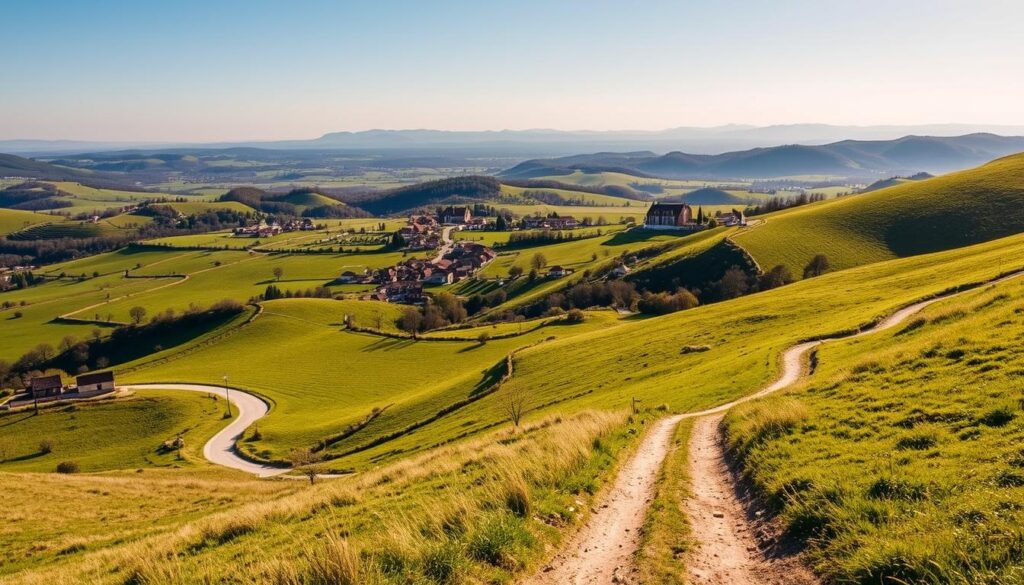
The Camino de Santiago is a legendary network of Spanish hiking trails. It attracts travelers worldwide, offering a transformative journey across Galicia. This ancient pilgrimage route winds through beautiful landscapes of religious tourism3.
The Rich History of a Sacred Journey
The Camino de Santiago is over 1,000 years old. It’s one of the world’s most significant Christian pilgrimage routes3. For centuries, pilgrims have traveled these paths seeking spiritual connection and personal growth.
Exploring the Different Routes
The Camino offers multiple routes for adventurers. Each path has its unique characteristics:
- Camino Francés: The most popular route, chosen by approximately 55% of pilgrims4
- Camino Portugués: Attracts around 20,000 travelers annually5
- Camino del Norte: Selected by 6% of pilgrims4
- Camino Primitivo: A challenging route taken by only 5% of pilgrims4
Why Travelers Embark on This Journey
People walk the Camino for various reasons. Some seek spiritual enlightenment, while others desire personal growth. Many simply want to experience northern Spain’s rich cultural landscape5.
“The Camino is not just a walk, it’s a journey of the soul.” – Anonymous Pilgrim
Over 400,000 travelers explore these historic trails yearly. The Camino de Santiago offers a truly remarkable experience5.
You can walk the last 100 km to earn your Compostela Certificate. Or, complete a full route for an unforgettable adventure4.
Preparing for Your Journey
El Camino de Santiago requires careful preparation. This pilgrimage demands physical, mental, and practical readiness. Understanding the journey’s nuances will help you navigate challenges and embrace the experience.
Essential Packing List for the Camino
Packing smartly is crucial for a successful pilgrimage. Your backpack should be lightweight yet comprehensive. Experienced pilgrims recommend these essential items:
- Comfortable, broken-in hiking boots
- Quick-dry clothing layers
- Lightweight sleeping bag
- First aid kit
- Refillable water bottle
- Compact rain gear
Physical Preparation and Training Tips
Preparing for the Camino Francés requires a structured approach. Start your training at least 3 months before your pilgrimage6. Here’s a progressive training program:
- Stage 1: Walk 5-10 km three times weekly6
- Stage 2: Gradually increase distance, add backpack weight6
- Stage 3: Build up to 20 km daily walks6
- Stage 4: Include longer weekend hikes6
Understanding the Weather and Best Times to Go
Weather can greatly affect your pilgrimage experience. The Camino offers varied climatic conditions across different routes7.
| Route | Length | Typical Duration | Best Season |
|---|---|---|---|
| Camino Francés | 491 miles | 28-35 days | April-October |
| Camino del Norte | 513 miles | 30-35 days | May-September |
| Camino Portugués | 383 miles | 25-27 days | Spring/Fall |
Pro tip: Choose shoulder seasons for milder temperatures and fewer crowds. April-May and September-October are ideal times to go.
“The journey of a thousand miles begins with a single step.” – Ancient Pilgrim Wisdom
Tips for Walking the Camino
Walking the Camino de Santiago needs careful planning and an open mind. This amazing pilgrimage spans 800 kilometers, ending at the Cathedral of Santiago de Compostela8. Pilgrims usually walk 20-25 kilometers daily, keeping a steady pace9.
The Camino offers various places to stay. Pilgrim hostels (albergues) are cheap, costing 8€ to 22€ per bunk8. For more privacy, try private rooms in albergues or Spanish bed and breakfasts.
Luxury seekers can enjoy Parador Hotels in larger towns8. These hotels offer unique historical experiences.
Pack John Brierley’s updated pilgrim guides for your Camino Primitivo journey8. Talk with locals and other travelers to soak up Spanish culture. Get at least one stamp daily in your pilgrim passport9.
This trek is more than just walking. It’s a life-changing adventure. Learn about the route’s history and try local foods. Explore the spiritual side of the Camino too.
FAQ
What exactly is the Camino de Santiago?
The Camino de Santiago is a network of pilgrim routes to Santiago de Compostela, Spain. It attracts people worldwide for various reasons. The routes range from 120 km to 1000 km long.
The most popular is the 790 km French Way (Camino Francés). It’s a centuries-old trail that offers religious, cultural, and personal growth experiences.
How long does it take to walk the Camino?
The time to complete the Camino varies from 4 to 45+ days. It depends on your chosen route and walking pace.
The popular Camino Francés usually takes 30-35 days to walk its full 790 km. Many pilgrims choose shorter sections or walk at different speeds.
What are the most popular Camino routes?
The top routes include the French Way, Portuguese Way, Northern Way, Primitivo, and Vía de la Plata. The French Way is the most well-known among pilgrims.
It stretches 491 miles from Saint-Jean-Pied-de-Port in France to Santiago de Compostela. Each route offers unique experiences and landscapes.
When is the best time to walk the Camino?
The best time depends on your weather preferences. Peak season is June to August, but it’s crowded and hot.
Many prefer April-May and September-October for milder weather and fewer crowds. Be ready for diverse conditions, from snow to scorching heat.
What should I pack for the Camino?
Pack light! Bring comfortable hiking boots, quick-dry clothes, a light sleeping bag, and moisture-wicking socks. A good 35-40 liter backpack and basic first aid kit are essential.
Keep your pack under 10% of your body weight. Don’t forget a water bottle, sun protection, and versatile clothing.
Do I need to be religious to walk the Camino?
No, you don’t need to be religious to walk the Camino. People walk for various reasons, like personal growth or cultural exploration.
Many find the journey life-changing, regardless of their beliefs. It’s a unique experience open to everyone.
How difficult is the Camino?
The Camino’s difficulty varies by route, but it’s accessible to different fitness levels. The French Way is considered the easiest and most well-maintained.
Physical preparation is recommended. Some sections can be challenging, with varied terrain and weather conditions.
What are accommodation options along the Camino?
You’ll find options from pilgrim hostels to private guesthouses and hotels. Albergues are budget-friendly, costing 10-15 euros per night.
Booking ahead is smart during peak season, especially for private rooms. Many towns offer affordable Pilgrim’s Menus for meals.
Do I need to speak Spanish?
Basic Spanish is helpful but not necessary. Many people along the Camino speak some English, especially in touristy areas.
Learning a few phrases will be appreciated by locals. Carry a phrasebook or translation app to help you communicate.
How do I get a Compostela (Pilgrim’s Certificate)?
To get a Compostela, walk at least the last 100 km of any Camino route. Collect stamps in your Pilgrim’s Passport along the way.
Present your stamped passport at the Pilgrim’s Office in Santiago de Compostela. They’ll give you the official certificate.
Source Links
- Camino de Santiago. All you need to know – https://caminoways.com/camino-de-santiago
- Walking the Camino de Santiago: A Resource Guide I Lens of Jen – https://www.lensofjen.org/the-camino-de-santiago/
- Camino de Santiago travel guide – https://www.responsiblevacation.com/vacations/camino-de-santiago/travel-guide
- The Camino de Santiago – your 2024 guide – STINGY NOMADS – https://stingynomads.com/camino-de-santiago-walking-guide/
- Choose the best Camino de Santiago pilgrimage route for you – https://www.lonelyplanet.com/articles/choose-which-camino-de-santiago-route
- Camino de Santiago training. A Zero to Hero program – https://stingynomads.com/camino-de-santiago-training/
- Walking the Camino | Everything You Need To Know – https://www.exploreworldwide.com/blog/walking-the-camino-de-santiago-how-to-plan-your-trip
- Walking The Camino De Santiago My Tips After 1000s Of Miles – https://thenwewalked.com/walking-the-camino-de-santiago/
- 13 Essential Camino Tips: Preparing, hiking & Post-Adventure – https://caminoways.com/essential-camino-tips