
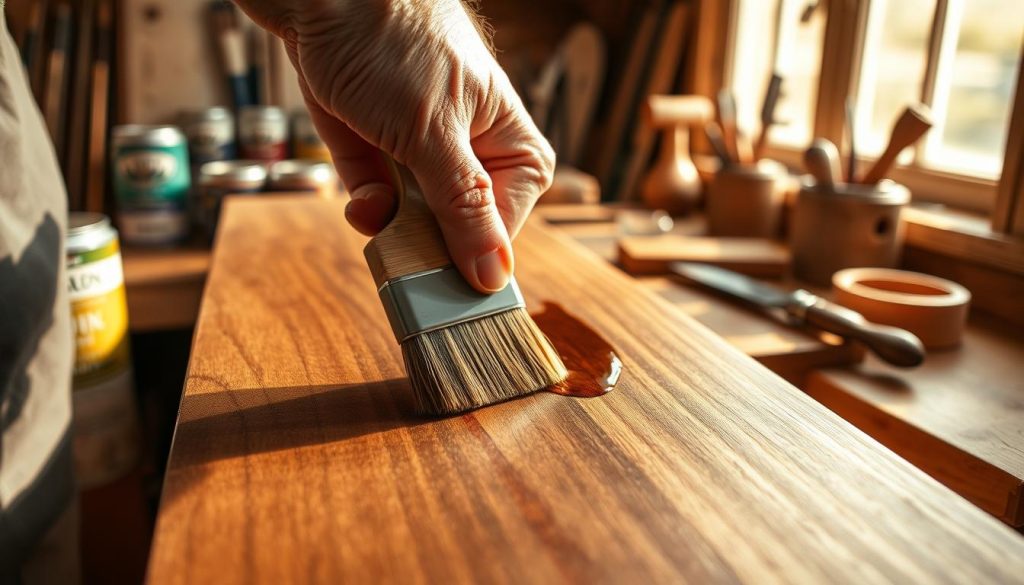
Wood aging and staining can transform furniture and wooden surfaces. These techniques create rich, sophisticated finishes that enhance natural grain and texture1. Woodworkers and DIY enthusiasts have many options to achieve stunning results.
Wood staining methods offer diverse approaches for darkening wood. Both professional and natural techniques cater to various skill levels and project needs2. Options range from commercial products like Minwax PolyShades to clever home remedies1.
Homeowners can try different wood aging techniques. Popular methods include aerosol toner, tinted polyurethane, and even coffee staining1. Each method offers unique advantages for transforming wooden surfaces.
Key Takeaways
- Multiple techniques exist for darkening wood
- Professional and natural methods provide flexibility
- Spot testing is crucial before full application
- Different wood types require specific staining approaches
- Proper preparation ensures best staining results
Understanding Wood Darkening Fundamentals
Wood toning is a delicate art that requires careful consideration. Furniture refinishing pros know how to transform wood surfaces effectively. Antique wood finish techniques depend on understanding wood properties and preparation methods.
Wood selection is crucial for successful darkening processes. Four main wood categories affect the final result3:
- Softwoods (pine, fir)
- Tight-grained hardwoods (maple, birch, cherry)
- Medium-grained hardwoods (walnut, mahogany)
- Coarse-grained hardwoods (oak, ash)
Preparing Wood for Darkening
Proper preparation is key to a quality wood toning project. Sanding is vital for achieving the best results. Coarser grit sandpaper like #100 allows more colorant to penetrate, creating deeper wood tones4.
Dense woods such as maple and birch need extra care during staining4.
Stain Selection and Application
Your stain choice determines the final look of your refinishing project. Stains use different colorant types:
- Pigment-based stains (ground natural or synthetic earth)
- Dye-based stains (chemical dissolved in liquid)
The colorant to liquid ratio greatly affects the final color intensity3.
Safety and Testing
Always test your darkening method on a small, hidden area first. Wear protective gear and work in a well-ventilated space. Multiple stain applications can create progressively darker results4.
| Stain Type | Drying Time | Wood Grain Effect |
|---|---|---|
| Oil-based | Slow | Minimal |
| Water-based | Rapid | Grain raising |
| Gel stains | Moderate | Reduced blotching |
Natural Methods to Darken Wood
Wood darkening offers eco-friendly ways to transform raw surfaces. The tea and vinegar method is a popular, affordable option. A homemade stain costs about $5 and takes 30 minutes to prepare5.
For best results, make a strong tea solution. Use 4 family-size black tea bags in 2 cups of boiling water. Let it steep for 24 hours5.
Next, create a steel wool and vinegar mix. Soak fine-grade #0000 steel wool in 2 cups of apple cider vinegar. Let it sit for 24 hours56.
This natural stain allows color changes to be seen every 5 minutes. Noticeable changes occur within an hour5.
Other wood coloring options include coffee grounds, beet juice, and walnut hull extracts7. These household items offer non-toxic alternatives to commercial stains7.
Before applying any natural stain, do a patch test on scrap wood. This ensures you get the desired results7.
Different wood types react uniquely to stains. Heavy-tannin woods like oak show darker colors than lighter woods like pine5.
Allow enough drying time between coats. Consider using a protective sealant to make your stained project last longer7.
FAQ
What are the best natural methods for darkening wood?
Natural wood darkening methods include tea and vinegar solution, coffee grounds paste, and walnut hull extract. Iron acetate solution and sunlight exposure are also effective options. These methods yield unique results based on wood type and desired finish.
How long does it take to darken wood naturally?
Natural wood darkening can take hours to days. Sun exposure is gradual, potentially lasting weeks. Chemical solutions like tea and vinegar show results within 24-48 hours.
The final color depends on wood species, application technique, and number of coats applied.
Is it safe to use household items for wood darkening?
Most natural wood darkening methods using household items are relatively safe. Always wear protective gloves and work in a well-ventilated area. Some methods, like ammonia fuming, require extra caution.
Test the solution on a small, hidden area first for best results.
Can I darken all types of wood using natural methods?
Woods react differently to darkening techniques. Porous woods like oak and pine take stains more easily. Dense woods like maple may need more aggressive methods.
Some woods might require multiple applications to achieve the desired darkness.
What are the advantages of natural wood darkening over commercial stains?
Natural methods are eco-friendly, cost-effective, and free from harsh chemicals. They provide subtle color changes and allow more control over the final finish.
However, commercial stains typically offer better durability and protection.
How do I prepare wood before applying a natural darkening method?
Proper preparation is crucial. Sand the wood surface smoothly and remove any existing finish. Clean thoroughly to remove dust and debris, ensuring the wood is completely dry.
Always test your chosen method on a small area first.
Can I combine different natural wood darkening techniques?
You can experiment with combining techniques like tea and vinegar solution. Layering different natural stains is also possible. Be cautious and test combinations on a small area first.
Some methods might interact unexpectedly or produce undesired results.
How long will the natural wood darkening last?
Natural wood darkening methods typically provide a surface-level color change. Without a protective topcoat, the color may fade or wear over time.
To preserve the finish, apply a clear sealant or wood oil after darkening.
Source Links
- quick and dirty way to darken wood furniture? – https://ask.metafilter.com/359607/quick-and-dirty-way-to-darken-wood-furniture
- How to Make Stain Darker on Wood – https://n3nano.com/blogs/n3-nano-finishing-blog/how-to-make-stain-darker-on-wood?srsltid=AfmBOoprcGvneVfGZCBJU9fxq4aTja6xsoWLKUpUIjJ74K9T0fifMMmG
- The Basics of Coloring Wood | Popular Woodworking – https://www.popularwoodworking.com/article/the_basics_of_coloring_wood/
- 7 Ways to Get a Darker Color | Popular Woodworking – https://www.popularwoodworking.com/finishing/7-ways-get-darker-color/
- The Most Inexpensive All Natural Wood Stain Method | Bless’er House – https://www.blesserhouse.com/the-most-natural-inexpensive-way-to/
- Homemade Natural Wood Stain – https://housefulofhandmade.com/homemade-natural-wood-stain/
- How to Darken Wood Without Stain (7 Creative Methods) – https://mamaneedsaproject.com/how-to-darken-wood-without-stain/

