
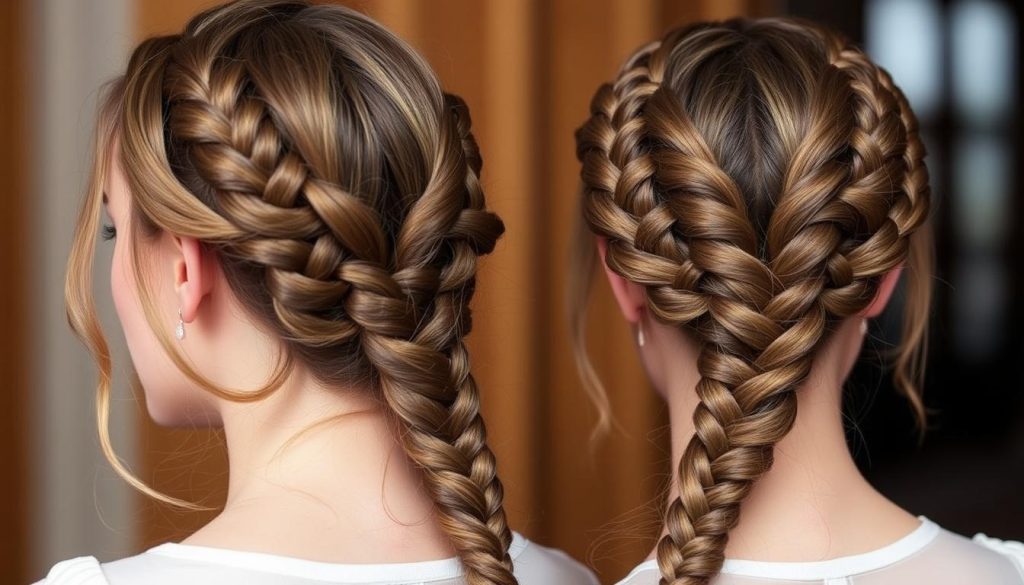
French braids are a must-know skill for creating stunning hairstyles. They offer a classic look that works for many occasions. These braids suit various hair types, from curly to fine1.
Mastering French braids takes practice and patience. Your hair should be at least shoulder length for double braids2. Start by learning single braids to build your skills2.
Experts recommend using dry hair for the best results1. This helps create smoother sections and prevents hair damage. Precision is key for a polished look with two French braids1.
Key Takeaways
- French braids are a timeless hairstyle suitable for all hair types
- Practice is essential for mastering the braiding technique
- Dry hair works best for creating clean, structured braids
- Shoulder-length or longer hair is ideal for double French braids
- Start with single braids before attempting more complex styles
Essential Tools and Supplies for French Braiding
Gathering the right tools is crucial for perfect French braids. The proper supplies can make your braiding techniques smooth and successful. Let’s explore what you’ll need.
Basic Hair Tools You’ll Need
To create stunning French braids, start with these fundamental tools:
- Wide-tooth paddle brush for detangling3
- Tail comb for precise section separation
- Hair elastics for securing braids
- Bobby pins for additional support
Optional Styling Products to Elevate Your Braid
Enhance your french braiding techniques with these additional products:
- Texturizing spray for added grip3
- Dry shampoo for volume and texture4
- Light-hold hairspray for sleek finish5
Choose tools that suit your hair type best. French braids can be created on all hair textures. The right supplies make the process much easier5.
Pro Tip: Always braid dry hair to prevent breakage and ensure a clean, polished look5.
Practice and the right tools are key to mastering beautiful French braids4. With time, you’ll create stunning styles effortlessly.
Do Two French Braids: Basic Technique
French braids require practice and precision. Most people start learning to braid around age 7. Mastering this skill for long or short hair depends on understanding the basic technique.
- Part your hair directly down the middle
- Divide each side into three equal strands
- Begin crossing right strand over the middle strand
- Cross left strand over the new middle strand
- Continuously add small sections of loose hair before each crossover6
Hair pros suggest key tips for perfect braids. Use unwashed hair for better grip. Keep section sizes consistent, about half an inch wide.
Leave about two inches unbraided at the end for secure finishing. French braids work well for various hair lengths. Around 40% of people with short hair want to learn this method.
- Use unwashed hair for better grip and hold6
- Keep section sizes consistent (about half an inch wide)6
- Leave approximately two inches unbraided at the end for secure finishing6
Pro tip: Using a texturizing spray can enhance your braid’s grip and appearance6.
Common French Braiding Techniques and Variations
French braiding offers diverse hairstyling options. These techniques can create stunning elegant styles. French braids are timeless and suit all ages7.
Perfecting French braids takes practice and dedication. Hairstylists agree that flawless braids require consistent effort8.
Proper hair prep is essential. Experts suggest thorough brushing and good conditioning for smooth styling8.
Classic French Braid Style
The classic French braid ponytail is timeless and elegant. For best results, use dry hair and texturizing spray7.
The technique involves crossing hair strands over each other. This creates a seamless, woven appearance.
When styling a French braid updo, focus on even sectioning. Use gentle tension to avoid an unkempt look7.
Dutch Braid Alternative
Dutch braids differ from French braids by crossing strands underneath. This style creates a unique raised effect7.
Dutch braids have become increasingly popular. They offer a fresh twist on classic braiding techniques7.
Many people confuse Dutch and French braids. Practice helps distinguish between these two methods7.
FAQ
How long does it take to learn how to French braid?
Learning to French braid usually takes practice. Most people can create basic braids within a few tries. Expect to spend about 30 minutes to an hour practicing.
Consistent practice is key to developing muscle memory. This will help improve your braiding skills over time.
Can I do French braids on short hair?
Yes, you can French braid short hair! Hair that’s at least 3-4 inches long can be braided. For shorter hair, use bobby pins to secure smaller sections.
You may need to create smaller, tighter braids. This technique works well for shorter hairstyles.
How do I prevent my French braids from becoming loose?
To keep French braids secure, start with slightly damp hair. This provides better grip. Maintain consistent tension while braiding.
Use a texturizing spray or dry shampoo for added grip. Secure the ends with small, clear elastic bands.
Practice braiding with firm but gentle tension. This helps prevent unraveling throughout the day.
What hair types work best for French braids?
French braids work well on most hair types. They’re especially good for medium to thick hair with some texture.
If you have fine or slippery hair, use styling products. Texturizing spray or light hair gel can help the braid hold better.
How long will a French braid last?
A well-done French braid can last 1-2 days. This depends on your hair type and daily activities.
To extend the braid’s life, use light-hold hairspray. Sleep on a silk pillowcase and avoid touching or sweating excessively.
For overnight wear, loosely wrap the braid. You can also use a soft scrunchie to maintain the style.
Are French braids damaging to hair?
When done correctly, French braids are a protective hairstyle. They can help prevent breakage. Use a soft hair tie and avoid braiding too tightly.
Be gentle when removing the braid. It’s best to vary your hairstyles between braiding. This helps maintain hair health.
Can I sleep with French braids?
Yes, sleeping with French braids can create beautiful waves. It also protects your hair overnight. Use a silk or satin pillowcase to reduce friction.
Ensure the braids aren’t too tight to prevent scalp tension. In the morning, gently unravel the braids and style as desired.
What’s the difference between a French braid and a Dutch braid?
The main difference is in the braiding technique. In a French braid, you cross sections over the middle strand.
This creates a smooth, integrated look. A Dutch braid involves crossing sections under the middle strand.
This creates a raised, more pronounced braid on top of the hair. It’s sometimes called an “inside-out” braid.
Source Links
- The Ultimate French Braid How-To Guide – A Mama Blessed – https://amamablessed.com/french-braids-ultimate-guide/
- How to Do Double French Braids (with Pictures) – wikiHow – https://www.wikihow.com/Do-Double-French-Braids
- How to Do a French Braid – https://www.cosmetify.com/blog/how-to-do-a-french-braid/
- How to French Braid Your Hair – L’Oréal Paris – https://www.lorealparisusa.com/beauty-magazine/hair-style/braid-hairstyles/how-to-french-braid
- How To French Braid Hair (Video) – https://www.realsimple.com/beauty-fashion/hair/tools-techniques/french-braid-hair
- How to French Braid Your Hair in 5 Easy Steps – https://www.allure.com/story/french-braid-how-to
- 24 Amazing French Braid Tutorials – https://www.stylecraze.com/articles/french-braid-tutorials/
- How to French braid hair your hair or someone else’s – https://www.today.com/style/how-french-braid-hair-your-hair-or-someone-else-s-t175014

