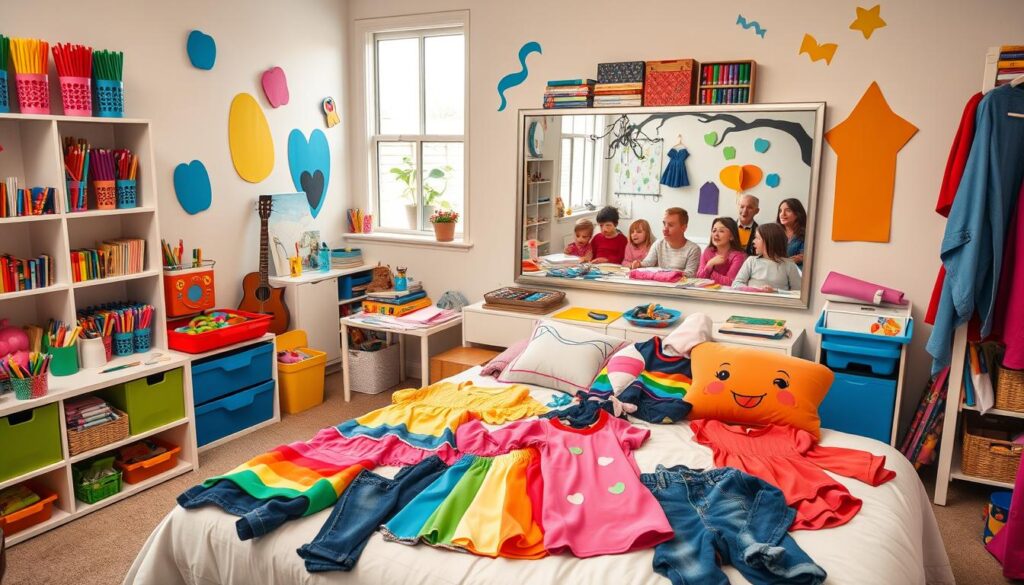
Supporting your child’s gender identity journey is a profound act of love. Parents create a safe space for kids to explore their authentic selves. Gender identity is complex, and children can grasp gender concepts early on.
Gender expression and identity are unique personal experiences. Your child may explore different aspects of their identity. Your unconditional support can boost their emotional well-being.
Being open, compassionate, and informed helps LGBTQIA+ children feel valued. Transgender and non-binary youth face many challenges in society. In 2021, many anti-transgender bills were introduced across U.S. state legislatures1.
Family support is crucial in protecting and empowering children exploring gender identity. It creates a nurturing space for kids to thrive and be understood.
Key Takeaways
- Gender identity is a personal and evolving experience
- Create a safe, non-judgmental environment for exploration
- Listen and validate your child’s feelings
- Educate yourself about gender diversity
- Seek professional guidance when needed
Create a Safe and Open Environment
Supporting a child’s gender journey requires a nurturing space. Kids need unconditional love as they explore their identity. Your job is to provide emotional safety and validation.
Encourage Open Communication
Building trust is key when talking about gender roles. Create chances for honest talks by:
- Asking open-ended questions about their feelings
- Showing genuine curiosity about their experiences
- Creating a judgment-free dialogue zone
Listen Without Judgment
Listening needs patience and empathy. When your child shares thoughts on gender, focus on their view. Active listening means hearing their emotions, not just their words.
“Every child deserves to feel heard and respected in their journey of self-discovery.”
Validate Their Feelings
Validation supports your child’s emotional health. Use affirming language to show acceptance. Acknowledge their feelings with care and understanding.
| Validating Responses | Dismissive Responses |
|---|---|
| “I hear you and love you” | “You’re just confused” |
| “Tell me more about how you feel” | “This is just a phase” |
| “Your feelings are important” | “You’re too young to know” |
Love and support your child’s unique journey. Respect their self-discovery process. Show unwavering support as they grow and learn23.
Educate Yourself and Others
Learning about gender identity is key to supporting your child’s self-discovery. It helps create a more inclusive environment for transgender and non-binary individuals4. About 4.5% of U.S. adults identify as LGBT, showing the need for better understanding4.
Understand Gender Identity Terminology
Get familiar with key gender identity terms. These include:
- Sex assigned at birth
- Gender identity
- Gender expression
- Transgender experiences
- Non-binary identities
Share Resources with Your Child
Offer age-appropriate resources to help your child grasp gender diversity. Consider:
- Children’s books about gender identity
- Educational websites
- Support group materials
- LGBTQ+ youth support networks
“Education is the most powerful weapon which you can use to change the world.” – Nelson Mandela
Discuss Gender Diversity with Family and Friends
Open talks about gender diversity can build a supportive network. Allies play a vital role in backing LGBTQ+ youth5. Encourage active listening and ask thoughtful questions to gain insight into gender-diverse experiences5.
LGBTQ+ individuals often face big challenges. These include higher rates of discrimination and mental health issues6. Visibility and understanding are crucial for creating a more welcoming space for transgender and non-binary people6.
Foster Self-Expression
Supporting a child’s gender expression nurtures their identity and self-confidence. Every child deserves to explore who they are freely. Creating an environment of acceptance and encouragement is crucial for gender affirmation.
Traditional gender limitations should not restrict a child’s self-discovery. Unconditional acceptance helps children develop a strong sense of self.
Support Clothing Choices
Clothing is key to gender expression. Let your child choose outfits that feel authentic and comfortable. Avoid restricting clothing choices based on outdated gender stereotypes.
Encourage them to wear what boosts their confidence. Their clothing should reflect their true selves.
Celebrate Interests and Hobbies
Children’s interests shouldn’t be limited by gender expectations. Support your child’s passions without judgment7.
- Explore diverse activities without judgment
- Validate their unique interests
- Provide opportunities for skill development
Supporting interests builds stronger self-esteem and emotional intelligence. Children thrive when their passions are encouraged8.
Encourage Gender Exploration Through Play
Play is crucial for self-discovery. Offer diverse toys and activities that go beyond gender boundaries. Ask open-ended questions about their play preferences.
Avoid directing children towards stereotypical choices. Let them explore freely through play.
Your unwavering support helps children develop a positive self-image. It enables them to navigate their identity with confidence7.
Seek Professional Guidance When Needed
Navigating your child’s gender exploration journey can be complex. Professional support can provide invaluable guidance. Experts can help you create a nurturing environment for your child’s self-discovery9.
Mental health professionals specializing in LGBTQIA+ issues offer critical insights. They understand the unique challenges your child might face9.
Consult with a Child Psychologist
Child psychologists experienced in gender dysphoria can help you understand your child’s emotions. They provide strategies for supporting your child’s gender affirmation journey. These specialists can help create safe spaces for self-expression9.
By questioning thoughts constructively, they guide families through identity exploration9.
Join Support Groups for Parents
Connecting with other parents can be transformative. Support networks play a significant role in mental health10. Many organizations offer safe spaces to share experiences and find emotional support9.
Utilize Online Resources for Gender Exploration
Online platforms provide extensive resources for understanding LGBTQIA+ experiences. These resources can help you support your child with empathy and knowledge9.
Identity exploration is a lifelong process. It requires patience, love, and continuous learning9.
FAQ
At what age can children understand gender concepts?
Kids as young as 3 can grasp gender concepts. Gender identity is internal, while expression is external. Offer a welcoming environment with diverse options to help children explore gender.
How can I create a safe environment for my child exploring their gender identity?
Encourage open talks and listen without judgment. Let your child express their gender freely in public or family settings. Avoid shaming gender expression. Speak positively about your child to boost their self-esteem.
What key terms should I understand about gender identity?
Know sex assigned at birth, gender identity, and gender expression. Gender identity develops separately from sexual orientation. Transgender kids have a gender identity different from their birth-assigned sex.
Understanding these ideas helps you support your child better.
How can I support my child’s gender expression through play and clothing?
Let your child pick clothes that match their gender expression. Celebrate their interests without gendering them. Offer various toy options and activities. Let them choose freely between trucks, dolls, or both.
When should I seek professional guidance about my child’s gender identity?
Consult a child psychologist experienced in gender identity if you need more support. Join parent groups for transgender or gender-diverse children. Use online resources from trusted LGBTQIA+ organizations.
Show love and acceptance to help your child feel comfortable.
What is the difference between gender identity and gender expression?
Gender identity is an internal sense of being male, female, neither, or both. Gender expression is how a person outwardly shows their gender. These are distinct aspects of gender experience.
How can I discuss gender diversity with my family and friends?
Learn about gender identity terms and share age-appropriate resources. Talk openly and positively about gender diversity. Stress acceptance and understanding. Connect with families of gender-diverse children for support.
Source Links
- How to Support a Child Exploring Their Gender Identity – https://psychcentral.com/health/how-to-support-your-child-exploring-their-gender-identity
- Pride Q&A: Finding Balance in the Workplace as an LGBTQ+ Professional – https://www.linkedin.com/pulse/pride-qa-finding-balance-workplace-lgbtq-professional-matt-haller
- 3 Questions the Working World Needs to Ask About LGBTQ+ Pride – https://es-la.gpstrategies.com/blog/3-questions-the-working-world-needs-to-ask-about-lgbtq-pride/
- Common Ally Questions | Kent State University – https://www.kent.edu/lgbtq/common-ally-questions
- 6 Things LGBTQ Youth Want Allies To Do This Pride – https://www.glsen.org/blog/6-things-lgbtq-youth-want-allies-do-pride
- Pride Month: Educating Myself and My Kids on Allyship – https://houstonmom.com/pride-month-educating-myself-and-my-kids-on-allyship/
- Celebrating Pride 365: Fostering LGBTQ+ inclusion and equality – https://www.citizensbank.com/learning/why-pride-is-part-of-our-culture
- Self-Expression | Encourage Positive Self-Expression – https://sesamestreetformilitaryfamilies.org/topic/self-expression/
- 15 Mental Health Reminders for the LGBTQ+ Community—From Therapists Who Get It – https://www.wondermind.com/article/lgbtq-therapists/
- What to Know About Pride Month in the Workplace – https://www.linkedin.com/pulse/what-know-pride-month-workplace-andrew-seaman