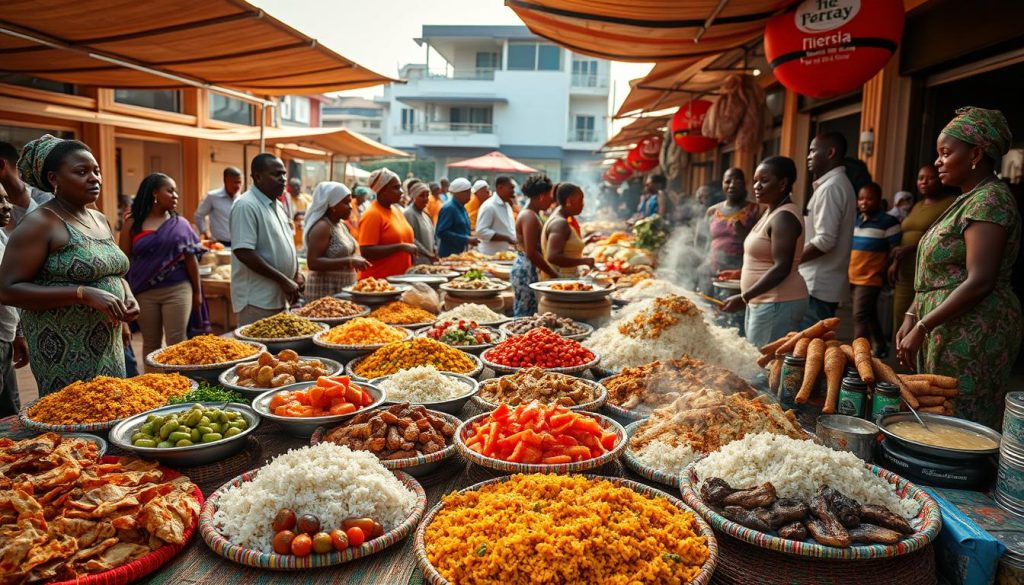
Nigerian cuisine offers a vibrant culinary landscape with extraordinary flavors. Over 300 ethnic groups contribute to its diverse food culture1. Traditional Nigerian dishes provide a tasty journey through West Africa.
Jollof rice is a culinary icon recognized as the national dish1. This beloved recipe showcases the depth of Nigerian cooking. It features rice, tomatoes, and peppers for an unforgettable taste experience2.
Egusi soup highlights Nigeria’s innovative use of local ingredients. Ground melon seeds add unique protein and flavor to this exceptional dish1.
Street food is a big part of Nigerian cuisine. Suya, a seasoned beef marinated in spices, represents regional culinary creativity2.
Key Takeaways
- Nigerian cuisine features over 300 ethnic culinary traditions
- Jollof rice is considered the national dish
- Egusi soup represents unique local ingredient use
- Street foods showcase regional cooking styles
- Traditional dishes reflect rich cultural diversity
Popular traditional Nigerian dishes You Must Try
Nigerian cuisine offers a vibrant culinary journey with rich flavors and diverse ingredients. From hearty soups to tasty street foods, the country’s dishes reflect its cultural complexity. Each meal tells a unique story of regional traditions.
Classic Nigerian Soup Varieties
Nigerian soups are legendary, each representing unique regional traditions. Edikaikong soup is a delightful delicacy packed with nutritious vegetables. Ogbono soup, thickened with ground wild mango seeds, offers a distinctive texture locals love.
Afang soup, popular among the Ibibio and Anang people, showcases deep ethnic culinary traditions. It’s a prime example of Nigeria’s diverse food culture.
- Edikaikong soup: A vegetable-rich delicacy
- Ogbono soup: Unique texture from wild mango seeds
- Afang soup: Ethnic specialty with deep cultural roots
Traditional Preparation Methods
Nigerian dishes involve meticulous techniques that transform simple ingredients into extraordinary meals. Pounded yam, often called the “king of swallows,” requires skillful preparation to achieve perfect consistency.
Eba, made from garri (dried cassava flour), is another staple. It showcases the creativity of Nigerian cuisine.
Accompaniments and Serving Suggestions
Nigerian meals are incomplete without complementary elements. Suya, a spicy street food from the Hausa people, adds flavor to any dining experience.
Street foods like Ewa Agoyin highlight the vibrant culinary culture beyond traditional restaurant settings. They offer a taste of everyday Nigerian life.
Every bite tells a story of tradition, community, and culinary passion.
Nigerian cuisine promises an unforgettable adventure that connects people through shared flavors. It’s a journey through taste, culture, and history on every plate3.
Essential Nigerian Soups and Stews
Nigerian cuisine offers a wide range of soups and stews that reflect the country’s culinary traditions. These dishes are cultural expressions showcasing the rich gastronomic heritage of over 200 million people. Street food like akara is a key part of this vibrant food landscape4.
Nigerian soups are known for their diverse ingredients and regional variations. Leafy greens like bitterleaf, ugu, and ewedu are common, showing a focus on local produce5. Proteins such as goat meat, chicken, and dried fish are often used6.
These soups typically include animal proteins, palm oil, and various spices for complex flavors6. Different ethnic groups have unique cooking styles. Egusi soup, for example, has many regional versions with varying textures and seed preparations4.
Yoruba and Igbo communities have their own favorites. Ewedu soup is popular in southwestern Nigeria, while Bitterleaf soup is enjoyed in Igbo regions5. Nigerian soups are not just tasty, but also nutritious.
Many soups provide Vitamins A, B1, B2, and C6. Some, like Edikang Ikong, may help lower blood pressure and boost immunity. Nigerian cuisine offers a tasty journey through cultural and culinary traditions.
FAQ
What makes Nigerian cuisine unique?
Nigerian cuisine boasts vibrant flavors and diverse ingredients. It’s deeply rooted in cultural significance. Dishes like jollof rice and egusi soup highlight the complexity of Nigerian cooking.
These meals feature aromatic spices and local ingredients. Cooking methods have been passed down through generations, preserving tradition.
What are some must-try traditional Nigerian dishes?
Essential Nigerian dishes include jollof rice, egusi soup, and pounded yam. Suya, a spicy grilled meat, is also popular. Other favorites are afang, edikaikong, and ogbono soups.
Don’t forget to try akara, a delicious bean fritter. Each dish represents a unique aspect of Nigeria’s rich culinary heritage.
How are traditional Nigerian soups prepared?
Nigerian soups use local ingredients like meats, fish, and vegetables. Traditional spices add depth to the flavors. Dishes like afang and ogbono soup require careful blending of ingredients.
Specific cooking techniques have been perfected over time. Slow cooking is often used to develop complex flavors in these soups.
What are “swallows” in Nigerian cuisine?
“Swallows” are starchy side dishes like fufu and eba. They’re made from cassava, yam, or other starchy ingredients. These dishes are used to scoop up soups and stews.
“Swallows” play a crucial role in Nigerian food culture. They’re an essential part of the communal dining experience.
How spicy is Nigerian food?
Nigerian cuisine can be quite spicy. Many dishes use hot peppers and robust spice blends. Suya, a popular street food, is known for its spicy seasoning.
Other dishes offer varying levels of heat. The spiciness can often be adjusted to personal preference.
Are there regional differences in Nigerian cooking?
Yes, Nigeria’s diverse regions have unique culinary traditions. Coastal areas might focus on seafood dishes. Northern regions often feature more meat-based recipes.
Each region brings special ingredients to the national cuisine. They also contribute unique cooking methods and flavor profiles.
Is Nigerian food vegetarian-friendly?
Many traditional Nigerian dishes contain meat or fish. However, there are plenty of vegetarian options available. Akara (bean fritters) and vegetable-based soups like edikaikong are popular choices.
Various bean and vegetable dishes offer nutritious and tasty alternatives. These options cater well to vegetarian diets.
Where can I learn to cook traditional Nigerian dishes?
You can learn Nigerian cooking through various resources. Cookbooks and online tutorials are great starting points. YouTube channels dedicated to African cuisine offer visual guides.
Cooking classes provide hands-on experience. Learning from Nigerian friends or family members can be invaluable. Many recipes are now easily accessible online.
Source Links
- Nigerian Dishes: 21 Traditional Foods to Transport You to Africa – https://blog.remitly.com/lifestyle-culture/nigerian-dishes/
- Nigerian Food: 20 Traditional Dishes to Try in Nigeria or At Home – https://theplanetd.com/nigerian-food/
- Nigerian Food: 25 Must-Try Dishes in Nigeria (With Recipes) – https://www.willflyforfood.net/food-in-nigeria/
- Nigerian Food 101: Recipes to Get You Started – https://www.seriouseats.com/how-to-get-started-cooking-nigerian-food-7373677
- Exploring Traditional Nigerian Soups: A Journey Through Flavours and Ingredients — Recipes & Roots – https://www.recipesandroots.ca/roots/exploring-traditional-nigerian-soups-a-journey-through-flavors-and-ingredients
- 13 Best Nigerian Soups You Will Love! – https://lowcarbafrica.com/best-nigerian-soups-you-will-love/