
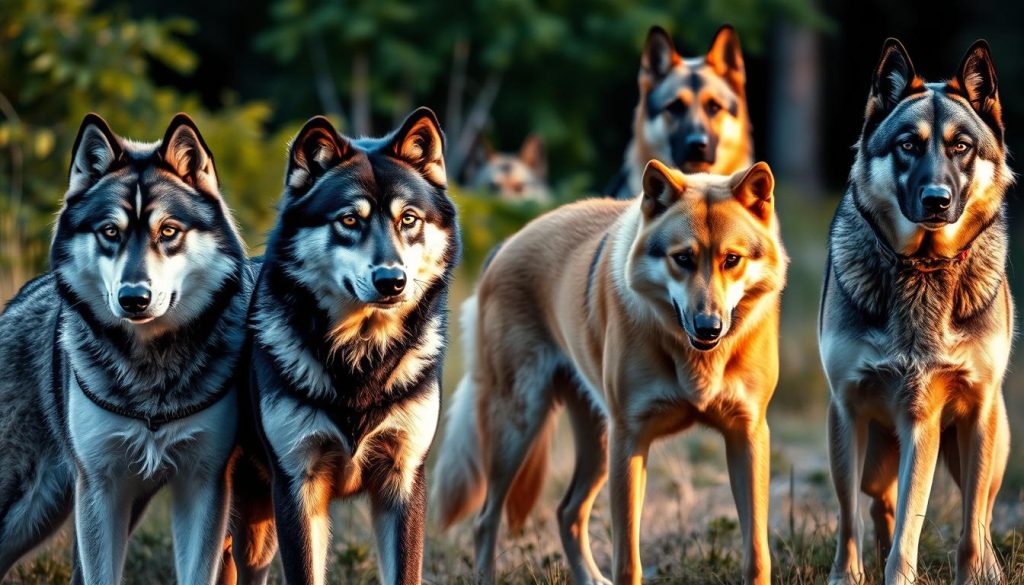
Many dog lovers are drawn to wolf-like breeds. These dogs blend wild looks with friendly personalities. They share over 99 percent of their DNA with wolves, creating a fascinating genetic link12.
Domestication has changed these ancient canines into great pets. They keep their wild spirit but are easier to manage. The Siberian Husky is a top pick for beginners13.
These energetic dogs look a lot like wolves. They have piercing eyes and a beautiful coat. Many wolf-like breeds strike a perfect balance between wild looks and domestic nature.
Selective breeding has turned these wild hunters into family pets. This process started 15,000 to 40,000 years ago2. Now, these breeds keep their wild look but fit well with humans.
Key Takeaways
- Wolf-like dog breeds offer a unique combination of wild appearance and domestic temperament
- Siberian Huskies are among the most popular wolf-like breeds for beginners
- Dogs share over 99% of their DNA with wolves
- Selective breeding has made these dogs suitable for family life
- Understanding breed characteristics is crucial before adoption
Understanding the Connection Between Wolves and Modern Dogs
Wolves and domestic dogs share a deep genetic bond. Their DNA is 99.9% identical, linking them across thousands of years. This connection reveals the fascinating world of canine evolution.
The Genetic Journey of Canine Domestication
Dog domestication has a complex timeline. Scientists believe it happened between 32,000 and 18,800 years ago. This was long before humans started farming.
Today, there are over 340 recognized dog breeds worldwide. This shows the amazing diversity from this ancient relationship.
Unique Characteristics of Wolf-Like Breeds
Some dogs, like Alaskan Malamutes, Samoyeds, and Akitas, still look like wolves. These breeds have traits connecting them to their wild ancestors:
- Distinctive physical appearances
- High energy levels
- Strong pack mentality
Evolutionary Adaptations
Wolves only eat meat, but dogs can eat various foods. This change happened over thousands of years with humans. Dogs now come in many sizes, from tiny Chihuahuas to huge breeds.
Modern dogs don’t come from today’s gray wolves. Instead, they’re from an unknown and extinct wolf species4. This fact adds mystery to the story of dog evolution.
Wolf-Like Dog Breeds for Beginners
Dog lovers wanting a wild-looking companion have several wolf-like breeds to choose from. The German Shepherd is a great option for new owners. It’s smart, trainable, and has a striking wolf-inspired look5.
Here are some top wolf-like breeds to consider:
- Czechoslovakian Wolfdog: A rare, smart breed needing lots of space and exercise5
- Alaskan Klee Kai: A small wolf look-alike perfect for compact living spaces6
- Tamaskan: A breed with only about 400 dogs worldwide7
Understanding these breeds’ traits is key when making your choice. The Czechoslovakian Wolfdog weighs 60-90 pounds and lives 12-15 years7. These dogs need lots of mental and physical activity.
| Breed | Size | Exercise Needs |
|---|---|---|
| German Shepherd | 50-90 pounds | High |
| Czechoslovakian Wolfdog | 60-90 pounds | Very High |
| Tamaskan | 51-99 pounds | High |
Owning a wolf-like breed requires serious commitment. Many of these dogs can get anxious when left alone and may act out6.
To raise these amazing dogs well, you’ll need to spend time on training and exercise. Socialization is also crucial for their development.
Essential Care Requirements for Wolf-Like Breeds
Wolf-like dog breeds need special care and knowledge. These unique animals present challenges for new owners. In the US, about 250,000 to 500,000 wolves and wolf dogs are pets8.
These breeds need lots of exercise and mental challenges. Their high energy requires daily activities for body and mind. Early training is crucial to prevent stubborn behaviors9.
Sadly, about 90% of pet wolves and wolf dogs are put down by age two. This shows how important proper preparation is8.
Grooming is vital for wolf-like breeds. Their thick double coats need regular care to avoid matting and shedding issues9. Feeding costs can exceed $5,000 yearly8.
Owners must consider special diets and secure enclosures. These dogs need high, dig-proof fencing for safety89.
Owning wolf-like breeds requires patience and commitment. With proper care and training, these amazing animals can become loyal companions9.
Interested in wolf-like dog breeds for beginners? Learn more about their unique needs before deciding.
FAQ
Are wolf-like dog breeds good for families?
Wolf-like dog breeds can be great family pets with proper training. German Shepherds and Samoyeds are known for loyalty and smarts. They need lots of exercise, mental challenges, and consistent training to thrive.
How much exercise do wolf-like dog breeds need?
These high-energy breeds need 1-2 hours of intense exercise daily. Long walks, runs, hikes, and play are crucial. Siberian Huskies and Alaskan Malamutes have very high energy levels.
Without enough physical and mental stimulation, they may become destructive.
Are wolf-like dog breeds difficult to train?
Training difficulty varies by breed. German Shepherds and Czechoslovakian Wolfdogs are smart but can challenge new owners. Positive reinforcement works best for these strong-willed dogs.
Early socialization is key to manage their independent nature.
Do wolf-like dog breeds shed a lot?
Yes, most wolf-like breeds have double coats and shed heavily. Samoyeds, Alaskan Malamutes, and Akitas need frequent brushing, often daily during shedding seasons. Expect a big grooming commitment with these breeds.
Are wolf-like dog breeds good for apartment living?
Wolf-like breeds usually don’t suit apartment life due to high energy needs. Smaller breeds like Alaskan Klee Kais might work better. Most need access to large spaces and regular outdoor activities.
What health issues are common in wolf-like dog breeds?
These breeds can face issues like hip dysplasia, eye problems, and genetic conditions. Regular vet check-ups help catch problems early. Choose reputable breeders who do genetic testing.
How expensive are wolf-like dog breeds?
Prices range from 0 to ,000 depending on breed and breeder. Extra costs include training, quality food, and grooming supplies. Don’t forget potential healthcare expenses for these unique dogs.
Are wolf-like dogs good with other pets?
It depends on socialization. Akitas can be territorial, while German Shepherds adapt better. Start socializing these dogs as puppies. This helps them get along with other pets.
Source Links
- 17 Majestic Wolf Dog Breeds to Add to Your Pack – https://www.rd.com/list/dogs-that-look-like-wolves/
- Wolf-Like Dog Breeds: 18 Different Breeds That Look Like Wolves | Canine Journal – https://www.caninejournal.com/wolf-like-dog-breeds/
- Wolf Dog Breeds: Hybrid, Wolf-Like Dogs for Lovers of Wolves – https://dogtime.com/lifestyle/106767-wolf-dog-breeds-wolfdog-wolfhound-hybrid-dog-wolves
- How Wolf Became Dog – https://www.scientificamerican.com/article/how-wolf-became-dog/
- Best Wolfish Dog Breeds the Whole Family Will Adore (Including Grandma) – https://www.womansday.com/life/pet-care/g29380555/wolf-dog-breeds/
- 11 Dogs That Look Like Wolves (& Their History) | Cadet Pet – https://www.cadetpet.com/dog-basics/dogs-that-look-like-wolves
- 14 Dog Breeds That Look Like Wolves (With Info & Pictures) – Dogster – https://www.dogster.com/dog-breeds/dog-breeds-that-look-like-wolves
- Ownership | W.O.L.F Sanctuary – https://wolfsanctuary.co/ownership/
- Is a smart, loyal, hard-working wolf dog your dream dog? – https://dogsbestlife.com/dog-breeds/wolf-dog-breed/

