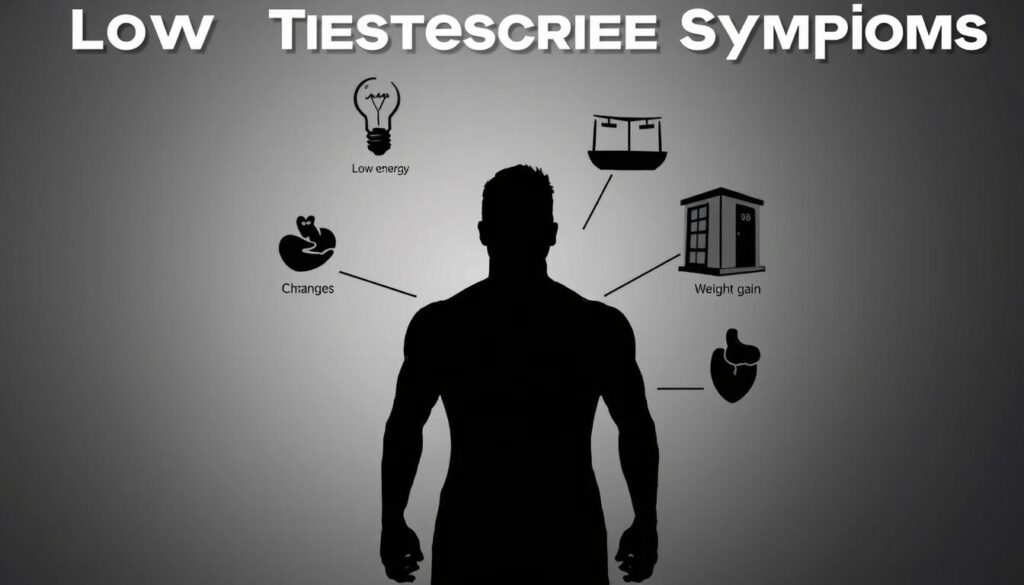
Low testosterone, or hypogonadism, can affect your overall health. Your testosterone levels may start to decrease naturally around age 30 to 40. This hormonal change can impact your physical and mental well-being.
Various factors can cause low testosterone. These include medical treatments, injuries, or underlying health conditions. Some men notice symptoms, while others don’t experience any changes.
Low testosterone symptoms can be diverse. They may affect your sex drive, mood, and physical appearance. These changes can vary widely from person to person.
About 20% of men might experience a significant drop in sex drive1. Approximately 40% could struggle with feelings of sadness or depression1. Physical changes can include less muscle mass and more body fat1.
Four in ten males ages 45 and older may have low testosterone2. Up to 35% of men with erectile dysfunction have low testosterone levels2. These numbers show how common this hormonal condition is.
Key Takeaways
- Testosterone levels naturally decline with age
- Symptoms can include sexual, physical, and emotional changes
- Low testosterone affects men differently
- Medical conditions and treatments can impact hormone levels
- Professional medical advice is crucial for proper diagnosis
Understanding Testosterone and Its Importance
Testosterone is a powerful hormone crucial for human physiology. It affects physical development and emotional well-being. This hormone is essential for both men and women3.
Testosterone levels change throughout life, varying among individuals. Researchers have studied this hormone since 1937. They’ve uncovered its complex effects on the human body3.
What Testosterone Does for Your Body
Your body needs testosterone for several vital functions:
- Muscle mass development
- Bone density maintenance
- Sexual function regulation
- Mood and energy level management
Testosterone Levels Across Genders
Testosterone is important for both men and women. Polycystic ovarian syndrome can raise testosterone in people with ovaries. This condition affects up to 15% of reproductive-age individuals4.
| Gender | Testosterone Impact |
|---|---|
| Males | Primary sex characteristic development |
| Females | Libido and metabolic regulation |
Common Testosterone Myths
“Understanding testosterone means separating scientific fact from popular misconception.”
Many myths surround testosterone function. Some think it only determines masculine behavior. However, the truth is more complex.
Late-onset hypogonadism affects about 2% of people over 40. This shows the hormone’s intricate nature4.
Normal testosterone production varies greatly. This makes it hard to define universal deficiency levels3. Scientists keep studying how this hormone affects overall health.
Recognizing the Symptoms of Low Testosterone
Low testosterone symptoms can signal potential health issues. Testosterone impacts your physical and emotional well-being. Recognizing these signs early can lead to timely medical intervention.
Physical Symptoms You Might Experience
Low testosterone can affect your body’s performance. You might notice changes in your physical appearance and functions.
- Reduced muscle mass and strength
- Increased body fat, especially around the abdomen5
- Decreased bone density
- Reduced sex drive
- Erectile dysfunction
- Hair loss
Certain health conditions increase your risk of low testosterone. Overweight individuals have a 30% higher chance of low testosterone than those with normal weight5.
People with Type 2 diabetes are more likely to experience low testosterone. About 25% of diabetic individuals are affected5.
Emotional and Mental Health Indicators
Low testosterone can significantly affect your emotional and mental well-being. You might experience changes in your mood and cognitive functions.
- Mood changes
- Increased irritability
- Depression
- Decreased motivation
- Difficulty concentrating
“Low testosterone can be a silent disruptor of your mental and emotional balance.”
How Low Testosterone Affects Your Daily Life
Testosterone deficiency varies with age. Only 1% of younger men experience it, while up to 50% of men over 80 might be affected6.
This condition can impact your energy levels and work performance. It can also affect your relationships and overall quality of life.
About 2.1% of men have Testosterone Deficiency Syndrome. That’s roughly 2 men in every 1006. Early recognition of symptoms can lead to proper medical guidance.
Diagnosing Low Testosterone Levels
Testosterone testing is key to finding hormone imbalances. It affects your overall health. Diagnosing low T needs a thorough approach7.
Doctors use multiple tests to check hormone levels. Hormone evaluation involves several steps for accurate results7.
Tests and Evaluations for Accurate Diagnosis
Low T diagnosis uses these testing methods:
- Total testosterone test: Measures free and protein-bound testosterone7
- Free testosterone test: Evaluates only the active hormone form7
- Bioavailable testosterone test: Measures free and loosely attached testosterone7
Understanding Your Test Results
Testosterone levels change throughout the day. Peak levels usually occur between 7 and 10 a.m7.
Nearly 40 percent of men aged 45 and older have low testosterone. This makes thorough testing crucial8.
| Test Type | Purpose | Frequency |
|---|---|---|
| Total Testosterone | Comprehensive hormone measurement | Most common |
| Free Testosterone | Active hormone evaluation | Less frequent |
| Bioavailable Testosterone | Detailed hormone analysis | Rare |
When to Seek Professional Help
Get testosterone testing if you have these symptoms:
- Persistent fatigue
- Reduced sex drive
- Muscle mass loss
- Memory or concentration issues8
“Accurate testosterone testing is key to understanding your hormonal health and addressing potential imbalances.”
Test results are just one part of the picture. Talk to a doctor about your findings and next steps.
Treatment Options for Low Testosterone
Low testosterone can be treated in various ways. Testosterone replacement therapy (TRT) offers multiple approaches to restore hormone balance9. Your plan may include injections, pellets, patches, or gels based on your health needs9.
Medical treatments can greatly improve your life quality. Men with hypogonadism often report more energy, better muscle mass, and improved sexual function10. The Mayo Clinic suggests personalized plans for low T treatment11.
Your therapy journey involves regular check-ups for best results. Improvements can start within weeks, with major benefits in three to six months11. Healthy habits like good weight and exercise can boost your therapy’s success10.
Testosterone therapy can be life-changing, but professional guidance is key. Healthcare experts will help manage side effects and tailor your treatment11. They’ll ensure your plan targets your specific symptoms and health goals.
FAQ
What exactly is low testosterone (hypogonadism)?
Low testosterone, or hypogonadism, occurs when your body doesn’t make enough testosterone. It can stem from aging, medical issues, or lifestyle choices. There are two main types: primary and secondary hypogonadism.
What are the most common symptoms of low testosterone?
You may notice reduced sex drive and erectile problems. Other signs include less muscle mass and more body fat. Mood changes, depression, and focus issues can also occur.
These symptoms can affect your daily life and relationships. They may also impact your work performance.
How is low testosterone diagnosed?
Doctors use blood tests to check testosterone levels. Multiple tests are often needed as levels change throughout the day. They may also check LH and FSH levels to find the cause.
What treatment options are available for low testosterone?
Treatment depends on the cause and how severe your symptoms are. Lifestyle changes like exercise and stress management can help. Medical options include testosterone replacement therapy in various forms.
The goal is to bring testosterone back to normal levels. This can improve your overall quality of life.
Can low testosterone affect both men and women?
Yes, testosterone is important for both men and women. It affects sexual function, muscle mass, bone density, and mood in both sexes. Men typically have higher levels than women.
What causes low testosterone?
Causes can include genetic conditions like Klinefelter syndrome. Injuries, infections, and certain medications can also lead to low testosterone. Aging, obesity, and chronic health issues are other possible causes.
Lifestyle factors like stress and poor diet may play a role. Sometimes, finding the exact cause requires medical testing.
How does testosterone impact my body?
Testosterone is crucial for your development and health. During puberty, it deepens your voice and promotes body hair growth. In adults, it affects sex drive, muscle mass, and bone density.
It also influences energy levels and overall mood. Testosterone is key for both sexual function and general well-being.
Source Links
- Effects of Low Testosterone – https://www.webmd.com/men/ss/slideshow-low-t-effects
- 12 Signs of Low Testosterone – https://www.healthline.com/health/low-testosterone/warning-signs
- Understanding How Testosterone Affects Men – https://www.nih.gov/news-events/nih-research-matters/understanding-how-testosterone-affects-men
- Testosterone: What It Is, Function & Levels – https://my.clevelandclinic.org/health/articles/24101-testosterone
- Low Testosterone (Low T): Causes, Symptoms & Treatment – https://my.clevelandclinic.org/health/diseases/15603-low-testosterone-male-hypogonadism
- Low Testosterone: Symptoms, Diagnosis & Treatment – https://www.urologyhealth.org/urology-a-z/l/low-testosterone
- Testosterone Levels Test: MedlinePlus Medical Test – https://medlineplus.gov/lab-tests/testosterone-levels-test/
- Low Testosterone | Urology | UPMC – https://www.upmc.com/services/urology/conditions/low-testosterone
- The 3 Best Treatments for Low Testosterone – https://atlanticurologyclinics.com/blog/the-3-best-treatments-for-low-testosterone/
- Options to Increase Your Testosterone – https://www.healthline.com/health/low-testosterone/testosterone-replacement-therapy-and-other-options
- Low Testosterone – https://www.uclahealth.org/medical-services/urology/mens-clinic-ucla/hormone-optimization/low-testosterone