
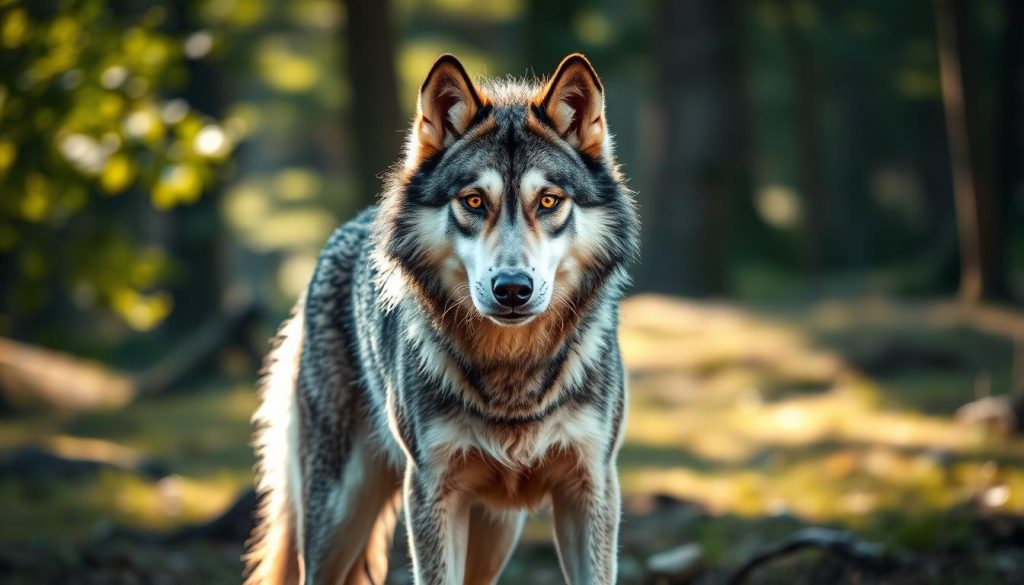
Wolf-husky hybrids, or wolf dogs, blend wild and domestic canine traits. They challenge traditional pet ownership with their complex personalities. These unique animals captivate animal enthusiasts with their wild ancestry1.
Wolf-dog hybrids pose unique challenges for owners. Their genetic makeup affects their maturation, which can take 1 to 4 years1. This extended development contributes to unpredictable behavior and training difficulties.
Legal issues surround wolf-husky hybrid ownership. As of 2013, 11 states prohibit these animals. Many states, including California and Florida, have strict restrictions on private wolfdog ownership1.
Genetic testing is the most reliable way to confirm a dog’s wolf heritage. Visual identification can be challenging1. Wolf dogs need extensive exercise and specialized training approaches.
These hybrids require different training methods than traditional dogs. Owners must understand their unique needs and provide appropriate care.
Key Takeaways
- Wolf-husky hybrids blend wild and domestic canine characteristics
- Legal restrictions vary across different states
- Extended maturation period impacts behavior and training
- Specialized care and understanding are crucial
- Genetic testing helps confirm wolf ancestry
Understanding Wolf-Husky Hybrids: Basic Characteristics and Genetics
Wolf-husky hybrids are a unique blend of wild and domestic canines. These wolfen hybrids come from special breeding programs2. Their exotic looks and genetics have made them increasingly popular2.
Physical Distinctions in Wolf Crossbreeds
Wolf-dog hybrids look quite different from pure huskies. Their genetics affect several key features:
- More pronounced facial structure
- Larger body size
- Distinctive eye shapes
- Unique coat textures
Genetic Composition and Identification
Special tests are needed to determine a wolf crossbreed’s exact genetic makeup. These tests can spot wolf heritage within three generations3.
Certain dog breeds are often used in wolfdog breeding. These include Siberian Huskies, Alaskan Malamutes, and German Shepherds2.
Legal and Ownership Considerations
Owning a wolfdog breed can be legally complex. Recent studies show that 11 states ban wolf-dog hybrids3. Many insurance companies see these animals as high-risk2.
“Wolf-dog hybrids are not just pets, they’re a complex commitment requiring specialized understanding.” – Canine Genetics Research Institute
Critical Ownership Insights
Potential wolfdog owners should think about these key factors:
- Require extensive space
- Need specialized veterinary care
- Demand rigorous training
- Involve significant legal restrictions
| Characteristic | Wolf Hybrid | Pure Husky |
|---|---|---|
| Size | Larger | Medium |
| Trainability | Challenging | Moderate |
| Legal Status | Restricted | Unrestricted |
Learning about wolf crossbreeds takes careful study. It’s important to think responsibly before getting one2.
Training Challenges and Behavioral Traits of Wolf-Dog Mixes
Training wolf-dog mixes is uniquely challenging due to their complex genetic makeup. These hybrids need expert handlers who grasp their intricate behavior patterns45. Their wild instincts require specialized training approaches.
Wolf-dog mixes often show unpredictable behavior. They may develop neophobia, a fear of new experiences5. This fear can lead to stress-related issues, making them difficult pets for novice owners.
- Require extensive socialization from early age
- Demonstrate strong territorial instincts
- Need consistent positive reinforcement training
- Prone to seasonal behavioral changes
Wolf-dog mixes experience “Winter Wolf Syndrome,” becoming more aggressive and territorial5. This behavioral shift can last up to five months each year4. It’s a crucial factor to consider for potential owners.
| Training Aspect | Wolf-Dog Mix Characteristic |
|---|---|
| Socialization | Ongoing, time-intensive commitment |
| Behavioral Predictability | Low to moderate |
| Training Difficulty | High |
Sadly, about 90% of wolf-dog hybrids are euthanized before reaching two years old4. This alarming statistic highlights the importance of understanding their unique needs. Proper training is crucial for their well-being.
Ownership of wolf-dog mixes is not for the faint-hearted or inexperienced pet owners.
Managing wolf-dog mixes demands dedication and deep understanding of their wild heritage. Professional training is vital for these remarkable animals. Consistent socialization helps create a harmonious relationship with these unique companions4.
Living with Wolf-Husky Hybrids: Care and Management
Wolf-husky hybrids are unique pets that need special care. These exotic canines require more than typical pet ownership. Owners must understand their complex needs, social structures, and high-energy demands6.
Exercise is vital for wolf-husky hybrids. They need one to two hours of intense physical activity daily6. Secure enclosures are a must for these animals.
Experts suggest spaces from 50×50 feet to an acre7. These hybrids can easily jump over six-foot fences, so strong containment is crucial6.
Socializing wolf-husky hybrids can be tricky. High wolf-content hybrids often show fear in new settings6. Their strong pack instincts may clash with family life.
Owners should seek advice from experts who know wolf-hybrid behavioral patterns. This step is key before bringing these exotic pets home8.
Wolf-husky hybrids need a special diet unlike regular dogs. Regular vet check-ups with exotic canine experts are crucial. Owners should be ready for behavioral challenges and long-term care strategies7.
FAQ
What exactly is a wolf-husky hybrid?
A wolf-husky hybrid is a mix of a domesticated husky and a wolf. This unique animal blends wild and domestic canine traits. These wolfdogs inherit physical and behavioral characteristics from both parent species.
Are wolf-husky hybrids legal to own?
Laws on wolf-dog ownership vary by state and local area. Some places ban them, while others require special permits. Always check local laws before getting a wolf-husky hybrid.
How difficult are wolf-husky hybrids to train?
These hybrids are very hard to train due to their wild roots. They mature slowly and don’t respond well to human commands. Experts with wolf-dog experience are often needed for successful training.
What are the exercise requirements for wolf-husky hybrids?
Wolf-husky hybrids need lots of daily exercise and space. They require hours of intense activity, including runs and interactive play. A large, secure outdoor area is vital for their energy and safety.
Do wolf-husky hybrids make good family pets?
Wolf-husky hybrids aren’t ideal family pets, especially with young kids. Their wild instincts and strong territorial behaviors can be risky. These animals need handlers who understand their complex needs.
What special dietary considerations do wolf-husky hybrids have?
These hybrids often need diets similar to their wild ancestors. High-protein foods with few processed ingredients work best. Many owners consult exotic canine vets for proper nutrition plans.
How long do wolf-husky hybrids typically live?
Wolf-husky hybrids usually live 12-15 years, depending on care and genetics. Finding good vet care can be tough. Not all vets have experience with wolf-dog hybrids.
What health issues are common in wolf-husky hybrids?
These hybrids may face health issues from both wolf and husky genes. Problems can include hip dysplasia and immune system challenges. Regular testing and special vet care are key for their health.
Source Links
- Huskies Vs. Dog-Wolf Hybrids: What's the Difference? – https://ckcusa.com/blog/2018/september/huskies-vs-dog-wolf-hybrids-whats-the-difference/
- Understanding Wolfdogs: The Intriguing Hybrid of Wolves and Domestic Dogs – https://sajeevdev.com/understanding-wolfdogs-the-intriguing-hybrid-of-wolves-and-domestic-dogs/
- Can Dogs Breed With Wolves? Vet-Reviewed Ethics & Responsibilities – Dogster – https://www.dogster.com/lifestyle/can-dogs-breed-with-wolves
- Ownership | W.O.L.F Sanctuary – https://wolfsanctuary.co/ownership/
- What to Know About Wolfdogs and Wolf-Dog Hybrids – https://www.webmd.com/pets/dogs/what-to-know-about-wolfdogs-wolf-dog-hybrids
- Dog-wolf Hybrid FAQ – https://dogtime.com/dog-health/general/5422-dog-wolf-hybrid-faq-nicole-wilde
- Do Wolf Dogs Make Good Pets? – https://www.kinship.com/dog-lifestyle/do-wolfdogs-make-good-pets
- Husky/wolf hybrids – https://www.dogforum.com/threads/husky-wolf-hybrids.333138/

