
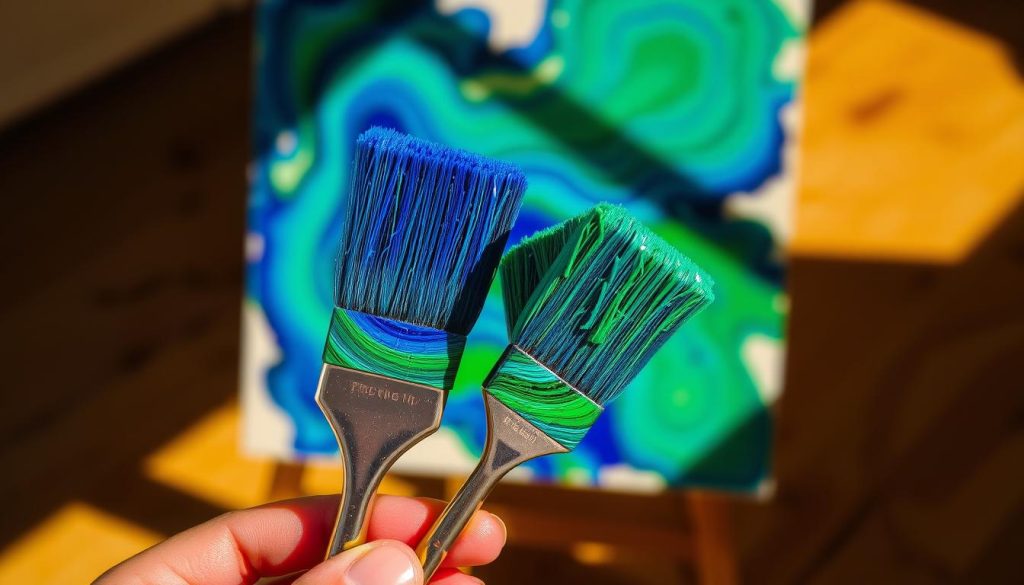
Blue and green create fascinating color interactions. When combined, these vibrant hues produce stunning visual results. Artists, designers, and color enthusiasts are captivated by these mesmerizing combinations1.
Blue is a primary color, while green is secondary. Mixing them equally produces teal, a captivating tertiary color1.
Color mixing magic depends on the method used. Pigment-based and light-based techniques can yield different results1.
Light mixing turns blue and green into brilliant cyan. Pigment mixing creates shades from turquoise to teal12.
The ratio of blue to green is crucial. It determines the final color outcome2.
Key Takeaways
- Blue and green create teal when mixed in equal amounts
- Light-based mixing produces cyan
- Color ratios impact the final shade
- Teal represents a perfect balance of blue and green
- Different mixing techniques yield unique color results
Understanding Color Theory and Mixing Basics
Color shapes how we see nature and our surroundings. It involves complex science beyond just visual appeal3. Color plays a key role in how people choose products within 90 seconds3.
Sir Isaac Newton created the first color wheel in 1666. This tool changed how we understand color relationships3. It shows how different shades and tints work together.
Primary and Secondary Colors
Color theory groups colors into categories:
- Primary colors: Red, yellow, blue3
- Secondary colors: Green, orange, purple3
- Tertiary colors: Blue-green, red-violet, and other in-between hues3
Color Mixing Science
We see color through light wavelengths picked up by special eye cells. Our retinas have cone cells that sense different wavelength ranges4. Blue light has a shorter wavelength than green light.
Color Models: RGB vs CMYK
Different color models serve unique purposes:
- RGB (Digital Screens): Combines red, green, blue lights4
- CMYK (Printing): Uses cyan, magenta, yellow, and black pigments3
Understanding color models helps create harmonious designs that resonate with our natural visual perception.
Designers can create compelling visuals by exploring color relationships. These designs connect with how we naturally understand shades and tints.
Exploring Blue and Green Color Combinations
Blue and green color combinations create a unique visual experience. They evoke tranquility and natural harmony. These colors work together to enhance expressiveness without competing for dominance5.
Design pros use this palette to create calming and vibrant spaces. These color combinations inspire creativity. Blue-green hues range from soft teal to electric turquoise.
Each shade tells a different visual story. Bright Scout shows how blue and green represent reliability and transformation. They do this through innovative gradient designs5.
The blue-green color palette has interesting technical specs. Its HEX code is #00CEC8. The RGB values are 0% red, 80.8% green, and 78.4% blue6.
Designers love the harmony these colors bring to visual works. Blue-green combos create energetic yet peaceful environments. They work well in web design and interior spaces.
Color experts suggest pairing blue-green with Soft Sand, Coral, and Silver. This enhances its visual impact6. Blue and green combos offer many creative possibilities.
These colors captivate audiences with their natural, refreshing appeal. They work well in digital interfaces, art projects, and home decor. Understanding blue and green interactions helps create stunning visual experiences.
FAQ
What color do blue and green make when mixed?
Mixing blue and green creates teal or cyan. The exact shade varies based on the color model and medium used. Pigment-based mixing differs from light-based mixing in results.
How do blue and green work in different color models?
In RGB, blue and green are primary colors of light. They create various shades when combined. In CMYK for printing, they’re secondary colors with different mixing properties.
Why are blue and green colors common in nature?
Blue and green dominate natural environments like oceans and forests. They represent tranquility, growth, and harmony. These colors inspire designers and artists in their work.
What psychological effects do blue and green colors have?
Blue and green are linked to calmness and balance. They can lower stress and promote healing. These colors create serenity in hospitals, spas, and meditation rooms.
How can I effectively use blue and green color combinations?
Use blue and green in interior design, art, fashion, and digital graphics. Try different shades and tints for interesting compositions. Balance cool and vibrant tones for visual harmony.
What determines the specific shade when mixing blue and green?
The resulting shade depends on the original colors’ wavelengths. The color model, mixing medium, and proportions of blue and green also affect the outcome.
Are blue and green complementary or analogous colors?
Blue and green are analogous colors. They’re next to each other on the color wheel. This makes them naturally harmonious and pleasing to the eye.
Source Links
- What do Blue and Green Make? – https://colormadehappy.com/what-do-blue-and-green-make/
- What Color Do Blue and Green Make When Mixed? – Color Psychology – https://www.colorpsychology.org/blog/what-color-do-blue-and-green-make-when-mixed/
- The bold, bright truth about color theory – https://99designs.com/blog/tips/the-7-step-guide-to-understanding-color-theory/
- Basic Science of Color Theory and How We See Color – https://www.datacolor.com/learn/basics-of-color/
- Blue Green Color Palette for Websites – ColibriWP Blog – https://colibriwp.com/blog/website-blue-green-color-palette/
- Blue-Green Color: Hex Code, Palettes & Meaning | Figma – https://www.figma.com/colors/blue-green/

