
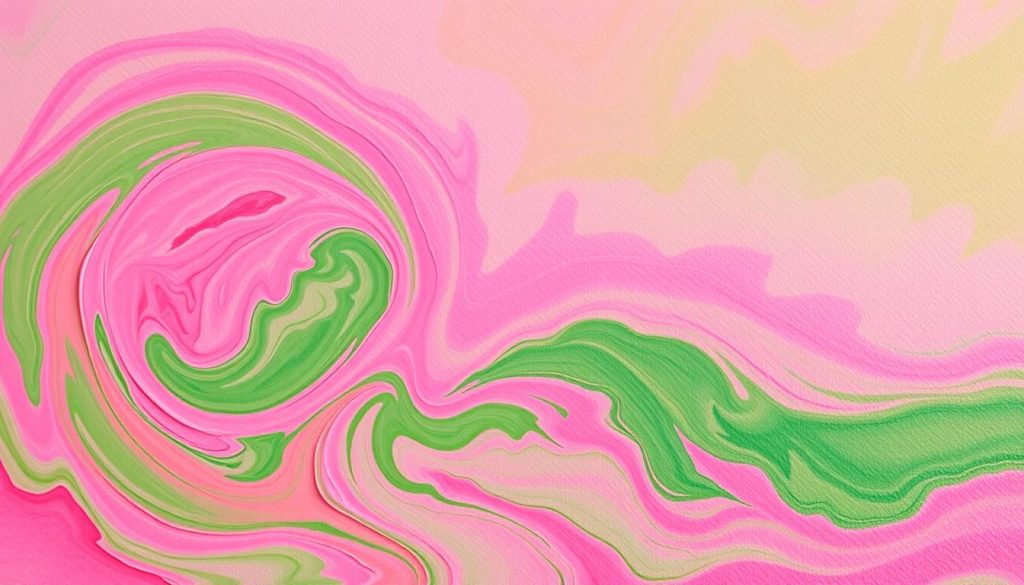
Color mixing is like artistic chemistry. It’s exciting to see how pink and green transform when combined. The results can be surprising, depending on the shades and color model used1.
Pink and green can create unexpected outcomes. The result might be brown or gray, based on the colors’ underlying pigments2. Pastel hues often produce softer, more subtle blends.
The pink-green interaction is complex. Pink is a tint of red, made by mixing red and white. Green comes from combining blue and yellow3.
This unique color relationship means each mixture will be one-of-a-kind. Artists and designers can explore endless possibilities with these vibrant hues.
Key Takeaways
- Pink and green can create brown, gray, or neutral tones
- Color mixing results depend on specific shade proportions
- Different color models produce varied mixing outcomes
- Pastel hues create softer blended colors
- Understanding color composition enhances mixing techniques
Understanding Pink and Green as Complementary Colors
Color theory reveals fascinating relationships between hues on the color wheel. Complementary colors help create visually striking compositions that capture viewers’ attention4. These color interactions explore the science of perception and artistic expression5.
The Science of Color Wheel Interactions
Complementary colors are pairs that sit opposite each other on the color wheel. These relationships create unique visual dynamics in various color models4:
- RGB model complementary pairs: red–cyan, green–magenta, blue–yellow
- CMY model complementary pairs: magenta–green, yellow–blue, cyan–red
- Traditional RYB model: red–green, yellow–purple, blue–orange
Breaking Down Color Components
Pink and green’s interaction shows color harmony principles. Complementary colors create high contrast when placed together, making them powerful design tools5.
This contrast can enhance visual clarity and keep viewers engaged with the artwork or design5.
Color Interaction Dynamics
Complementary colors produce fascinating visual effects when they meet. Red–green and blue–yellow pairs create the most striking contrasts, according to opponent process theory4.
In the RGB model, combining two complementary colors at full intensity produces white light4.
Designers can use color theory principles to create balanced visual experiences. Understanding color harmony allows for more intentional and impactful design choices5.
Pink and Green Color Mix: Creating New Shades
Color combinations unlock fascinating insights into artistic expression. Artists mix pink and green to create unique spring palettes. These mixes can produce soft olive tones or dusty brownish-gray shades.
Color mixing varies based on the chosen medium. Watercolor and acrylic paints offer different approaches to color psychology effects. The resulting hue changes dramatically depending on specific shades and proportions used.
Peach-pink mixed with green might yield an earthy olive tone. Blue-green teal combined with purple-magenta pink could create a sophisticated dusty mauve6.
Digital color mixing opens up new creative possibilities. Designers can craft vibrant combinations that communicate specific moods. Adding darker pigments gradually helps control the final color outcome6.
The key is experimentation and understanding subtle color interactions. This applies to both traditional and digital mediums7.
FAQ
What color do pink and green make when mixed?
Mixing pink and green usually creates a muted, grayish-brown or muddy shade. The outcome depends on the specific shades used. Lighter pastels produce softer tones, while vibrant hues create complex combinations.
Why do pink and green work as complementary colors?
Pink and green are complementary colors because they’re opposite on the color wheel. This creates a natural visual contrast, making both colors appear more vibrant. The combination leverages color theory principles, creating visual interest and appeal.
How do different painting mediums affect pink and green mixing?
Different painting mediums produce unique results when mixing pink and green. Watercolors create softer, translucent blends, while acrylics offer opaque and saturated mixtures. Digital mixing allows for precise color manipulation.
The medium’s opacity, pigment concentration, and base characteristics all influence the final color outcome.
Can pink and green create a spring color palette?
Yes! Pink and green are perfect for creating a fresh, spring-inspired color palette. Soft mint with blush or sage with coral can evoke springtime’s delicate feel. These combinations work well in interior design, fashion, and graphic design.
What are the psychological effects of pink and green mixed colors?
Mixed pink and green colors can evoke feelings of balance, renewal, and harmony. Softer shades might create calm, while vibrant mixes feel energetic and refreshing. The emotional response depends on color saturation and personal associations.
How can I achieve the best results when mixing pink and green?
Use high-quality pigments and start with small amounts of each color. Experiment with different ratios and shades, mixing colors gradually. Use a color wheel for reference.
Don’t hesitate to add white or complementary colors to adjust the tone and intensity.
Source Links
- What Color Does Pink and Green Make? – https://www.homemade-gifts-made-easy.com/pink-and-green-make.html
- What Color Do Pink and Green Make When Mixed? – https://www.color-meanings.com/what-color-pink-green-make-mixed/
- What Color Does Pink and Green Make When Mixed? – https://www.trimmedroots.com/what-does-pink-and-green-make/
- Complementary colors – https://en.wikipedia.org/wiki/Complementary_colors
- What are Complementary Colors? – https://www.interaction-design.org/literature/topics/complementary-colors?srsltid=AfmBOopoopqU2A0W8eNcBp0NmU4O25_OhCinqvQ3i0Ld6X7sEjJGqyHy
- What color does pink and green make when mixed? – https://iheartcraftythings.com/what-color-does-pink-green-make.html
- What Color Does Pink and Green Make? – Drawings Of… – https://drawingsof.com/what-color-does-pink-and-green-make/

