
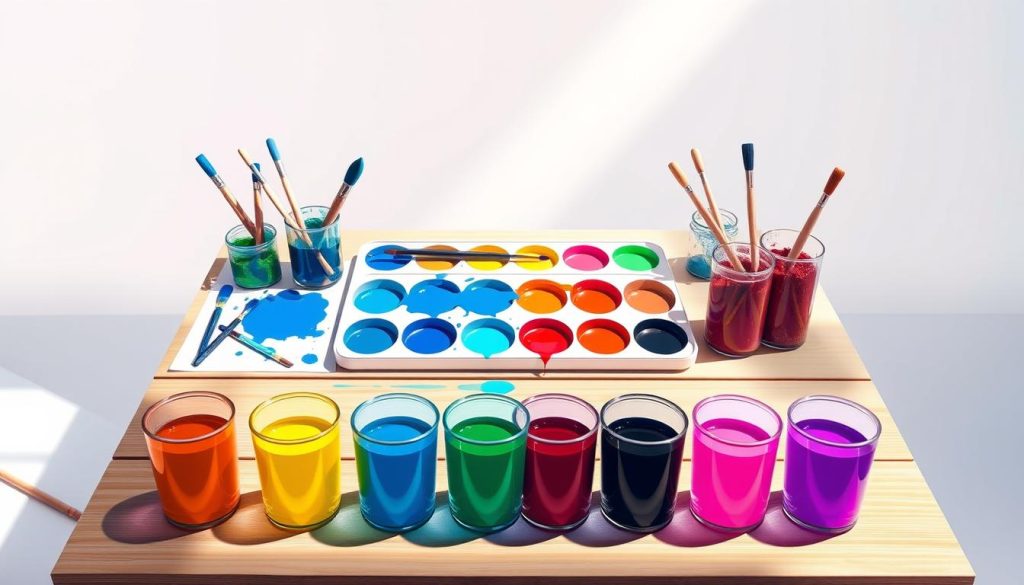
Color theory unveils amazing changes when primary colors blend. Blue and yellow, two primary colors, create a vibrant new hue when mixed. This process is an art form that demands skill and knowledge.
Blue and yellow together make green, a lively secondary color. The shade of green varies based on the amounts of blue and yellow used. You can get anything from soft mint to deep forest green.
Color theory shows how small changes can greatly affect the final result. Different art supplies like watercolors, acrylics, and oils let you play with blue and yellow mixes1. These tools help artists make exactly the color they want.
Key Takeaways
- Blue and yellow are primary colors in traditional color models
- Mixing blue and yellow creates green
- Color quantities significantly impact the resulting shade
- Different art mediums offer unique color mixing experiences
- Color theory provides a scientific approach to artistic color creation
Understanding Basic Color Theory and Mixing Principles
Color theory helps artists and designers understand how colors interact and communicate. Sir Isaac Newton designed the first color wheel in 16662. This tool provides insights into complementary colors and color psychology.
The color wheel shows relationships between different hues. It includes primary, secondary, and tertiary colors. These form the foundation of paint colors and visual design2.
Primary Colors and Their Interactions
Primary colors are the building blocks of all other colors. These include:
- Red
- Blue
- Yellow
Mixing primary colors creates secondary colors like green, orange, and purple3. Artists can create magic by understanding how these colors blend.
Color Temperature and Visual Impact
Colors have temperatures that evoke different emotions. Warm colors like reds generate energy. Cool colors such as blues promote calmness2.
Understanding color psychology can greatly influence design and artistic expression.
Mixing Models in Color Creation
Two primary color mixing models exist:
- RGB (Additive): Used in digital screens, mixing red, green, and blue light3
- CMYK (Subtractive): Used in printing, combining cyan, magenta, yellow, and black2
Color influences 90% of consumer product decisions2. This fact shows the importance of understanding color theory.
Blue and Yellow: Creating the Perfect Green Shade
Mixing blue and yellow reveals the fascinating world of color creation. Professional artists know that art supplies can transform primary colors into green shades4. True green comes from a 50-50 mix of yellow and blue.
The nuances can be complex. Color mixing techniques greatly affect the final result5. Pantone shades show the variety possible when blending blue and yellow.
Chartreuse uses 33% blue and 67% yellow. Darker forest greens are also possible. Each combo produces a unique visual effect4.
Color variations depend on temperature, pigment quality, and art supplies used5. Blue pigments reflect blue light while absorbing red and green. Yellow pigments reflect yellow light while absorbing blue.
This interplay of wavelengths creates a rich green palette. Artists and designers love exploring color dynamics5. Mastering these principles will elevate your color work in landscapes or logos.
FAQ
What happens when you mix blue and yellow?
Mixing blue and yellow creates green. This is a key principle in color theory. The exact shade depends on the hues and amounts used.
Are blue and yellow complementary colors?
No, blue and yellow are primary colors. Complementary colors sit opposite each other on the color wheel. Blue’s complement is orange, while yellow’s is purple.
How do different shades of blue and yellow affect the green produced?
The green’s shade varies based on the specific blue and yellow mixed. Light blue and bright yellow might make lime green. Navy blue and dark yellow could create forest green.
What art supplies are best for mixing blue and yellow?
High-quality paints with good pigmentation work best. Acrylic, watercolor, and oil paints are great for color mixing. Pantone systems offer precise color mixing guidance.
Can I use blue and yellow in design and branding?
Yes! Blue and yellow are popular in design and color psychology. They create striking color schemes often used in logos and branding. These colors convey energy, creativity, and professionalism.
How do professional designers choose green shades?
Designers use color wheels and theory to pick precise green shades. They consider color temperature, value, and emotional impact. Specialized color guides help in this process.
What industries commonly use blue and yellow color combinations?
Many industries use blue and yellow, including graphic and interior design. Fashion, automotive, and branding also incorporate these colors. Sports teams and tech companies often use them in their visual identities.
Are there cultural meanings associated with blue and yellow?
Colors have cultural significance. Blue often represents trust and calm. Yellow symbolizes happiness and energy. These meanings can vary across different cultures.
Source Links
- What color does blue and yellow make when mixed? – https://iheartcraftythings.com/what-color-does-blue-yellow-make.html
- The bold, bright truth about color theory – https://99designs.com/blog/tips/the-7-step-guide-to-understanding-color-theory/
- What are the Principles of Color Mixing? – Leatrice Eiseman – https://leatriceeiseman.com/what-are-the-principles-of-color-mixing/
- What Colors Make Green? – https://artsyfartsylife.com/what-colors-make-green/
- Do Yellow and Blue Make Green? – https://evebigaj.com/2021/06/25/do-blue-and-yellow-make-green/

