
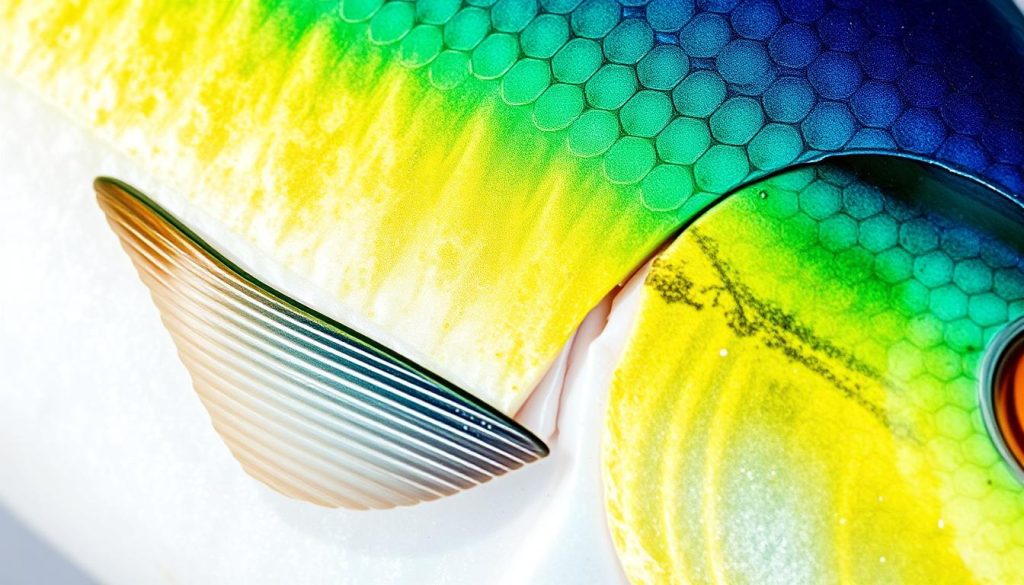
Mahi-mahi offers a unique taste adventure for seafood lovers. Its semi-mild, sweet flavor appeals to both experienced fish eaters and newbies. This tropical fish stands out with its robust taste1.
Mahi-mahi’s flavor is stronger than halibut but milder than swordfish1. Its pink flesh turns white when cooked, making an eye-catching dish1. Chefs love its versatile texture and delicate taste2.
This fish is a great eco-friendly choice. It has a short life cycle of 4-5 years, making it sustainable1. Mahi-mahi usually weighs around 5 pounds but can reach up to 50 pounds2.
Key Takeaways
- Mahi-mahi offers a semi-mild, sweet flavor profile
- Fish transforms from pink to white when cooked
- Sustainable seafood option with short life cycle
- Typically ranges from 5 to 50 pounds in weight
- Considered a versatile fish for various culinary preparations
Understanding Mahi-Mahi Fish Taste and Texture
Mahi-mahi is a fascinating fish that captivates seafood lovers. Its scientific name is Coryphaena hippurus, but it’s commonly called dolphinfish3. This remarkable species offers a unique culinary experience.
Mahi-mahi has a semi-mild, subtly sweet flavor. Its texture is firm and compact, setting it apart from other seafood. Compared to tuna, mahi-mahi has a more delicate taste3.
Flavor Profile Exploration
Mahi-mahi’s texture is a culinary delight. The fish has firm, moist flesh that stays flavorful when cooked. Chefs love its versatility in various cooking methods3.
- Mild, sweet taste
- Firm and compact texture
- Less fishy than tuna
- Excellent for various cooking methods
Nutritional Powerhouse
Mahi-mahi is not just tasty, it’s also nutritious. It’s an excellent source of lean protein and essential nutrients. The fish provides vitamin B12, selenium, and potassium3.
| Nutritional Benefit | Details |
|---|---|
| Protein | Lean and high-quality |
| Omega-3 Fatty Acids | Rich content |
| Vitamins | B12, selenium, potassium |
A true gem of the ocean, mahi-mahi offers both exceptional flavor and remarkable nutritional value.
Sustainability is crucial for mahi-mahi. These fish can grow up to 6 feet long and weigh over 100 pounds4. Their short lifespan of 4-5 years4 makes responsible fishing practices important.
Best Ways to Cook and Prepare Mahi-Mahi
Mahi-mahi offers endless culinary possibilities for seafood enthusiasts. This fish shines with various cooking methods, each highlighting its unique qualities. From pan-searing to grilling, discover recipes that promise delicious results.
Mastering mahi-mahi cooking techniques is key to creating tasty dishes. Professional chefs recommend several key methods:
- Pan-searing: Quick and flavorful, taking less than 30 minutes5
- Baking: Gentle method that preserves moisture
- Grilling: Adds smoky flavor and beautiful char marks
- Steaming: Keeps the fish delicate and light
Seasonings can take mahi-mahi to new heights. Try these flavor combinations:
- Citrus and herb rubs
- Cajun-style spice blends
- Garlic and lemon marinades6
Proper cooking times and temperatures ensure perfect mahi-mahi. Each fillet needs about 3-4 minutes per side until golden brown7. The internal temperature should reach 137 degrees Fahrenheit.
For best results, let the fish rest at room temperature for 20 minutes before cooking5. This step helps achieve even cooking throughout the fillet.
Pro tip: Always avoid overcooking mahi-mahi to maintain its tender, flaky texture.
Choose fresh mahi-mahi fillets weighing 4-6 ounces for optimal results7. Serve your perfectly cooked fish with sides like mashed potatoes or green beans5.
Conclusion
Mahi-mahi offers a delightful seafood experience with exceptional flavor and nutritional benefits. This versatile fish provides a unique culinary adventure for home cooks and seafood lovers8. Its mild taste and impressive nutritional profile make it an excellent protein choice.
Quality selection is crucial when buying mahi-mahi. Look for fresh fillets with vibrant pink color and a clean, neutral scent. The best seasons for fresh mahi-mahi are March, April, May, October, and November8.
A 3-ounce serving contains about 100 calories and provides essential nutrients. These include potassium, vitamin B12, and selenium9. Mahi-mahi also delivers nearly one-third of daily protein needs8.
Cooking techniques can transform mahi-mahi from simple to spectacular. Grilling creates a crispy exterior while keeping the inside juicy. Baking ensures a tender, moist texture perfect for marinades9.
Home chefs can experiment with various seasonings for mahi-mahi. The fish pairs wonderfully with lemon, garlic, and diverse spices10. Its low-fat content and versatile flavor appeal to health-conscious food lovers8.
This guide helps you select, prepare, and enjoy mahi-mahi with confidence. Dive into the world of this exceptional fish and create amazing dishes in your kitchen.
FAQ
What does mahi-mahi taste like?
Mahi-mahi has a mild, sweet flavor that’s less “fishy” than other seafood. Its firm texture is similar to swordfish. The white flesh absorbs marinades and seasonings well.
How does mahi-mahi compare to other fish like tuna?
Mahi-mahi offers a milder taste and lighter texture than tuna. It has a sweeter profile, making it more approachable for non-seafood fans. Mahi-mahi’s firm texture is great for grilling and pan-searing.
What are the best cooking methods for mahi-mahi?
Mahi-mahi is versatile and works well with grilling, baking, pan-frying, and steaming. Avoid overcooking to prevent dryness. Quick, high-heat methods like grilling or pan-searing are ideal.
Cook mahi-mahi for 3-4 minutes per side to keep it moist and tender.
Is mahi-mahi a healthy seafood option?
Yes! Mahi-mahi is a lean protein, low in calories, and rich in nutrients. It contains omega-3 fatty acids, vitamin B12, and selenium.
A 4-ounce serving provides about 20 grams of protein and is low in saturated fat.
Where does mahi-mahi typically come from?
Mahi-mahi lives in tropical and subtropical waters, including the Caribbean Sea and Pacific Ocean. Popular fishing spots include Hawaii, Florida, and parts of Central America.
It’s a fast-swimming, surface-dwelling fish that’s often sustainably harvested.
How can I tell if mahi-mahi is fresh?
Fresh mahi-mahi should look bright and translucent with a firm texture. The flesh should be white to light pink without discoloration.
It should have a mild ocean smell. A strong, fishy odor means it’s not fresh. Buy from trusted sources and check proper refrigeration.
What are some popular seasonings for mahi-mahi?
Mahi-mahi pairs well with bright, zesty flavors. Popular choices include citrus marinades, herb blends, and Cajun spices.
Its mild flavor adapts to various cuisines, from Caribbean to Mediterranean. Try ginger and garlic for a tropical twist.
Source Links
- Everything You Need to Know About Mahi-Mahi – https://www.thespruceeats.com/all-about-mahi-mahi-fish-1300648
- Mahi Mahi Flavor Profile | Mahi Mahi Taste, Texture And Size – https://www.chefs-resources.com/seafood/finfish/mahi-mahi/
- Is Mahi Mahi Tuna? Unveiling the Truth about This Popular Fish – https://globalseafoods.com/blogs/news/is-mahi-mahi-tuna-unveiling-the-truth-about-this-popular-fish?srsltid=AfmBOor5851IRAUIfYu9e-PEATNSbL1PbyRi4v7qUXEkDWt3IovSWt-2
- What Is A Mahi-Mahi And 10 Facts You Should Know – ULUA.COM – https://ulua.com/what-is-a-mahi-mahi-and-10-facts-you-should-know/
- Pan-Seared Mahi Mahi with Umami Butter Sauce (30 minutes!) – https://www.butterbeready.com/pan-seared-mahi-mahi-with-umami-butter-sauce/
- Easy Perfect Mahi Mahi Recipe – https://www.chewoutloud.com/easy-perfect-mahi-mahi-recipe/
- Perfect Baked Mahi Mahi – https://laughingspatula.com/how-to-cook-mahi-mahi/
- What Does Mahi Mahi Taste Like? – Food Shark Marfa – https://www.foodsharkmarfa.com/what-does-mahi-mahi-taste-like/
- What Does Mahi Mahi Taste Like – https://casadesante.com/blogs/wellness/what-does-mahi-mahi-taste-like?srsltid=AfmBOopamX1wllq6tiUrJyZan8hX6GCFw5Zqsuw5nAXa0tLzX8YW-bf7
- What Does Mahi-Mahi Fish Taste Like? | Unimitra Sea Food – https://unimitraseafood.com/blogs/what-does-mahi-mahi-fish-taste-like/

