
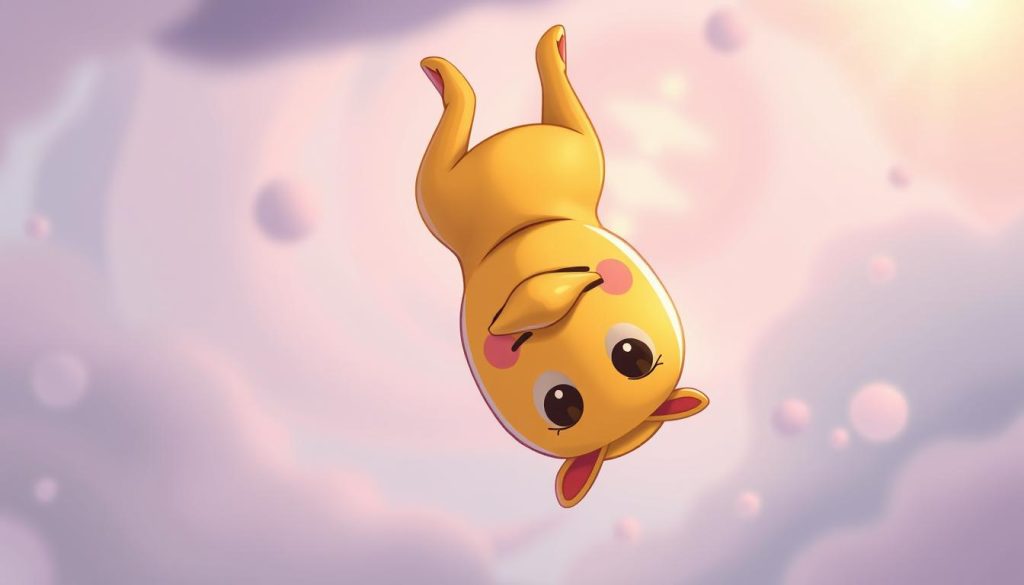
The upside down smiley has changed how we express emotions online. This flipped emoji captures complex feelings that words often can’t. It’s more than just a simple graphic12.
The upside down emoji is a tool for showing sarcasm, confusion, and subtle emotions. People use it for everything from playful jokes to deep frustration12.
Launched in October 2015, this emoji quickly became popular in digital chats. It replaced old internet markers like “/s” or “jk”21.
The emoji can show feeling overwhelmed or hiding inner struggles. It’s a versatile way to express complex emotions in our digital world2.
Key Takeaways
- Represents multiple emotional states beyond simple smiley faces
- Introduced in Unicode 8.0 in 2015
- Used to express sarcasm, confusion, and subtle emotional nuances
- Replaces traditional text-based tone markers
- Versatile in digital communication contexts
Origins and Technical Evolution of the Upside Down Face Emoji
The upside down face emoji has revolutionized digital communication. Its journey began with early digital experiments and Japanese emoticons. This inverted symbol has transformed how we express emotions online.
The emoji’s roots trace back to Japanese digital culture. Unique emoticons like the “handstand” (逆立ち) explored creative ways to represent feelings.
In 2015, Unicode officially implemented the upside down face emoji. Major tech platforms quickly adopted it, each with their own unique design interpretation.
Unicode Implementation and Platform Variations
Key milestones in the emoji’s development include:
- Approval under Unicode 8.0 in 20153
- First appearance on iOS 9.1 in October 20154
- Android integration in December 20154
- Twitter’s Twemoji 2.0 custom emoji release4
Digital Communication Context
The emoji quickly became a symbol of emotional complexity. Jane Solomon from Unicode called it an “emotional catch-all” bridging happiness and frustration.
Its usage spans various platforms. From sarcastic Twitter interactions to playful Instagram selfies, this emoji is versatile.
An emoji that speaks volumes without saying a word.
The upside down face emoji keeps evolving. It represents the dynamic nature of digital communication and emotional expression.
What Does the Upside Down Emoji Mean?
The upside-down face emoji adds depth to digital chats. It’s a unique way to express complex emotions beyond words. This flipped face icon helps users share nuanced feelings in their messages1.
The emoji’s meaning changes based on context. It’s a powerful tool for showing sarcasm, irony, and subtle emotional states5. People often use it to express frustration, embarrassment, or playful resignation6.
For example, “Another perfect day at work ?” hints at sarcastic humor about a tough situation. About 30% of emoji users use this symbol for tricky social situations5.
The upended smiley serves as digital shorthand for complex emotions. It replaces traditional internet markers like “/s” for sarcasm1. This emoji has become a versatile tool in modern online conversations.
Its popularity shows a shift towards more visual online expression5. Whether showing mild frustration or self-deprecating humor, it adds flair to digital dialogue6.
FAQ
What exactly does the upside-down face emoji (?) mean?
The upside-down face emoji shows irony, sarcasm, or mild frustration mixed with humor. It’s a versatile symbol for complex emotions. It often means “I’m fine” when things aren’t really okay.
How do people commonly use the upside-down emoji in conversations?
People use this emoji to express subtle awkwardness or self-deprecating humor. It signals feeling stressed but trying to stay funny. It’s like saying “everything’s fine… sort of” with a dash of wit.
Is the upside-down emoji considered positive or negative?
This emoji is more complex than just positive or negative. It shows a mix of humor and underlying tension. It often conveys ironic acceptance of not-so-great situations.
When was the upside-down face emoji first introduced?
The upside-down face emoji joined the Unicode Standard in 2016. It became part of Unicode 9.0, entering the standard emoji set. This allowed consistent use across different digital platforms.
Do different age groups interpret this emoji differently?
Yes, younger folks use the emoji more playfully and ironically. Older users might express subtle sarcasm or mild frustration with it. Interpretation varies based on age, context, and personal style.
How do different platforms design this emoji?
The core concept stays the same, but designs vary slightly. Apple, Google, and Microsoft each have their own artistic take. However, the basic emotional meaning remains consistent across platforms.
Are there any cultural differences in using this emoji?
Cultural context greatly affects how this emoji is understood. Western digital users often use it ironically. Other cultures might see it differently or use it with more subtle meanings.
Can the upside-down emoji be used professionally?
It’s best to avoid this emoji in formal work communications. It fits better in casual chats with friends or close coworkers. Use it for creative and less formal digital talks.
Source Links
- What Is The Upside-Down Face Emoji ? Supposed To Mean? – https://www.dictionary.com/e/emoji/upside-down-face-emoji/
- 9 Creative Ways To Use The Upside Down Face Emoji – https://www.bustle.com/life/137625-5-ways-to-use-the-upside-down-face-emoji-because-it-can-indicate-so-much-more
- What Does The ? Upside-Down Face Emoji Mean? [Emojiology] – https://blog.emojipedia.org/emojiology-upside-down-face/
- What Does The Upside Down Face Emoji Mean? Here’s Everything You Need To Know About It – https://www.bustle.com/articles/136250-what-does-the-upside-down-face-emoji-mean-heres-everything-you-need-to-know-about-it
- What does the upside-down emoji mean? – https://www.androidauthority.com/upside-down-emoji-meaning-3336655/
- What Does the Upside Down Emoji Mean? – https://beebom.com/upside-down-emoji-meaning/

