
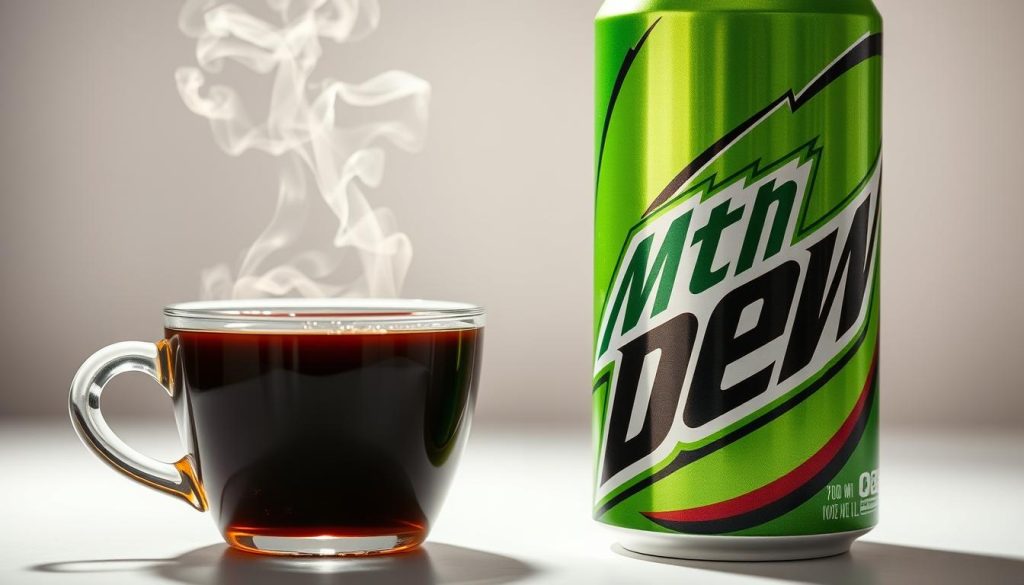
Coffee and Mountain Dew spark debate among caffeine seekers. Both drinks offer an energy boost, but their caffeine levels differ. A 12 oz Mountain Dew can has about 55 mg of caffeine.
An 8 oz coffee cup packs 80-100 mg of caffeine. This makes coffee the stronger caffeine source. However, caffeine content can vary between different beverages12.
Mountain Dew provides a quick energy kick. Yet, coffee remains the more potent option. It’s important to monitor your caffeine intake for health reasons3.
Key Takeaways
- Coffee contains more caffeine than Mountain Dew
- A 12 oz can of Mountain Dew has about 55 mg of caffeine
- An 8 oz cup of coffee typically contains 80-100 mg of caffeine
- Caffeine content varies between different types of beverages
- Understanding caffeine intake is crucial for health management
Understanding Caffeine Content in Popular Beverages
Caffeine fuels many people’s daily routines through various drinks. It’s crucial to know caffeine levels in different beverages. This knowledge helps consumers make smart choices about their drink intake4.
Caffeine levels differ across drink types. Many are shocked to learn how much caffeine they consume daily. Knowing these levels can help people manage their intake better5.
How Caffeine Levels Are Measured
Caffeine is measured in milligrams (mg) per serving. Healthy adults can safely consume up to 400 mg of caffeine daily4.
This equals about 4-5 cups of coffee. It’s also similar to 7 cans of Mountain Dew or several energy drinks.
- Approximately 4-5 cups of coffee
- 7 cans of Mountain Dew
- Multiple energy drinks
Different Types of Caffeine Sources
Caffeine comes from various sources. These include natural, synthetic, and herbal options.
- Natural sources: Coffee, tea, chocolate
- Synthetic sources: Energy drinks, supplements
- Herbal alternatives: Guarana, yerba mate
Daily Recommended Caffeine Intake
Caffeine intake recommendations vary per person. Pregnant women should limit intake to under 200 mg daily4. Some health conditions may require even lower caffeine consumption.
Understanding your personal caffeine tolerance is key to maintaining a healthy lifestyle.
Beverages offer different caffeine levels. An 8 oz coffee cup has about 96 mg of caffeine. A similar serving of Mountain Dew contains around 37 mg45.
Coffee vs Mountain Dew Caffeine: A Detailed Comparison
Coffee and Mountain Dew offer different energy boosts. Their caffeine profiles tell unique stories6. A 12-ounce Mountain Dew can has 54 mg of caffeine, about 4.5 mg per ounce6.
Coffee packs a stronger punch. A 12-ounce cup of black coffee contains 120 to 150 mg of caffeine6. This explains why coffee is the top choice for a powerful caffeine kick.
Mountain Dew uses synthetic caffeine added during production. Coffee’s caffeine occurs naturally. The Mountain Dew ingredients include artificial components for its unique taste and energy boost7.
| Beverage | Caffeine (12 oz) | Sugar Content |
|---|---|---|
| Mountain Dew | 54 mg | 46 g |
| Black Coffee | 120-150 mg | 0 g |
Know your caffeine intake limits. The FDA recommends 400 mg daily for healthy adults6. You can enjoy multiple Mountain Dews or coffees within these guidelines.
“Not all caffeine is created equal” – Beverage Nutrition Expert
- Mountain Dew caffeine is synthetic
- Coffee provides natural caffeine
- Caffeine content varies by preparation method
Choose your beverage wisely, understanding the unique characteristics of each caffeine source.
Health Implications of Both Beverages
Caffeinated drinks affect health in various ways. Coffee offers potential benefits when consumed responsibly. It may reduce risks of heart disease, stroke, and protect against Parkinson’s8.
Sugar content is crucial in beverage health. A 12 oz Mountain Dew has 46 grams of sugar. This exceeds the daily limit of 25-36 grams recommended by the American Heart Association.
Black coffee contains no sugar. It’s a cleaner caffeine source for those watching their diet8.
Caffeine safety depends on consumption habits and personal tolerance. Both coffee and Mountain Dew provide caffeine, but their effects differ. Zero-calorie sodas have neutral health impacts.
Sugar-filled drinks like Mountain Dew can harm heart health. They may also lead to weight gain8. Moderation is key when choosing caffeinated beverages.
Energy levels vary between these drinks. Coffee’s natural compounds give lasting mental clarity. Mountain Dew’s artificial additives can cause quick energy spikes and crashes.
Choose wisely to optimize your caffeine intake. This can lead to better overall wellness.
FAQ
How much caffeine is in a typical cup of coffee compared to Mountain Dew?
An 8-ounce cup of coffee has 95-200 mg of caffeine. A 12-ounce Mountain Dew can contains 54 mg. Coffee packs a stronger caffeine punch than Mountain Dew.
Is the caffeine in coffee different from the caffeine in Mountain Dew?
Coffee’s caffeine comes from beans and includes antioxidants. Mountain Dew uses synthetic caffeine in a complex artificial formula. The natural vs. synthetic sources create different effects.
What are the daily recommended caffeine intake guidelines?
The FDA suggests healthy adults limit caffeine to 400 mg daily. This equals about 4-5 coffee cups or 7-8 Mountain Dew cans. Everyone’s caffeine tolerance varies, so watch how it affects you.
Which beverage is healthier – coffee or Mountain Dew?
Coffee is usually healthier. It has natural antioxidants and little sugar when black. Mountain Dew is high in sugar and artificial additives. These can lead to weight gain and dental problems.
How does caffeine affect energy levels differently in coffee and Mountain Dew?
Coffee gives a gradual, lasting energy boost. Its natural caffeine works with other compounds. Mountain Dew causes a quick spike from sugar and synthetic caffeine. This often leads to a more noticeable crash later.
Can I drink coffee or Mountain Dew if I’m sensitive to caffeine?
If you’re caffeine-sensitive, start with small amounts. Watch how your body reacts. Try low-caffeine coffee or caffeine-free Mountain Dew alternatives. Ask a doctor about your specific caffeine tolerance.
How do brewing methods impact coffee’s caffeine content?
Brewing methods greatly affect coffee’s caffeine levels. Espresso has more caffeine per ounce than drip coffee. Drip coffee’s caffeine varies based on beans, roast, and brew time. Mountain Dew’s caffeine stays consistent.
Are there any long-term health considerations with regular caffeine consumption?
Moderate caffeine use is usually safe for adults. Too much can cause anxiety, sleep issues, and increased heart rate. Coffee offers more health benefits than Mountain Dew. Mountain Dew has high sugar and artificial ingredients.
Source Links
- Assessing the Caffeine Content of Mountain Dew (Caffeine Chart) – https://cafely.com/blogs/info/caffeine-in-mountain-dew?srsltid=AfmBOoqEjI1tPxhe12bT6V2WrjuvPhgDdVy-7RkmGPWEHzl_zijhjSlN
- How Much Caffeine Is In Mountain Dew (Vs Coffee)? – https://meadowridgecoffee.com/a/blog/how-much-caffeine-does-a-can-of-mountain-dew-have?srsltid=AfmBOoqZE0t_PhVPKuUF4WoLOQNnKet4VUq0-gW5yZsMDSmVVEsudQav
- Coffee and Soda: A Comparison of Caffeine Levels, Health Benefits – https://driftaway.coffee/coffee-vs-soda/?srsltid=AfmBOoqM6DfVPiISs0NmR8Y11UPO74npgcAVXMVL9bo8h6K1H2IEsUAA
- Assessing the Caffeine Content of Mountain Dew (Caffeine Chart) – https://cafely.com/blogs/info/caffeine-in-mountain-dew?srsltid=AfmBOorWpctrWIqH84MEowFDBuSRjsFz4XJ69DgMB8P_WxQwWx-AgCxY
- How much caffeine is in your cup? – https://www.mayoclinic.org/healthy-lifestyle/nutrition-and-healthy-eating/in-depth/caffeine/art-20049372
- How Much Caffeine Is In Mountain Dew (Vs Coffee)? – https://meadowridgecoffee.com/a/blog/how-much-caffeine-does-a-can-of-mountain-dew-have?srsltid=AfmBOorLTm2AtSTp3zIKZ4HA_AFT_mGD6XjigR-a2MVwSQyRJVY1ctL7
- Assessing the Caffeine Content of Mountain Dew (Caffeine Chart) – https://cafely.com/blogs/info/caffeine-in-mountain-dew?srsltid=AfmBOorZFClwNNXzeOO5byY2UqcAZaal1806oWS766wdW025Z-iO91I5
- Coffee and Soda: A Comparison of Caffeine Levels, Health Benefits – https://driftaway.coffee/coffee-vs-soda/?srsltid=AfmBOoqUyPS8_PCQj1bz6TzEP-jCElyizIoor713ApX9Ihl219FUg1–

