
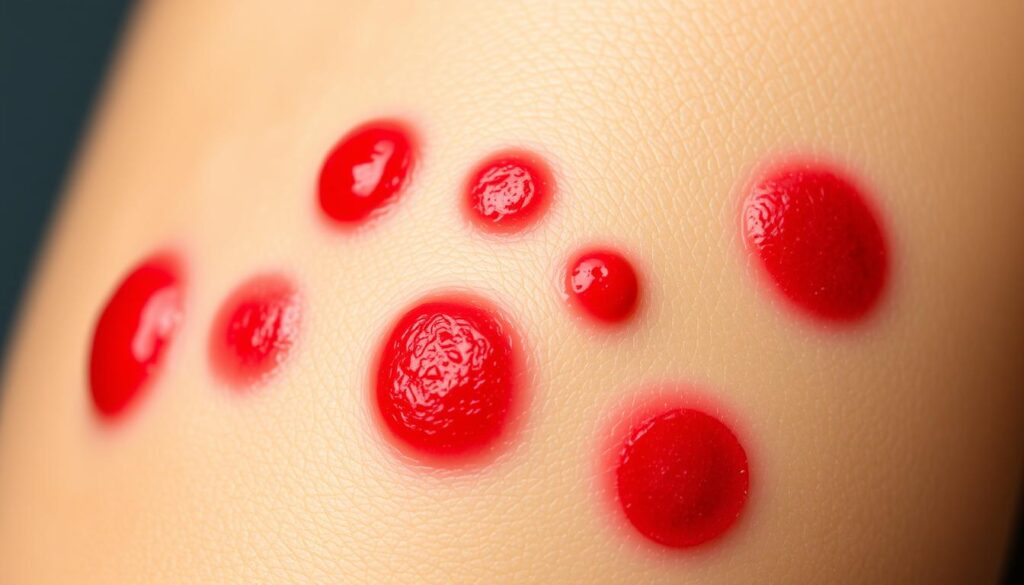
Noticed small, bright red spots on your skin? These might be cherry angiomas, harmless benign tumors. These tiny vascular growths can appear on various body parts12.
Cherry angiomas are small, bright red bumps made of tiny blood vessels. They usually measure 1 to 5 mm and can appear at different life stages12.
These skin growths become more common as you age. About 5% of teens may develop them. Over 75% of people aged 75+ have cherry angiomas1.
They’re slightly more frequent in men. Cherry angiomas tend to appear more often in people over 502.
Key Takeaways
- Cherry angiomas are harmless red skin spots
- They become more common with age
- Most are less than 5 mm in size
- They are more prevalent in older adults
- Generally require no medical treatment
Understanding Cherry Angioma
Cherry angiomas are fascinating skin growths that appear as we age. These small red moles are common and can show up on various body parts. Knowing their traits helps you recognize and manage these unique skin formations.
Common Characteristics and Appearance
Red moles have distinct visual traits. They often look like bright red, smooth lesions. Their size can range from tiny to about a quarter-inch wide3.
Most cherry angiomas start as small, flat spots. Over time, they may become slightly raised4.
- Bright red or cherry-like color
- Smooth surface
- Can be flat or slightly raised
- Size typically ranges from tiny to 2-3 millimeters
Where They Typically Appear
Cherry angiomas have unique features that make them stand out. They often grow in specific body areas, forming predictable patterns3:
- Anterior trunk (most frequent location)
- Posterior trunk
- Proximal extremities
- Head and neck region
- Distal extremities
Risk Factors and Prevalence
Cherry angiomas become more common as we age. Over 75% of adults aged 75 or older have at least one cherry angioma4. They’re most common in adults over 305.
Males are slightly more affected, with a 49.5% prevalence rate5. Your genes, hormones, and overall health can influence the growth of these red moles3.
“Cherry angiomas are a normal part of aging and typically harmless,” says Dr. Emily Richardson, dermatology specialist.
While usually harmless, it’s smart to see a doctor if you notice big changes. They can check any significant differences in appearance or number of cherry angiomas.
Causes and Development of Red Moles
Cherry angiomas result from genetic, hormonal, and environmental factors. These factors influence the growth of vascular lesions. Understanding their complex nature helps explain their distinctive appearance.
Red moles usually show up in your thirties. They become more common as you age. Several factors contribute to their formation.
- Genetic predisposition
- Hormonal changes
- Age-related transformations
- Chemical exposures
Environmental elements can affect angioma causes. Exposure to certain chemicals may increase your risk. These include nitrogen mustard, bromide, and 2-butoxyethanol6.
“Red moles are typically harmless but should be monitored for any unusual changes,” says dermatological experts.
Hormonal shifts play a key role in cherry angioma development. Higher prolactin levels can make these growths more likely. This is especially true after pregnancy6.
| Age Group | Angioma Prevalence |
|---|---|
| Under 30 | Low |
| 30-50 | Moderate |
| Over 75 | Up to 75% affected7 |
Most cherry angiomas are harmless. However, keep an eye on any changes. Consult a doctor if you notice shifts in size, color, or shape8.
Treatment Options and Removal Methods
Cherry angiomas can be removed for cosmetic reasons or if they cause discomfort. Professional medical procedures offer effective treatment. Understanding these options helps you make an informed choice.
Professional Medical Procedures
Several methods are available to treat skin lesions. Your dermatologist will suggest the best approach for your specific case9.
- Laser therapy: A precise method that can remove angiomas quickly10
- Electrocautery: Burning off the angioma using electrical current9
- Cryotherapy: Freezing the growth with liquid nitrogen10
- Shave excision: Carefully cutting out the angioma10
Recovery and Aftercare
Most removal procedures are outpatient treatments with minimal downtime. Your skin may appear slightly red or tender afterward. Protect the treated area from direct sunlight.
Follow your healthcare provider’s specific aftercare instructions for best results.
| Procedure | Duration | Recovery Time |
|---|---|---|
| Laser Therapy | Seconds | 1-2 days |
| Electrocautery | Minutes | 3-5 days |
| Cryotherapy | Seconds | 1 week |
Potential Side Effects
Professional removal methods are generally safe. However, some side effects may occur11:
- Temporary redness
- Minor swelling
- Potential scarring
- Possible pigmentation changes
“Always consult a dermatologist to determine the most appropriate removal method for your specific cherry angioma.”
Electrocautery and laser therapy are the most effective ways to remove cherry angiomas10. These professional techniques offer reliable results.
Conclusion
Cherry angiomas are vital to your skin health. These small red growths are usually harmless but need careful monitoring. They often appear on your trunk and chest, influenced by genetics and lifestyle1213.
For skin care, professional advice is best. Your doctor can assess unusual growths and suggest treatments if needed. Natural remedies exist, but their effectiveness varies widely12.
Regular skin check-ups help track cherry angiomas and detect potential health issues. These lesions are usually benign, but staying informed is key. Your skin’s well-being matters13.
If you see big changes in your cherry angiomas, see a dermatologist. They can provide the best care for your unique needs.
FAQ
What exactly is a cherry angioma?
A cherry angioma is a common, harmless skin growth. It appears as a bright red, round spot. These spots usually range from 1 to 5 mm in size.
Adults over 30 are more likely to have cherry angiomas. Some people remove them for looks, but they’re not harmful.
Are cherry angiomas dangerous?
Cherry angiomas are generally harmless and don’t pose health risks. However, it’s wise to keep an eye on them. Watch for changes in size, color, or frequent bleeding.
If you notice significant changes, consult a dermatologist. They can assess the situation and provide guidance.
Where do cherry angiomas usually appear on the body?
These skin spots often show up on the torso, arms, legs, and shoulders. They can appear alone or in groups. Cherry angiomas become more common as we age.
In fact, over 75% of people aged 75 and older have them. They’re a normal part of aging skin.
What causes cherry angiomas?
The exact causes of cherry angiomas aren’t fully understood. Factors like aging, genetics, and hormonal changes play a role. Some studies suggest links to chemical exposure and sun exposure.
Can cherry angiomas be removed?
Yes, doctors can remove cherry angiomas using various methods. These include electrocauterization, shave excision, cryosurgery, and laser therapy. The pulsed dye laser is often preferred for less pain.
Most removal procedures are outpatient with minimal recovery time. Your doctor can help you choose the best option.
Are some people more likely to develop cherry angiomas?
Cherry angiomas are more common in certain groups. Caucasians and men tend to have them more often. The likelihood increases with age.
Pregnancy and genetic factors can also increase your chances. If you’re concerned, talk to your doctor.
Do cherry angiomas go away on their own?
Cherry angiomas typically don’t disappear naturally. They usually stay unless removed through medical procedures. While they don’t require treatment, some people choose removal.
Reasons for removal include cosmetic preferences or if the spots become irritated. Discuss options with your healthcare provider.
Are there any home remedies for cherry angiomas?
There’s little scientific evidence supporting home remedies for cherry angiomas. It’s best to consult a healthcare professional before trying any treatment. They can ensure your safety and prevent potential skin damage.
Source Links
- What is a Cherry Angioma: Causes, Treatment, and Removal – https://www.healthline.com/health/cherry-angioma
- Causes of Cherry Angioma or Bright Red Spots on Skin – https://skincancer-specialists.com/blog/what-is-cherry-angioma-causes-symptoms/
- Cherry Hemangioma: Practice Essentials, Pathophysiology, Etiology – https://emedicine.medscape.com/article/1082935-overview
- Cherry Angiomas Mclean VA & Woodbridge, VA | Skin & Laser Dermatology Center – https://www.bderm.com/services/cosmetic-procedures/cherry-angiomas/
- Cherry angioma: A case–control study – https://pmc.ncbi.nlm.nih.gov/articles/PMC7415270/
- Should Red Moles (Cherry Angiomas) Be Removed? – https://www.verywellhealth.com/red-moles-8379555
- Campbell de Morgan spot – https://patient.info/doctor/campbell-de-morgan-spot
- Red Moles: What to Know about Angiomas – Shondra Smith MD – https://www.shondrasmithmd.com/blog/red-moles-what-to-know-about-angiomas/
- Cherry Angiomas: Causes, Prevention, and Treatment Options – https://www.westlakedermatology.com/blog/cherry-angioma-treatment-options/
- Removal Options for a Cherry Angioma – http://www.skindeeplaserservices.com/blog/2018/june/removal-options-for-a-cherry-angioma/
- Cherry angioma: Symptoms, causes, and removal – https://www.medicalnewstoday.com/articles/312594
- – Creating Flawless Skin – – https://lamprobe.com/cherry-angiomas/
- PDF – https://ph.health.mil/PHC Resource Library/CherryAngiomasforProviders_FS_64-035-1016l.pdf

