
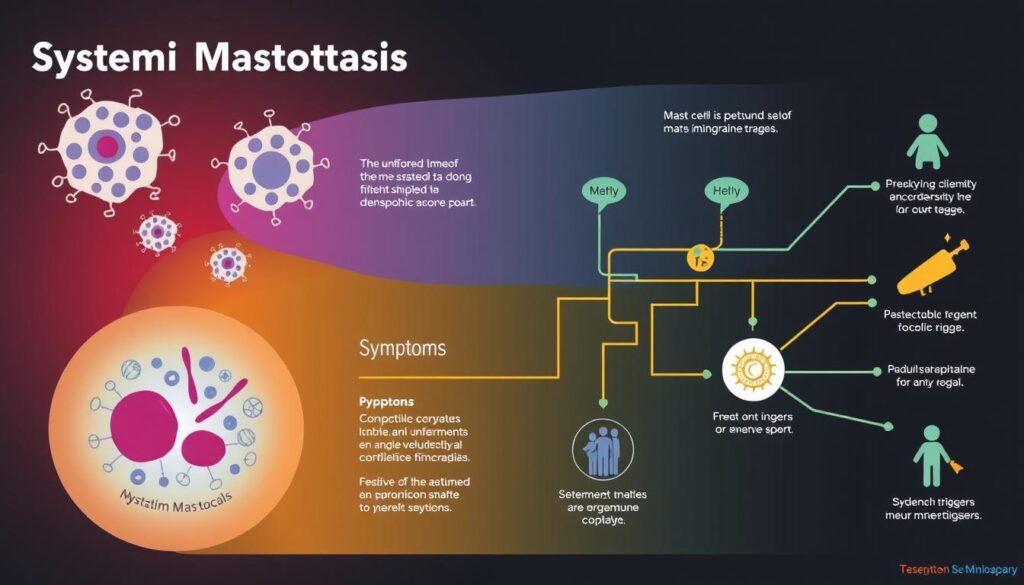
Systemic mastocytosis is a rare blood disorder that affects your immune system. It causes your body to produce too many mast cells. These cells can build up in various organs, causing unexpected reactions12.
The extra mast cells can gather in your skin, liver, and bone marrow. This buildup can lead to various symptoms, from skin issues to more serious health problems21.
Systemic mastocytosis usually starts after the teen years. It’s not common, affecting about 1 in 10,000 people in the US1. Most people with this condition have mild symptoms that doctors can manage well1.
Key Takeaways
- Systemic mastocytosis is a rare blood disorder affecting mast cell production
- The condition can impact multiple organs and body systems
- Most people experience mild symptoms manageable with medication
- The disorder typically develops in adults
- Genetic mutations play a crucial role in the condition’s development
Understanding Systemic Mastocytosis and Its Impact
Systemic mastocytosis affects your body’s immune system. It changes how mast cells, key players in your defense, work. These cells multiply and act strangely in this condition.
Mast Cells: Your Body’s Guardians
Mast cells protect you throughout your body. They live in your skin, lungs, and gut. When working right, they release substances like histamine to fight invaders.
How Mastocytosis Impacts Your Body
In systemic mastocytosis, mast cells become overactive. They build up in various organs. This can affect many body systems.
- Bone marrow
- Skin
- Liver
- Spleen
- Gastrointestinal tract
Understanding Mastocytosis Triggers
Certain things can set off mast cell activation. Common triggers include:
- Temperature changes
- Physical friction
- Insect stings
- Certain medications
- High-stress situations
“Knowing your triggers is the first step in managing systemic mastocytosis effectively.”
The main cause of mastocytosis is a genetic change. It happens in the KIT gene in about 95% of adult patients3. This change alters how mast cells grow and work4.
While systemic mastocytosis is not typically inherited, understanding your genetic predisposition can help in managing the condition more effectively.
Signs, Symptoms, and Health Complications
Systemic mastocytosis affects multiple body systems with varying symptoms. Early detection is key for managing this complex condition. Symptoms differ in severity and frequency for each person.
The most common mastocytosis symptoms include:
- Extreme fatigue
- Skin flushing and itchy brownish patches
- Gastrointestinal issues like nausea and abdominal pain
- Respiratory challenges such as nasal congestion
- Neurological effects including cognitive difficulties
Systemic Mastocytosis can lead to serious complications. Nearly half of patients experience severe allergic reactions called anaphylaxis5. Various factors can trigger these reactions, including foods, medications, stress, and environmental changes4.
“Understanding your body’s unique response is key to managing systemic mastocytosis”
The potential long-term health complications include:
- Bone density issues and increased fracture risk
- Organ dysfunction
- Potential development of blood disorders
- Mental health challenges like anxiety and depression
The type of systemic mastocytosis affects symptom severity and progression6. Most people are diagnosed in their 40s or 50s4. Symptoms may appear at different life stages.
| Symptom Category | Potential Impact |
|---|---|
| Physical | Fatigue, pain, allergic reactions |
| Psychological | Anxiety, cognitive challenges |
| Long-term Health | Potential organ and bone complications |
Remember that each person’s experience with systemic mastocytosis is unique, and working closely with healthcare professionals is essential for effective management.
Types of Systemic Mastocytosis and Diagnosis
Grasping systemic mastocytosis types is key for proper care. Each type has unique challenges that need special handling7.
The World Health Organization lists five systemic mastocytosis subtypes. Each has its own traits and health risks. Diagnostic criteria help doctors spot these variations8.
Indolent Systemic Mastocytosis
This is the most common and mildest form. It barely affects organs. Patients often live normal lives with this type7.
Aggressive Systemic Mastocytosis
Severe cases harm organs a lot. They can shorten life and need intense medical care8.
Advanced Forms and Associated Conditions
- Systemic mastocytosis with associated hematologic neoplasm
- Mast cell leukemia
- Potential complications including splenomegaly and hepatomegaly
Diagnostic Procedures and Testing
Correct diagnosis uses several thorough methods:
- Bone marrow biopsy
- Blood tests
- Genetic analysis for KIT gene mutation7
The key to managing systemic mastocytosis lies in early and precise diagnosis.
| Mastocytosis Type | Characteristics | Prognosis |
|---|---|---|
| Indolent | Minimal organ involvement | Normal life expectancy |
| Aggressive | Significant organ dysfunction | Reduced survival rate |
| Leukemia | Extensive mast cell proliferation | Limited survival |
Your mastocytosis type guides treatment choices. Team up with doctors to manage symptoms well. This can boost your overall life quality8.
Conclusion
Systemic mastocytosis management requires a personalized approach. Your journey involves tailored medical strategies to address unique symptoms and health challenges9. Modern medical advancements offer hope for effective treatment and improved life quality10.
Treatment for systemic mastocytosis has made significant strides. Patients now benefit from targeted therapies that control mast cell activity and reduce symptoms11. The FDA’s approval of medications like avapritinib shows promise for managing various forms of the condition11.
Your medical team will focus on symptom management and complication prevention. This may include mast cell stabilizers, antihistamines, and trigger avoidance strategies10. Regular monitoring is crucial due to the condition’s variable nature across patients9.
Many people with systemic mastocytosis lead fulfilling lives with proper care. Ongoing research expands our understanding of this rare condition. This offers increasing hope for more effective future treatments11.
FAQ
What exactly is systemic mastocytosis?
Systemic mastocytosis is a rare blood disorder. It happens when your body makes too many mast cells. These extra cells can affect many body parts and cause various symptoms.
What causes systemic mastocytosis?
A change in the KIT gene is the main cause. This change happens on its own and isn’t passed down. It affects how mast cells grow and work in your body.
What are the most common symptoms of systemic mastocytosis?
Symptoms can be different for each person. They often include extreme tiredness, skin flushing, and stomach issues. Some people have trouble breathing, headaches, and a higher risk of severe allergic reactions.
Skin changes like urticaria pigmentosa can also occur.
Are there different types of systemic mastocytosis?
Yes, there are five types. The most common is indolent, which is the mildest. Other types include smoldering, aggressive, and mast cell leukemia.
There’s also systemic mastocytosis with associated hematologic neoplasm. Each type affects health differently.
Can systemic mastocytosis be cured?
There’s no complete cure for systemic mastocytosis right now. Treatment focuses on managing symptoms and preventing problems. This can include taking antihistamines and avoiding triggers.
In severe cases, doctors may use targeted therapies or chemotherapy.
How is systemic mastocytosis diagnosed?
Doctors use several tests to diagnose systemic mastocytosis. These include bone marrow biopsy, blood tests, and genetic analysis. The World Health Organization has specific rules to help confirm the condition.
What are the potential complications of systemic mastocytosis?
Possible complications include weak bones and organ problems. There’s also a higher risk of blood disorders. In severe cases, it can lead to leukemia.
The risks depend on which type of systemic mastocytosis you have.
Can people with systemic mastocytosis live a normal life?
Many people with milder forms can lead normal lives. This requires proper care, medication, and avoiding triggers. Regular check-ups with doctors are important.
Working closely with healthcare professionals helps maintain a good quality of life.
Source Links
- Systemic Mastocytosis: Symptoms & Treatment – https://my.clevelandclinic.org/health/diseases/24386-systemic-mastocytosis
- Systemic mastocytosis – Symptoms and causes – https://www.mayoclinic.org/diseases-conditions/systemic-mastocytosis/symptoms-causes/syc-20352859
- PDF – https://www.lls.org/sites/default/files/2022-07/FS36_Mastocytosis_Fact_Sheet_2022.pdf
- Systemic Mastocytosis – https://www.webmd.com/allergies/systemic-mastocytosis
- Systemic mastocytosis: MedlinePlus Genetics – https://medlineplus.gov/genetics/condition/systemic-mastocytosis/
- Mastocytosis – https://www.nhs.uk/conditions/mastocytosis/
- Mastocytosis — DermNet – https://dermnetnz.org/topics/mastocytosis
- Recent advances in diagnosis and therapy in systemic mastocytosis – https://www.bloodresearch.or.kr/journal/view.html?doi=10.5045/br.2023.2023024
- Systemic Mastocytosis: Multidisciplinary Approach – PMC – https://pmc.ncbi.nlm.nih.gov/articles/PMC8577553/
- Systemic Mastocytosis: The Difficult Patient with a Rare Disease. Case Presentation and Brief Review – https://pmc.ncbi.nlm.nih.gov/articles/PMC5801525/
- Systemic Mastocytosis: Practice Essentials, Background, Pathophysiology – https://emedicine.medscape.com/article/203948-overview

