
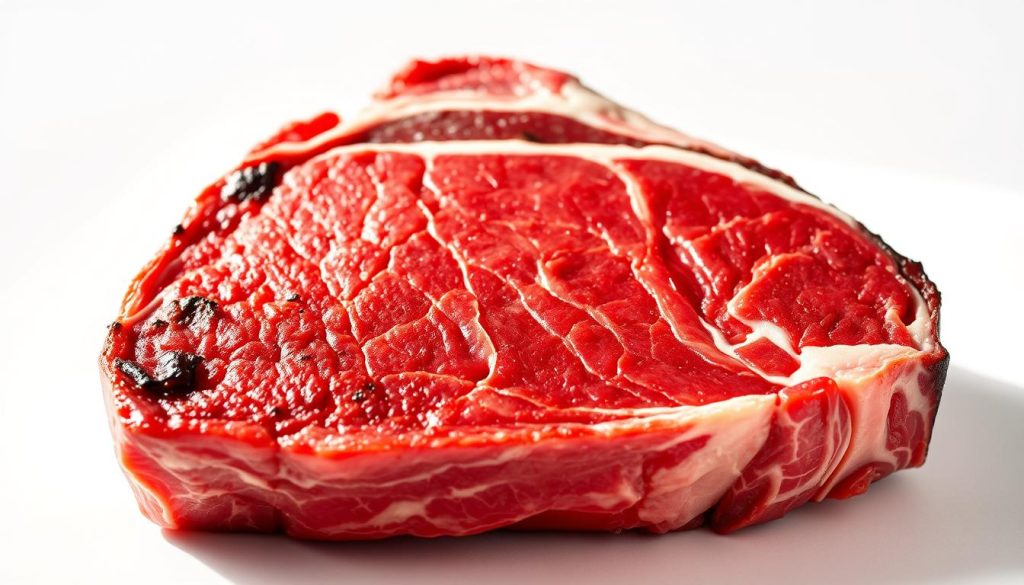
Ribeye steak is a prized cut of beef. It comes from the rib primal, behind the chuck section of the cow. This premium cut delivers exceptional flavor and tenderness.
The ribeye comes from the longissimus dorsi muscle in the prime rib area. Its rich marbling creates an unmatched eating experience. Steak lovers cherish it for its intense beefy flavor.
The ribeye is positioned between the eighth and tenth rib. This specific location ensures a consistently delicious taste. It’s considered one of the most flavorful beef cuts available.
Key Takeaways
- Ribeye comes from the rib primal section of the cow
- Known for exceptional marbling and flavor
- Derived from the longissimus dorsi muscle
- Located between the eighth and tenth rib
- Considered a premium steak cut worldwide
Understanding the Primal Cuts of Beef
Beef offers a diverse range of primal cuts, each with unique flavors and textures. These cuts come from different parts of the cow, shaping their taste and tenderness3.
The quality of beef depends on the cattle breed and where it’s from. Butchers carefully separate eight main primal cuts, each perfect for different dishes3.
Exploring Beef’s Major Sections
The eight primal cuts include:
- Chuck (budget-friendly, tougher meat)3
- Rib (high marbling, premium flavor)3
- Loin (most tender, most expensive)3
- Sirloin
- Round (lean, budget-friendly)3
- Flank (robust flavor)3
- Short Plate (fatty, rich collagen)3
- Shank (high collagen content)3
Muscle Structure Significance
The prime rib comes from the cow’s back muscle, called longissimus dorsi. This muscle is tender because it’s rarely used4.
The rib eye includes meat from the sixth to twelfth ribs. That’s seven ribs in total4.
Understanding muscle structure is key to appreciating beef’s complexity and flavor potential.
Full beef ribs can be up to 10 inches long at the chuck end. They get shorter near the loin, measuring about six inches4.
Rib cuts are expensive because they’re tender and flavorful. They have lots of marbling, which adds to their taste4.
Ribeye Cut Origin: From Rib Primal to Plate
The ribeye’s journey is a tale of culinary evolution. It comes from the upper rib cage, spanning ribs six through twelve. This location gives the cut its special traits.
The ribeye cut evolution has made it a cultural icon. Its unique qualities stem from three key muscles5.
The ribeye boasts three major muscles: longissimus dorsi, complexus, and spinalis dorsi5. These create a cut known for exceptional marbling and rich flavor6. It’s prized for its high natural fat content.
- Prized for high natural fat content
- Typically cut at least 1 inch thick
- Considered the “steak lover’s steak”
Ribeye steaks shine in many culinary traditions. The marbling melts during cooking, creating an intense flavor burst5. American Wagyu ribeyes offer superior marbling, taking the dining experience up a notch.
The ribeye represents more than just a cut of meat—it’s a culinary art form that continues to evolve.
Cooking methods are key to showcasing the ribeye’s unique traits. Chefs love its ability to deliver great taste through various techniques6. Its versatility makes it a favorite in kitchens worldwide.
Conclusion
The ribeye’s history reveals more than a culinary journey. It comes from a specific cow section, showing how anatomical knowledge enhances our appreciation. This cut, from ribs 6 to 12, is a flavor masterpiece loved by steak fans.
Understanding ribeye characteristics helps you make smart choices at the butcher. Its unique marbling and muscle composition create an exceptional taste profile7. Ribeye steaks offer heart-healthy fats, protein, iron, zinc, and B vitamins.
Ribeye production reflects changes in food technology and consumer preferences. Late 1800s refrigerated railcars brought this premium cut to dinner tables across major cities7. Today, sustainable farming and culinary innovations shape how we enjoy ribeye steaks.
The ribeye showcases culinary craftsmanship in the world of beef cuts. It offers a remarkable dining experience, connecting us to rich gastronomic traditions87. Explore different preparation methods to elevate your appreciation for this exceptional steak.
FAQ
What exactly is a ribeye steak?
Ribeye is a tender, flavorful beef cut from the rib section. It comes from between the 6th and 12th ribs. The rich marbling gives it an exceptional taste and juicy texture.
How does the muscle structure affect ribeye quality?
Ribeye comes from a less-worked muscle area, making it naturally tender. Its extensive marbling provides incredible flavor. This intramuscular fat keeps the meat moist during cooking.
What’s the difference between prime rib and ribeye?
Both cuts come from the same rib section. Prime rib is typically a roast that includes the ribeye muscle. Ribeye steak is an individual portion, usually grilled or pan-seared.
Which cooking methods work best for ribeye?
Ribeye is perfect for high-heat cooking methods like grilling and pan-searing. These techniques help render the fat and create a delicious crust. They also maintain a juicy, tender interior.
Do different cattle breeds impact ribeye quality?
Yes, cattle breeds like Angus, Wagyu, and Hereford influence ribeye quality. They affect marbling, tenderness, and overall flavor profile. Wagyu beef is known for its exceptional marbling and rich taste.
How should I select a high-quality ribeye?
Choose ribeyes with consistent, white marbling throughout the meat. Look for bright red color and firm texture. Even fat distribution is important.
USDA grades like Prime and Choice can help identify top-quality cuts.
What’s the cultural significance of ribeye?
Ribeye has become a global culinary icon in steakhouses worldwide. It represents a premium dining experience. The cut symbolizes the art of meat preparation across various cultures.
How can I ensure I’m buying sustainably sourced ribeye?
Choose beef from farms practicing sustainable agriculture. Look for grass-fed methods and minimal environmental impact. Prioritize animal welfare.
Certifications like Animal Welfare Approved can guide your purchase.
Source Links
- Where Do Different Steaks Come From on a Cow? – Y.O. Ranch Steakhouse – https://www.yoranchsteakhouse.com/blog/where-do-different-steaks-come-from-on-a-cow/
- Rib Eye – https://www.charbroil.co.uk/how-tos/rib-eye
- Beef Cuts Explained: Different Cuts of Beef Every Professional Cook Should Know – https://www.escoffier.edu/blog/culinary-arts/cuts-of-beef-every-professional-cook-should-know/
- What Is the Beef Rib Primal Cut And Why Is It So Great? – https://www.thespruceeats.com/beef-rib-primal-cut-995250
- The Cut: Ribeye | SRF | American Wagyu – https://snakeriverfarms.com/blogs/srf-journal/the-cut-ribeye?srsltid=AfmBOorZowZLU7_lSu8pSOxgZ6Ldeg7xIaixAJ47wiHpxB5Q0uKLNUjj
- Decoding the Ribeye: What Makes It a Favorite Cut? – https://plumcreekwagyubeef.com/blogs/news/decoding-the-ribeye-what-makes-it-a-favorite-cut?page=26&srsltid=AfmBOooR6h_PSoRJvDsuB9cMWURjVDoBkKazbMbF0ac-huRpj_iWDhqH
- The King of Steaks: Ribeye Meat King Guide – https://meatking.hk/blogs/recipes/king-ribeye-steak-guide?srsltid=AfmBOoptdAO2V4-KbVbNdhLYqFwUTWiNlgGje-YIgWmfUb-Gbvl6tGvY
- The Ribeye Steak: A Prized Cut of Beef and Best Cooking Techniques – https://grillheadssupply.com/blogs/bbq-library/the-ribeye-steak-a-prized-cut-of-beef-and-best-cooking-techniques?srsltid=AfmBOoplOUx_-zNo9BP0l1IVfdVoOr9-mQSVGU1oLxKGBwIAOJbsB9D3

