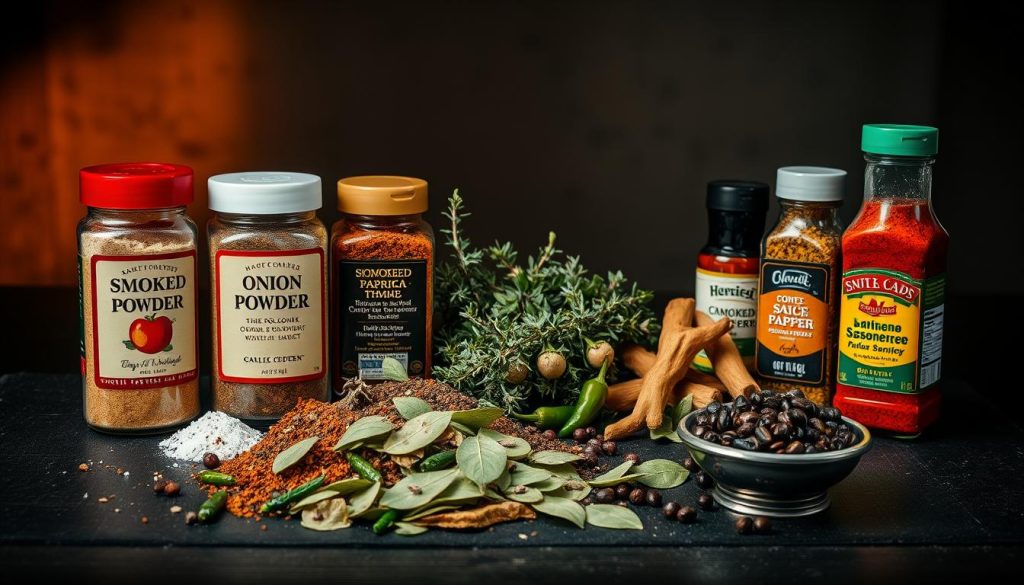
Black culinary traditions showcase a vibrant mix of flavors. Seasonings in Black cooking define taste and cultural identity. Soul food spices turn ordinary ingredients into extraordinary dishes that tell rich stories1.
African diaspora culinary traditions use diverse spices for complex flavor profiles. Soul food seasoning blends include garlic powder, onion powder, paprika, black pepper, and cayenne pepper1. These spices work together to create a robust and memorable taste.
Seasoned salt has been crucial in Black kitchens. Lawry’s seasoned salt, available since 1938, changed home cooking2. It offered a handy blend of salt, sugar, paprika, turmeric, onion, and garlic.
Chefs and home cooks keep innovating with traditional seasonings. They adapt to new dietary needs while preserving culinary heritage. Vegan soul food and health-conscious cooking show how seasoning practices evolve2.
Key Takeaways
- Soul food seasonings blend multiple spices for complex flavors
- Historical seasonings like Lawry’s have deep cultural significance
- Spice blends reflect African American culinary innovation
- Traditional seasonings adapt to modern health considerations
- Cooking techniques continue to evolve while honoring heritage
The Cultural Heritage of Seasonings in Black Cooking
Black culinary traditions showcase a rich tapestry of ancestral flavor profiles. These have transformed American cuisine over time. Heritage spice mixes tell a powerful story of resilience and cultural preservation3.
Diasporic spice combinations emerged from complex historical experiences. They blend African cooking techniques with American South ingredients. Cooking became a form of cultural expression and community building3.
Origins in African American Culinary Traditions
African-American flavor traditions developed through innovative cooking practices. Enslaved cooks turned limited ingredients into extraordinary dishes. They created unique seasoning methods that continue today4.
- Kitchen pepper blends emerged by the 15th century
- Spices reflected trade routes and cultural exchanges
- Cooking became a method of preserving cultural memory
Evolution of Soul Food Seasoning Practices
Seasoning techniques grew from intuitive, generational knowledge. Elders taught cooking through hands-on experience. They used non-standard measurements that emphasized personal touch3.
| Seasoning Technique | Cultural Significance |
|---|---|
| Kitchen Pepper | Blend of imported spices |
| Intuitive Measurement | Oral tradition preservation |
Impact of Regional Influences
Regional variations greatly influenced African-American culinary practices. Coastal oyster preparations and inland agricultural techniques added unique flavors. Each region contributed its own special touch5.
Modern Black chefs honor these traditions while adapting to health considerations. They create innovative seasoning approaches that respect cultural heritage4.
Essential Spices and Herbs in Soul Food Kitchens
https://www.youtube.com/watch?v=WPaDKFh0dW0
Soul food cooking showcases rich seasoning blends that honor Black culinary heritage. These flavors express cultural techniques passed down through generations. Seasoning is more than flavor; it’s a profound cultural statement.
Soul food spices create a taste symphony that tells a story of resilience. They represent creativity in the face of adversity. Key ingredients form the backbone of soul food cooking.
- Garlic powder
- Onion powder
- Black pepper
- Chili powder
- Paprika
- Cayenne pepper
These spices blend to create complex flavor profiles in soul food dishes. They transform simple ingredients into extraordinary meals. Balancing these seasonings is key to developing authentic soul food recipes.
Soul food seasonings reflect African American culinary traditions. During slavery, cooks used limited ingredients creatively to maximize flavor. Today, these spices continue to represent cultural identity and innovation.
Spices are more than ingredients – they are stories of survival, creativity, and community.
Modern Applications and Seasoning Techniques
Soul food spices are evolving, reflecting dynamic cultural seasoning techniques in Black cooking. Chefs are reimagining traditional flavors with innovative approaches. They honor culinary heritage while embracing contemporary health trends9.
Bryant Terry’s “Vegan Soul Kitchen” shows how plant-based cooking preserves authentic taste experiences9. Contemporary methods now blend diverse influences, going beyond classic salt and pepper combinations.
Black culinary experts craft custom spice blends balancing nutrition with rich flavors. Plant-based eating inspires new seasoning approaches in Black cooking9.
Marcus Samuelsson champions creative techniques celebrating traditional ingredients with modern twists9. Health-conscious adaptations drive changes in soul food spices. Cooks develop lower-sodium blends while maintaining robust flavor profiles.
Wellness trends challenge culinary pros to innovate without compromising taste. Caramelizing and smoking remain crucial in developing depth in modern Black cuisine9.
Custom spice blends are now an art form. Chefs experiment with unique combinations, blending tradition with fresh perspectives. This ensures Black cooking stays vibrant, relevant, and delicious9.
FAQ
What are the most important seasonings in Black cooking?
Key seasonings in Black cooking include garlic powder, onion powder, and paprika. Cayenne pepper and complex spice blends are also crucial. These create deep, layered flavors typical of soul food.
These seasonings reflect a rich heritage of flavor development. They trace back to African diaspora cooking techniques.
How did seasoning practices evolve in Black cuisine?
Seasoning practices in Black cuisine emerged from African culinary roots. They transformed through slavery, adaptation, and regional influences across the United States.
Cooks developed innovative techniques to create flavorful dishes using available ingredients. They preserved cultural techniques while developing new flavor profiles.
Why are spice blends so important in soul food?
Umami-rich spice blends create depth, complexity, and balance in soul food dishes. They represent a cultural storytelling method, carrying generations of culinary knowledge.
These blends pass down familial traditions through carefully crafted seasoning techniques. They’re more than just flavor enhancers; they’re a cultural legacy.
How are traditional seasonings being adapted in modern cooking?
Modern cooks are reimagining traditional seasonings with health-conscious, reduced-sodium blends. They’re exploring plant-based applications and developing fusion cuisines that honor ancestral cooking.
This approach keeps Black culinary heritage vibrant and relevant. It meets modern dietary needs while respecting tradition.
What makes Black cooking seasonings unique?
Black cooking seasonings are unique in their complex layering of flavors. They have profound cultural significance and transform simple ingredients into extraordinary dishes.
These seasonings reflect a culinary tradition of creativity and resourcefulness. They represent a deep cultural connection passed down through generations.
Can I make my own soul food spice blend at home?
Yes, you can create your own soul food spice blend at home. Start by understanding flavor balance and experimenting with traditional ingredients.
Use paprika, cayenne, dried herbs, and garlic powder as a base. Adjust proportions to suit your taste and develop your unique signature blend.
Are there health benefits to traditional Black cooking seasonings?
Many traditional Black cooking seasonings offer significant health benefits. Turmeric, cayenne, and garlic have anti-inflammatory properties.
Other spices provide antioxidants and support metabolic health. These ingredients add flavor and contribute to overall wellness rooted in ancestral wisdom.
Source Links
- Soul Food Seasoning Recipe – https://blackpeoplesrecipes.com/soul-food-seasoning/
- How Lawry’s Became A Go-To Seasoning For Black Home Cooks – https://tastecooking.com/seasoning-inspires-salty-looks-kanye-hooks/
- Cooking by Feeling: Honoring Black Culture Through Food – https://www.healthline.com/nutrition/black-cooking-heritage
- There’s Black History in Every Pinch of Kitchen Pepper – https://www.epicurious.com/ingredients/kitchen-pepper-history-article
- Black Foodways and Cuisine – https://nmaahc.si.edu/explore/stories/black-foodways-and-cuisine
- Soul food – https://en.wikipedia.org/wiki/Soul_food
- Ultimate Soul Food Cooking: Key Ingredients & Techniques – https://mamahomesoulfood.com/the-ultimate-guide-to-soul-food-cooking-essential-ingredients-techniques/
- 28 Soul Food Recipes That Southerners Swear By (and Northerners Need to Try) | McCormick – https://www.mccormick.com/articles/purewow/28-soul-food-recipes-that-southerners-swear-by-an
- Culinary Influences and Cooking Techniques from Black History — Provenance Meals – https://www.provenancemeals.com/wellness-blog/culinary-influences-and-cooking-techniques-from-black-history?srsltid=AfmBOopr7xYlOUnys0rnHMjC4-xtbB2Qohn2t_qqsub9TUGDBoZGV4Dd