
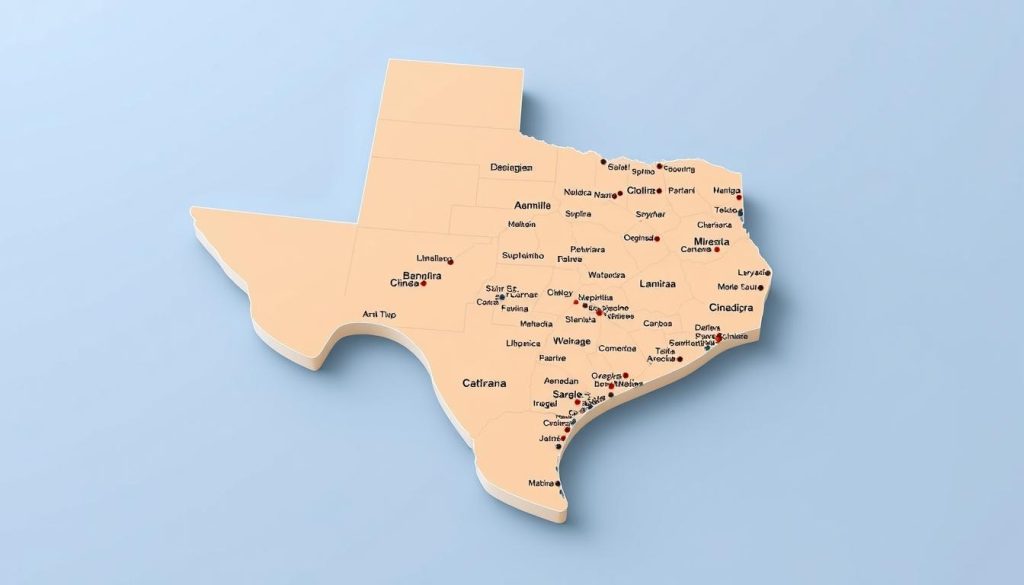
Most of Texas operates within the Central Time Zone. This creates a consistent time standard across its vast landscape. However, there are some interesting exceptions to this rule1.
The Central Time Zone covers major cities like Houston, Dallas, and San Antonio. Yet, El Paso and Hudspeth counties follow Mountain Time instead1. This adds an intriguing layer to Texas’s time zone setup.
Time can differ depending on your location within the state. Northwestern Culberson County near Guadalupe Mountains National Park unofficially observes Mountain Time1. This highlights Texas’s unique time zone characteristics.
Key Takeaways
- Most of Texas follows the Central Time Zone
- El Paso and Hudspeth counties use Mountain Time Zone
- Time zones can impact scheduling and communication
- Northwestern Culberson County has a unique time zone status
- Understanding local time zones is crucial for travelers
Understanding Texas Time Zones and Regions
Texas is a massive state with unique time zone traits. Its vast landscape covers over 268,596 square miles. This creates interesting time zone dynamics for residents and visitors.
Most of Texas follows the Central Time Zone. This zone is key to the state’s daily life. It has specific rules for standard and daylight saving periods.
- Central Time Zone is UTC-6 during Standard Time
- Shifts to UTC-5 during Daylight Saving Time
- Daylight Saving Time begins on the second Sunday in March
- Ends on the first Sunday in November2
Central Time Zone Coverage
Most Texas cities follow the Central Time Zone. Houston, Dallas, San Antonio, and Austin all sit in this zone. The Standard Time Act of 1918 set up the current system.
Mountain Time Zone Areas
Some western parts of Texas use the Mountain Time Zone. El Paso is a big city in this zone. The Mountain Time Zone works differently:
- Mountain Time Zone is UTC-7 during Standard Time
- Shifts to UTC-6 during Daylight Saving Time2
These time zones show Texas’s diverse geography. They create unique time dynamics across the state3.
Texas Time Zone Changes Throughout the Year
Texas faces time zone shifts twice a year due to daylight saving time. The change happens on the second Sunday in March at 2 a.m. Most of Texas follows the Central Time Zone, while El Paso and Hudspeth counties use Mountain Time1.
During standard time, Central Time is UTC-06:00, and Mountain Time is UTC-07:001. When daylight saving starts, these offsets change to UTC-05:00 and UTC-06:00 respectively1.
- Daylight saving time ends on the first Sunday in November
- Clocks “fall back” at 2 a.m., returning to standard time
- The average person loses approximately 40 minutes of sleep during the spring transition4
Texas lawmakers are looking into time zone rules. The Texas House voted 138-5 for House Bill 1422 to possibly adopt permanent daylight saving time5. This move follows a national trend, with 19 states considering similar changes5.
Health experts warn about the effects of these time shifts. The National Sleep Foundation says our bodies struggle to adapt to yearly clock changes5. These disruptions can cause mood issues and increase car accident risks5.
Conclusion
Texas time zones offer a captivating blend of geography and legislation. The Central Time Zone covers most of the state. This creates a unique temporal landscape reflecting Texas’ diverse features.
Texas lawmakers have shown great interest in time-related matters. They’ve filed at least 18 bills addressing these issues6. The Texas House strongly supports moving to permanent daylight saving time6.
Most of Texas follows Central Time. However, travelers should be aware of small regional differences. Historical shifts highlight the changing nature of time zone designations.
Time zone rules in Texas may change in the future. Ongoing discussions could lead to new regulations. Understanding these nuances helps navigate the state’s complex temporal landscape.
Being mindful of temporal distinctions is crucial across Texas. It ensures smooth travel and communication throughout this vast state. Stay informed about potential changes to make the most of your time in Texas.
FAQ
What time zone is most of Texas in?
Most of Texas follows Central Time. This zone covers about 75% of the state. Major cities like Houston, Dallas, San Antonio, and Austin are in this zone.
Are there any parts of Texas in a different time zone?
Yes, far western Texas uses Mountain Time. This includes El Paso and parts of nearby counties. Guadalupe Mountains National Park is also in this zone.
How does Daylight Saving Time affect Texas?
Texas follows Daylight Saving Time like most U.S. states. Time changes happen twice yearly. Clocks “spring forward” in March and “fall back” in November.
Both Central and Mountain Time zones in Texas follow these changes.
When do the time changes occur in Texas?
Daylight Saving Time starts on March’s second Sunday at 2:00 AM. Clocks move forward one hour then. It ends on November’s first Sunday at 2:00 AM.
At this time, clocks move back one hour.
Do all counties in Texas follow the same time zone?
No, not all counties use the same time zone. Most of Texas is in Central Time. Far western counties, including El Paso County, use Mountain Time.
How can I quickly remember Texas time zones?
Remember that most of Texas uses Central Time. This includes major cities like Houston, Dallas, and San Antonio. Only the westernmost part uses Mountain Time.
Does Texas always observe Daylight Saving Time?
Yes, Texas currently follows Daylight Saving Time. Some state lawmakers have talked about ending time changes. However, no changes have been made yet.
How do time zones affect travel within Texas?
When going from Central to Mountain Time in Texas, adjust your watch by one hour. This matters when traveling to or from El Paso and western Texas counties.
Source Links
- Time in Texas – https://en.wikipedia.org/wiki/Time_in_Texas
- HotBot – https://www.hotbot.com/answers/what-time-zone-is-texas
- Timezone America: Understanding the History, Impact, and Complexity of U.S. Time Zones – https://www.bluepeople.com/timezone-america-understanding-its-complexity-and-impact/
- When does daylight saving time start? Do we lose an hour of sleep in March? – https://www.nbcdfw.com/news/local/when-does-daylight-saving-time-start-do-we-lose-an-hour-of-sleep-in-march/3471613/
- Texas House votes to permanently stay on daylight saving time. But Congress won’t allow it — yet. – https://www.texastribune.org/2023/04/11/texas-daylight-saving-time/
- Texas House votes to permanently stay on daylight saving time. But Congress won’t allow it — yet. – https://www.fox4news.com/news/texas-house-votes-to-permanently-stay-on-daylight-saving-time-but-congress-wont-allow-it-yet

