
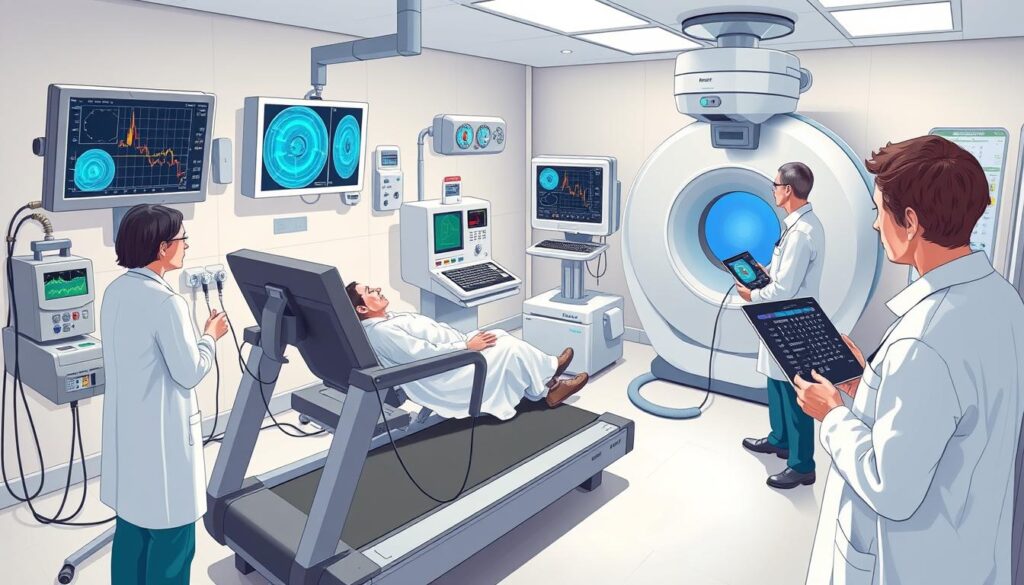
A nuclear stress test is a key cardiac diagnostic procedure. It offers vital insights into your heart’s health and function. This imaging method helps doctors assess blood flow and spot potential heart issues1.
The test uses a small amount of radioactive material. This is injected into your bloodstream to create detailed heart muscle images1. The process captures images of your heart at rest and during activity.
You may need to exercise on a treadmill or bike. This increases blood flow to your heart muscle1. The entire procedure usually takes a few hours.
Preparation for the test involves specific steps. You’ll need to avoid smoking and caffeine beforehand1. The test uses advanced scanners like SPECT or PET.
These create detailed heart images. They help diagnose possible coronary artery blockages. They also assess overall heart health.
Key Takeaways
- Nuclear stress tests provide detailed heart muscle imaging
- The procedure involves radioactive tracer injection
- Test duration is typically two to four hours
- Helps diagnose potential heart disease and blockages
- Non-invasive method to assess cardiac function
Understanding the Purpose of a Nuclear Stress Test
A nuclear stress test is a powerful tool for heart health evaluation. It assesses how your heart works under different conditions. This imaging procedure helps doctors understand your heart’s performance and potential issues2.
What Is a Nuclear Stress Test?
A nuclear stress test examines blood flow to your heart muscle. It uses a small amount of radioactive substance injected into your bloodstream3. This lets doctors capture detailed images of your heart’s function2.
Why Is It Done?
The main goal is to screen for coronary artery disease. It also provides a thorough heart health assessment. Doctors use this test to diagnose heart conditions and evaluate blood flow.
- Diagnose potential heart conditions
- Evaluate blood flow and oxygen delivery to heart muscle
- Assess risk factors for cardiovascular problems2
Who Needs This Test?
Your doctor might suggest a nuclear stress test if you have certain symptoms. These include chest pain or shortness of breath. It’s also recommended for those with heart disease history.
- Experience symptoms like chest pain or shortness of breath
- Have a history of heart disease
- Are at risk for cardiovascular complications4
Early detection can make a significant difference in heart health management.
The test can be done through exercise or medication. Exercise tests use a treadmill. Medication tests simulate physical stress2. The whole process takes about 2-4 hours.
The actual imaging lasts about an hour4.
| Test Type | Duration | Method |
|---|---|---|
| Exercise Stress Test | 7-12 minutes | Treadmill Exercise |
| Pharmacologic Stress Test | 30-60 minutes | Medication-Induced Stress |
Remember, abnormal results might indicate reduced blood flow or potential heart risks, guiding further medical interventions2.
Preparing for Your Nuclear Stress Test
Proper preparation is vital for an accurate nuclear cardiology procedure. Knowing the steps beforehand can ease your mind and improve test results. The nuclear stress test preparation involves several key factors.
Pre-Test Dietary Guidelines
Single-photon emission computed tomography tests require specific dietary restrictions. Follow these key guidelines for the best results.
- Avoid caffeine for 12 hours before the test5
- No food or drinks (except water) for 4-6 hours prior to the appointment
- Drink at least two glasses of water before your test6
Medication Considerations
Your medication routine needs special attention before an exercise stress test. Keep these important points in mind.
- Consult your healthcare provider about temporarily stopping certain medications7
- Beta-blockers might need to be stopped 24 hours before the test6
- Inform your doctor about all current medications
What to Bring and Wear
Preparing for your nuclear cardiology appointment goes beyond medical considerations. Here’s what you should know:
- Wear comfortable clothing and sneakers6
- Avoid applying lotions, oils, or powders to your chest6
- Bring a list of current medications
- Remove metal objects that might interfere with imaging
Remember, proper preparation is key to an accurate and successful nuclear stress test.
The entire process usually takes about four hours5. Plan your day accordingly. If you need to cancel, give 24-hour advance notice to your healthcare provider.
Pro tip: Talk to your healthcare team about any concerns before the test. This ensures you’re fully prepared and comfortable.
During and After the Test
At your cardiac stress test, medical staff will prepare you for radionuclide imaging. They’ll attach electrodes to your chest to monitor heart activity. A radioactive tracer will be given through an IV to create detailed heart images.
You’ll exercise or get medication to mimic physical stress. The nuclear stress test takes two image sets: one at rest and another during peak activity. Doctors use thallium-201 or technetium-99 tracers to check heart performance.
Radiation exposure after the test varies from 3 to 22 millisieverts. Most patients can resume normal activities right away. However, avoid close contact with kids and pregnant women for 1-2 days.
The tracer will leave your body naturally within 1-2 days. You might have mild side effects like headache, dizziness, or injection site soreness. If you have chest pain or breathing problems, get medical help quickly.
Your doctor will discuss your test results and plan next steps for your heart care89.
FAQ
What exactly is a nuclear stress test?
A nuclear stress test evaluates heart blood flow during rest and exercise. It uses a small amount of radioactive tracer for imaging. This test helps diagnose coronary artery disease and assess heart function.
The procedure typically takes two or more hours. It’s performed using either a PET or SPECT scanner.
Why would my doctor recommend a nuclear stress test?
Your doctor might suggest this test if you have chest pain or shortness of breath. It’s also useful for patients with heart disease or at risk for cardiovascular problems.
This test is ideal when standard stress tests are inconclusive. It’s particularly helpful for those who can’t complete regular stress tests.
How should I prepare for a nuclear stress test?
Avoid caffeine for 24 hours before the test. Stop eating and drinking for a specified period. Wear comfortable clothing and walking shoes.
Bring a list of your current medications. Discuss potential medication adjustments with your doctor. Don’t apply lotions or creams on test day.
What happens during the actual test?
Electrodes will monitor your heart activity. A radioactive tracer is injected, and initial images are taken at rest.
You’ll exercise or receive medication to simulate exercise. More tracer is injected at peak exertion. A second set of images is then captured.
Your blood pressure, heart rate, and ECG are monitored throughout the procedure.
Are there any risks associated with a nuclear stress test?
Complications are rare but may include minor bruising at the injection site. Allergic reactions or temporary irregular heartbeats can occur during the test.
The radiation used is minimal and considered safe. Report any unusual symptoms to your healthcare provider immediately.
How long does it take to get the results?
Your healthcare provider will usually discuss results soon after the test. Images are analyzed to evaluate heart blood flow and overall cardiac function.
Based on findings, your doctor might recommend further testing. They may also develop a specific treatment plan for you.
Can I return to normal activities after the test?
In most cases, you can resume regular activities right after the test. It’s recommended to drink plenty of water to flush out the radioactive tracer.
Your healthcare provider will give specific instructions based on your health condition. These instructions will also consider your test results.
Source Links
- Cardiac Nuclear Imaging (Nuclear Stress Test) | Veterans Affairs – https://www.veteranshealthlibrary.va.gov/3,82060
- Nuclear stress test – UF Health – https://ufhealth.org/conditions-and-treatments/nuclear-stress-test
- PDF – https://cardiology.weillcornell.org/sites/default/files/downloads/guide_to_nuclear_stress_test_1_0.pdf
- Nuclear Cardiac Stress Test: What to Expect – https://www.upmc.com/services/heart-vascular/services/tests/nuclear-stress-test
- Cardiac Nuclear Stress Test – https://asterahealth.org/what-we-offer/cardiac-nuclear-stress-test/
- How to Prepare for a Nuclear Stress Test – Advanced Heart and Vascular Institute – https://www.advancedhvi.com/2022/03/25/how-to-prepare-for-a-nuclear-stress-test/
- Nuclear stress test Information | Mount Sinai – https://www.mountsinai.org/health-library/tests/nuclear-stress-test
- Nuclear Stress Test I Ohio State Medical Center – https://wexnermedical.osu.edu/heart-vascular/heart-tests-diagnostics/nuclear-stress-test
- Precautions During and After a Nuclear Stress Test – https://www.healthline.com/health/precautions-after-nuclear-stress-test

