
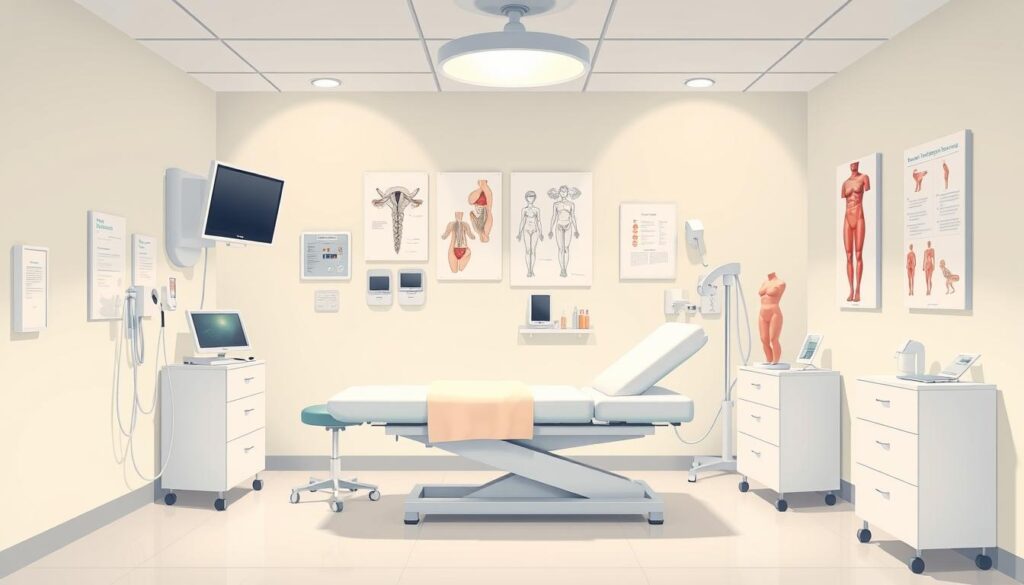
A pelvic exam is key for reproductive health screening. It helps you stay informed about your gynecological well-being. This quick procedure lets doctors check your reproductive organs and spot health issues early1.
Doctors suggest pelvic exams for sexually active women or those 21 and older2. The exam can find ovarian cysts, STIs, and early-stage cancer1. Your doctor may recommend it if you have pelvic pain or unusual discharge.
The exam is quick and simple. It usually takes just a few minutes13. You might feel some discomfort, but it shouldn’t be painful3.
Key Takeaways
- Pelvic exams are crucial for early detection of reproductive health issues
- The exam typically takes 10 minutes or less
- First exam is recommended at age 21 or after becoming sexually active
- Screening helps detect potential conditions like STIs and cancer
- The procedure is a standard part of preventive healthcare
Understanding the Purpose and Importance of a Pelvic Exam
Sexual health check-ups are vital for women’s preventive healthcare. Pelvic exams assess reproductive organs thoroughly. They help detect potential health issues early and maintain overall wellness.
Pelvic exams identify various health conditions that might go unnoticed. They allow healthcare providers to evaluate reproductive health comprehensively4.
Who Needs a Pelvic Exam
Women should start pelvic exams after becoming sexually active or around 18 years old5. Timing may vary based on individual health factors and medical history.
- Sexually active individuals
- Women over 21 years old
- Those experiencing reproductive health symptoms
Benefits of Regular Reproductive Health Screening
Regular cervical cancer screening through pelvic exams offers multiple health advantages:
- Early detection of potential health issues4
- Identification of precancerous changes4
- Monitoring reproductive health conditions4
Proactive healthcare is your best defense against potential reproductive health challenges.
When to Schedule Your First Exam
Schedule your first pelvic exam when you become sexually active or turn 21. Your healthcare professional will discuss your medical history beforehand5.
They’ll address any specific health concerns you may have. This conversation helps tailor the exam to your needs.
| Exam Timing | Recommended Action |
|---|---|
| Sexually Active | Schedule first exam |
| Age 21 | First routine screening |
| Experiencing Symptoms | Immediate consultation |
Remember, your reproductive health is a critical aspect of your overall well-being. Regular screenings can help detect and prevent potential health issues early.
Preparing for Your Pelvic Exam
Proper preparation can boost your confidence for a pelvic exam. Knowing what to expect reduces anxiety and ensures a smooth visit. Understanding the process helps you feel more at ease.
https://www.youtube.com/watch?v=RwkKXCCA_0k
- Schedule your appointment when you’re not menstruating6
- Empty your bladder before the exam for maximum comfort
- Prepare a list of questions or concerns to discuss with your healthcare provider
Regular pelvic exams help detect potential health issues early7. Your preparation can make the experience more manageable and informative.
“Knowledge and preparation are your best allies in maintaining reproductive health.”
Here are some extra tips to consider:
- Bring a supportive friend or partner if it makes you more comfortable8
- Wear comfortable, easily removable clothing
- Be prepared to change into a medical gown
Most pelvic exams are quick, lasting only 5 to 10 minutes8. Healthcare providers perform these exams routinely and professionally.
| Exam Preparation Checklist | Recommendation |
|---|---|
| Timing | Avoid scheduling during menstruation |
| Documentation | Prepare list of questions and medical history |
| Comfort | Bring a support person if desired |
Your proactive approach shows commitment to your reproductive health6. Taking these steps can make your exam more comfortable and informative.
Step-by-Step Guide to the Pelvic Exam
A pelvic exam is crucial for your reproductive health. It carefully assesses your health with precision and care. Knowing the process can help you feel more at ease during the screening.
The exam involves several stages of thorough assessment. Your provider will guide you through each step. They’ll ensure your comfort and address any concerns you have.
External Examination Process
The external exam starts with a visual check of the vulvar area. Your healthcare pro will perform a speculum inspection. This step helps spot any visible issues or health concerns9.
Speculum Examination Details
A speculum is carefully inserted during this part of the exam. It allows a clear view of your vaginal canal and cervix. This exam lets providers collect cell samples and check for irregularities9.
Internal Pelvic Assessment
Your doctor will perform a bimanual exam for the uterine evaluation. They’ll gently press on your lower abdomen. At the same time, they’ll insert gloved fingers to check your reproductive organs9.
| Exam Component | Purpose |
|---|---|
| External Inspection | Check for visible abnormalities |
| Speculum Exam | Visualize cervix and collect samples |
| Bimanual Assessment | Evaluate uterus and ovaries |
Pap Smear Procedure
The Pap smear is key for checking cervical health. Women 21-65 should get screened every 3 years. Your provider will collect cervical cells to check for abnormalities10.
- Routine screening recommended every 3 years
- HPV testing can be combined after age 30
- Results typically take a few days to process
Remember, a pelvic exam is an essential part of maintaining your reproductive health and detecting potential issues early.
Conclusion
Pelvic health is crucial for your overall wellness. Millions of women get routine pelvic exams yearly. In 2010, US physicians performed 62.8 million pelvic exams11.
Understanding the value of pelvic exams can ease your concerns. These screenings are vital for early diagnosis12. By being proactive, you lower the risk of undetected gynecological issues12.
The American College of Obstetricians and Gynecologists advises regular screenings. These help catch potential problems early on.
Your healthcare provider is your ally in this process. Share any concerns or questions for personalized care. Regular exams are part of 76% of preventive care visits11.
Prioritizing these screenings is a smart move. It’s an investment in your long-term gynecological health.
FAQ
What exactly is a pelvic exam?
A pelvic exam checks your female reproductive organs. It’s a routine procedure done by healthcare providers. The exam helps detect potential health issues and maintain reproductive health.
At what age should I start getting pelvic exams?
Pelvic exams usually start when you’re sexually active or turn 21. You might need an earlier exam if you have symptoms like pelvic pain. Unusual vaginal discharge or menstrual irregularities also warrant an earlier check.
How often should I get a pelvic exam?
Pelvic exam frequency depends on your health, age, and medical history. Women between 21 and 65 typically need screenings every 3-5 years. Your healthcare provider can give you personalized advice.
Does a pelvic exam hurt?
Pelvic exams might cause some discomfort or pressure. However, they shouldn’t be severely painful. Tell your provider if you feel significant pain. The exam usually takes only 5-10 minutes.
How should I prepare for a pelvic exam?
Schedule your exam when you’re not menstruating. Empty your bladder before the appointment. Prepare questions or concerns to discuss with your doctor.
Wear comfortable clothing to the exam. You’ll get a gown and sheet for privacy during the procedure.
What happens during a pelvic exam?
A typical pelvic exam has four main parts. It starts with an external visual inspection of the vulva. Next is a speculum exam to view the vagina and cervix.
A Pap smear might be done to collect cervical cells. Lastly, a bimanual exam checks the size and position of your uterus and ovaries.
Is a Pap smear the same as a pelvic exam?
A Pap smear is part of a pelvic exam. It collects cells from your cervix to screen for cervical cancer. Not all pelvic exams include a Pap smear.
Can I bring someone with me to the exam?
Yes, you can bring someone for comfort. A partner, friend, or family member is welcome. Some clinics offer a chaperone during the exam.
What conditions can a pelvic exam detect?
Pelvic exams can detect various conditions. These include ovarian cysts, sexually transmitted infections, and uterine growths. Early-stage cancers, fibroids, and other reproductive issues can also be found.
Is it normal to be nervous about a pelvic exam?
It’s normal to feel nervous about pelvic exams. Remember, these are routine procedures for healthcare providers. They’re trained to make you comfortable. Talk openly with your doctor to ease your concerns.
Source Links
- Pelvic exam – Mayo Clinic – https://www.mayoclinic.org/tests-procedures/pelvic-exam/about/pac-20385135
- Your First Pelvic Exam | Texas Children’s – https://www.texaschildrens.org/content/conditions/your-first-pelvic-exam
- Why It’s Time To Stop Putting off a Pelvic Exam – https://my.clevelandclinic.org/health/diagnostics/17343-pelvic-exam
- The Importance of Pelvic Exam: Garden OB/GYN – https://www.gardenobgyn.com/blog/the-importance-of-pelvic-exam
- Pelvic exam – https://cancer.ca/en/treatments/tests-and-procedures/pelvic-exam
- Pelvic Exam: Preparation, Process, and More – https://www.healthline.com/health/pelvic-exam
- What to Expect at a Pelvic Exam – https://njfpl.org/reproductive-health-services/what-to-expect-at-a-pelvic-exam/
- Pelvic Exams: What to Expect and Who Needs Them – https://www.upmc.com/services/womens-health/services/obgyn/gynecology/pelvic-exam
- Pelvic Exam: Care Instructions | Kaiser Permanente – https://healthy.kaiserpermanente.org/health-wellness/health-encyclopedia/he.pelvic-exam-care-instructions.uh4146
- Pelvic Examination for Women: What To Expect – https://www.webmd.com/women/pelvic-examination
- Millions of women undergo pelvic exams with no proven benefit, US panel concludes – https://www.statnews.com/2016/06/28/pelvic-exams-no-benefit/
- Pelvic Examination | Gynaecologist Canberra – https://www.omargailani.com.au/pelvic-examination/

